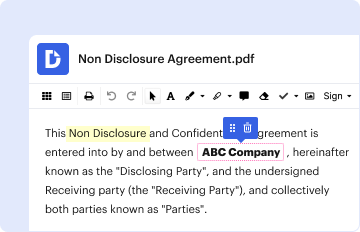
Type text, add images, blackout confidential details, add comments, highlights and more.
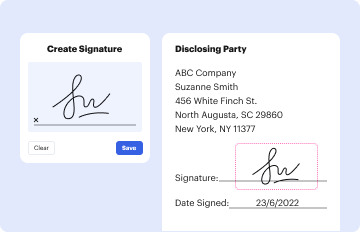
02. Sign it in a few clicks
Draw your signature, type it, upload its image, or use your mobile device as a signature pad.
03. Share your form with others
Send it via email, link, or fax. You can also download it, export it or print it out.
How to use or fill out Living Trust for Husband and Wife with One Child - Nebraska
Ease of Setup
DocHub User Ratings on G2
Ease of Use
DocHub User Ratings on G2
Click ‘Get Form’ to open it in the editor.
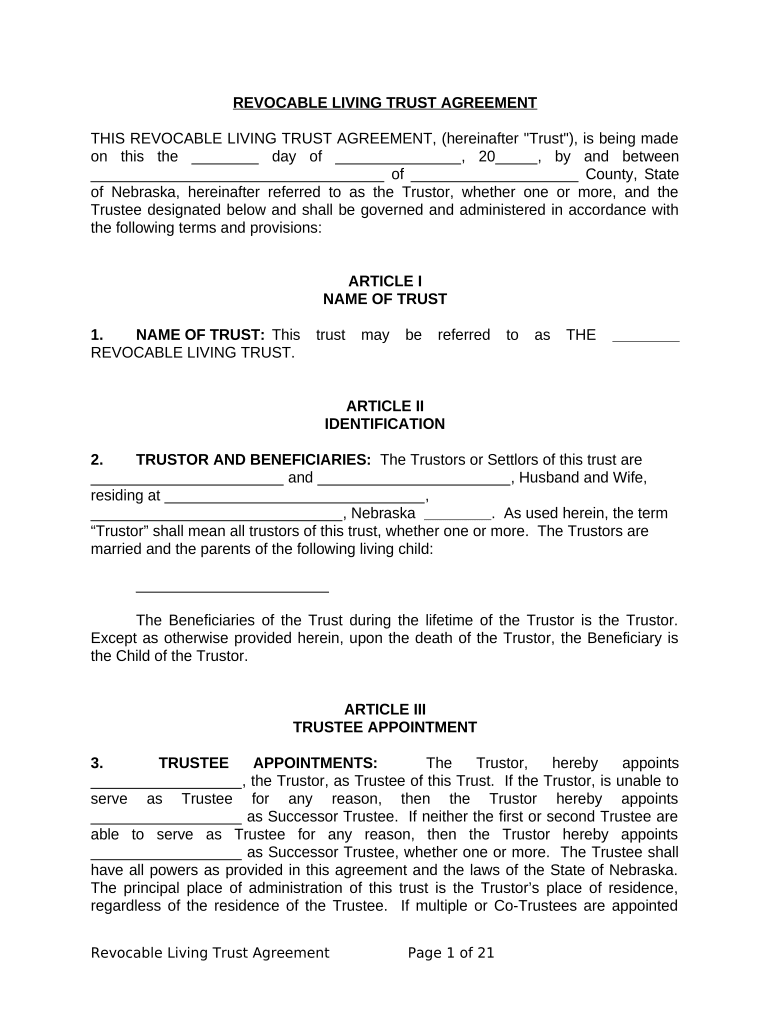
Begin by entering the date at the top of the form. This is crucial as it marks the official start of your trust.
In Article I, provide a name for your trust. This can be something meaningful to you, such as 'The [Your Last Name] Family Trust'.
Move to Article II and fill in the names of both Trustors (you and your spouse) along with your address. Ensure accuracy as this identifies you legally.
List your child’s name under Beneficiaries. This section clarifies who will benefit from the trust after your passing.
In Article III, appoint yourself and your spouse as Trustees. If necessary, designate a Successor Trustee in case both are unable to serve.
Proceed to Article IV where you will list all assets included in the trust on Schedule A. Be thorough to ensure all properties are accounted for.
Review Articles V through XII carefully, ensuring that all powers and provisions align with your intentions for asset management and distribution.
Start using our platform today to create a seamless Living Trust experience!
Fill out Living Trust for Husband and Wife with One Child - Nebraska online It's free
How much does it cost to set up a trust in Nebraska?
How Much Does It Cost to Create a Living Trust in Nebraska? The price of creating a trust largely depends on how you go about making one. If you use a lawyer, fees can easily run $1,000 or more, depending on the hourly or project rate. If you want to keep costs down, there are online programs that cost less than $100.
Should married couples have separate living trusts?
Should you put your home in a trust? Absolutely. Putting your home in a trust can save you a lot of time and money. Typically, there are two reasons people put their home in a trust. The first is for the tax benefits. The second reason is to avoid probate. To learn why you want to avoid probate and how else putting you.
Do you need a trust if you have only one child?
People with fewer assets, a modest estate, or just a relatively simple estate distribution plan most likely dont need a living trust, which, incidentally, generally has more upfront costs than writing a willand that may also be a consideration in deciding whether you need to include a living trust in your estate plan
Do you need a living trust if you only have one child?
Your estate plan is entirely your decision, and you are free to leave your assets to others, such as other family members, friends, or charitable organizations, should you choose. If you do wish to leave something to your child but are concerned about their ability to manage it, a trust can be an excellent solution.
Related Searches
Living trust for husband and wife with one child nebraska sampleLiving trust for husband and wife with one child nebraska onlineLiving trust for husband and wife with one child nebraska costLiving trust for husband and wife with one child nebraska formFree living trust for husband and wife with one child nebraskaLiving trust Nebraska templateIrrevocable trust NebraskaLiving trust vs will
Security and compliance
At DocHub, your data security is our priority. We follow HIPAA, SOC2, GDPR, and other standards, so you can work on your documents with confidence.
Sep 16, 2013 In Revenue Ruling 5866, 19581 C.B. 60, the Inter- nal Revenue Service determined the status of individuals living in a common-law marriage for
This may be a disabled minor child and one parent if that parent is considered an essential person; and. (iii) Three or more member unit: $3000 plus $25 for
May 9, 2012 A living trust is created during the lifetime of the trustor typically for (5)(a) Deeds between husband and wife, or parent and child, without
Cookie consent notice
This site uses cookies to enhance site navigation and personalize your experience.
By using this site you agree to our use of cookies as described in our Privacy Notice.
You can modify your selections by visiting our Cookie and Advertising Notice.