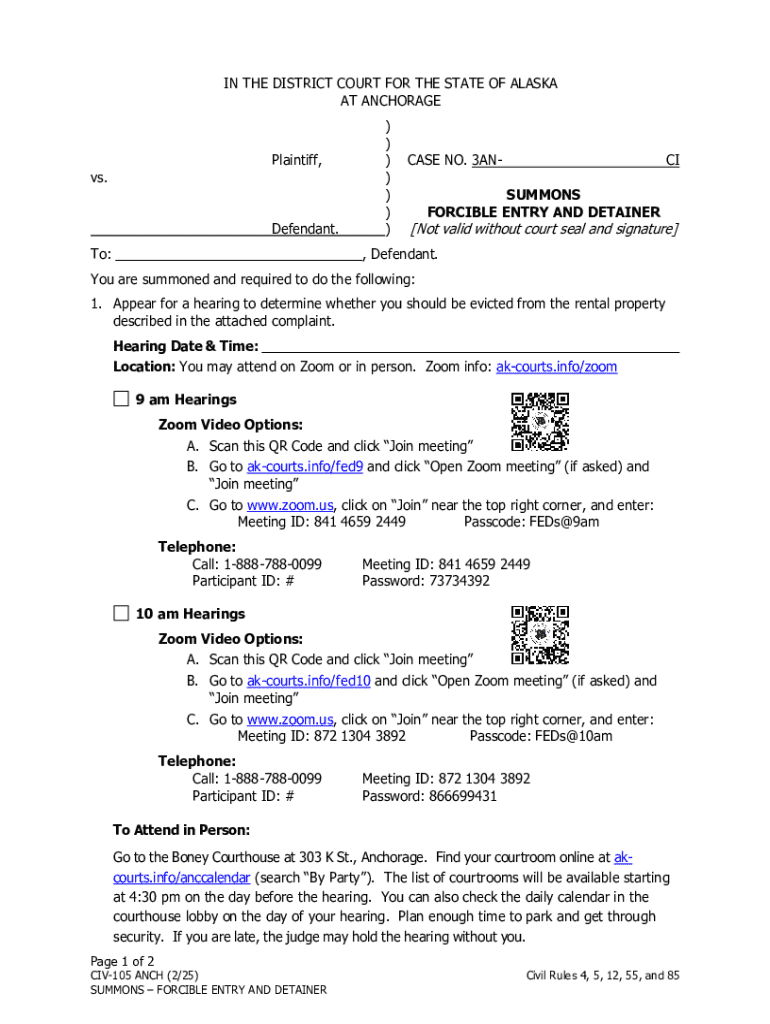







Definition and Purpose of the CIV-105 ANCH FED Summons (6-10) - State of Alaska
The CIV-105 ANCH FED Summons (6-10) is a legal document issued by the District Court for the State of Alaska. It serves the primary role of notifying a defendant about an eviction hearing related to their rental property. This summons also outlines the defendant's obligations, such as the necessity to file a written answer to the complaint within 20 days, and provides directions on attending the hearing either in person or via Zoom. Understanding the purpose and stipulations of this summons is crucial to avoid a default judgment and to ensure proper legal proceedings are followed.
How to Use the CIV-105 ANCH FED Summons (6-10) - State of Alaska
Using the CIV-105 ANCH FED Summons requires an understanding of its components. The document should be filled out accurately to initiate the eviction process legally. Generally, the landlord or property manager initiates the summons, ensuring the defendant receives all necessary information. The defendant needs to acknowledge receipt of the summons, review the allegations, and prepare for the hearing by gathering evidence or seeking legal counsel. The document serves as a formal notification to address the eviction issues immediately.
Steps to Complete the CIV-105 ANCH FED Summons (6-10) - State of Alaska
- Identify the Parties: Clearly specify the names of the plaintiff (landlord) and defendant (tenant), along with their contact details.
- Outline the Allegations: Detail the reasons for eviction, ensuring all legal grounds are clearly stated.
- File with the Court: Submit the completed summons to the District Court and pay any applicable filing fees.
- Serve the Defendant: Ensure that the defendant receives a copy of the summons through an acceptable service method, such as certified mail or process server.
- Prepare for the Hearing: Collect evidence, documents, and any witness testimonies to support the case.
Who Typically Uses the CIV-105 ANCH FED Summons (6-10) - State of Alaska
This summons is predominantly used by landlords and property managers in Alaska seeking legal eviction of tenants who fail to comply with lease agreements. It may also be used by attorneys representing these entities to initiate formal eviction proceedings. On the receiving end, tenants served with this document need to respond appropriately to defend against the eviction claims or to negotiate settlements.


Key Elements of the CIV-105 ANCH FED Summons (6-10) - State of Alaska
- Notification of Hearing: Information about the date, time, and location of the eviction hearing.
- Response Requirements: Instructions for the defendant to file a written answer within a specified period.
- Detailed Allegations: Specific reasons for the eviction, which can include unpaid rent, lease violations, or property damage.
- Legal Consequences: Warning about default judgment if the defendant fails to respond or appear at the hearing.
Legal Use of the CIV-105 ANCH FED Summons (6-10) - State of Alaska
The summons constitutes a legal action to ensure landlords can reclaim their property lawfully if a tenant breaches the rental agreement. It sets out the procedural requirements for both parties involved in the eviction process and ensures compliance with state housing and tenant laws. It's crucial to use this form in accordance with legal guidelines to avoid potential disputes or court dismissals.
Important Terms Related to CIV-105 ANCH FED Summons (6-10) - State of Alaska
- Defendant: The tenant against whom the eviction action is being taken.
- Plaintiff: The landlord or property manager initiating the eviction.
- Default Judgment: A ruling against the defendant if they fail to respond to the summons or appear in court.
- Service of Process: The method by which the summons is delivered to the defendant, ensuring official notice.
Examples of Using the CIV-105 ANCH FED Summons (6-10) - State of Alaska
Consider a scenario where a tenant consistently fails to pay rent on time, violating the lease agreement. The landlord, after multiple notices, decides to evict the tenant. They fill out the CIV-105 ANCH FED Summons, file it with the District Court, and serve it to the tenant. The tenant, upon receiving the document, can consult a legal advisor to respond promptly or attend the hearing to contest the claims.
State-Specific Rules for the CIV-105 ANCH FED Summons (6-10) - State of Alaska
Alaska's eviction proceedings and tenant rights laws govern the usage of this summons. Landlords must prove sufficient legal grounds for eviction and adhere to state-mandated notice periods before filing a summons. The court may offer resources for mediation or legal aid, emphasizing fair treatment for both parties. Understanding these state-specific nuances is critical for effective use of the form.