






Definition and Purpose of the Application for Fulton Historic Property
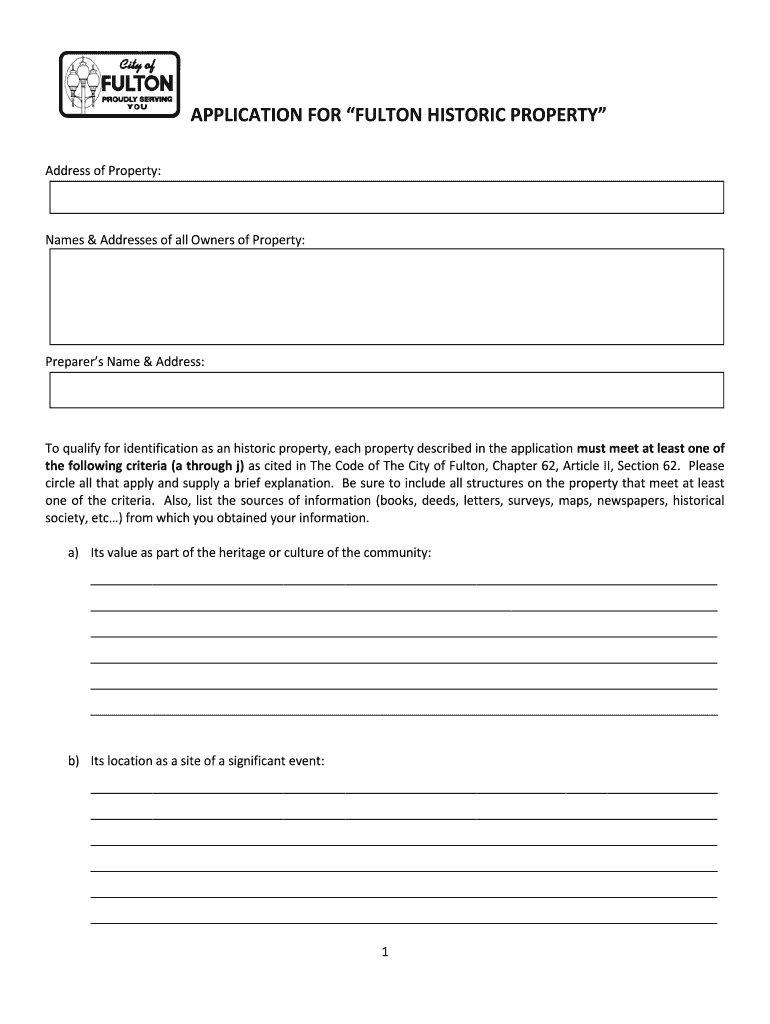
The Application for Fulton Historic Property is a formal document used to propose a property for designation as a historic site within Fulton County. This application assesses a property's historical, architectural, and cultural significance. A successful application can lead to preservation opportunities and legal protections against unsanctioned alterations, maintaining the unique character of historically valuable properties.
Eligibility Criteria for Designation
To qualify for designation as a Fulton Historic Property, the property must meet specific criteria:
- Cultural Significance: The property should be associated with significant cultural events or developments in history.
- Notable Historical Events: It must have connections to events or activities that have made a significant contribution to history.
- Architectural Characteristics: The property should exhibit noteworthy architectural styles or designs.
- Preservation Suitability: It must be feasible to preserve and maintain the property’s original features.
Properties that fulfill these criteria are assessed for inclusion to ensure they contribute positively to the historical narrative of Fulton County.


How to Obtain the Application for Fulton Historic Property
Applicants can acquire the Application for Fulton Historic Property through various channels:
- County Offices: Forms may be physically available at Fulton County's local government offices.
- Online Resources: Many counties offer downloadable forms via their official websites, providing a convenient means for prospective applicants to access necessary documentation.
- Mail Requests: Requesting a copy through mail may also be an option for those preferring hard copies.
Steps to Complete the Application
- Gather Property Information: Collect essential details about the property, including its current owners, address, and any known historical information.
- Compile Historical Context: Provide documentation that supports the property's historical relevance. This could include historical records, previous ownership, and significant events associated with the property.
- Document Architectural Features: Detail the architectural qualities that make the property unique and worthy of preservation.
- Prepare Supporting Materials: Include photographs, maps, or any other visual aids that illustrate the property's significance.
- Complete the Application Form: Fill out all required sections of the form accurately, ensuring that all information is up-to-date and comprehensive.
- Submit the Application: Submit the completed application either online, via mail, or in person, based on the submission guidelines provided by the issuing authority.
Legal Use and Implications
Designating a property as a historic site carries specific legal implications. It provides protections that can prevent unauthorized alterations and demolitions, ensuring the property's historical integrity remains intact. Property owners need to comply with preservation guidelines, which can include special requirements when undertaking renovations or restorations.
Key Elements of the Application
When completing the application, ensure the following elements are thoroughly addressed:
- Historical Context: Describe past events and figures affiliated with the property.
- Architectural Analysis: Detail the architectural style, materials, and construction date.
- Current Condition: Assess and document the current state of preservation.
- Proposed Uses: Explain potential future uses that align with preservation goals.
Importance of the Application for Fulton Historic Property
Submitting this application is crucial for protecting properties of historical significance. Successful designation can provide:
- Cultural Conservation: Preserves local heritage and storytelling.
- Increased Property Value: Recognized historic properties can have enhanced market desirability and property value.
- Community Pride: Celebrating historical properties fosters community identity and pride.
Submission Methods: Online, Mail, and In-Person
Depending on convenience and preference, applicants can choose from various submission methods:
- Online Submission: Digital forms can be filled and submitted directly through county websites, providing an efficient and paperless process.
- Mail Submission: Traditional mailing remains an option for those who prefer physical documentation.
- In-Person Submission: Submitting the application in person can provide an opportunity for applicants to engage directly with preservation office staff for instant feedback or clarifications.
Required Documents for Application
Several supporting documents are crucial to complete the application:
- Deeds and Ownership Documentation: Proof of ownership needs to be attached.
- Historical Records: Documents that highlight historical relevance.
- Visual Aids: Architectural drawings, photographs, and maps.
Variants and Alternatives to the Application
Applicants may need to be aware of potential variants or alternative forms:
- State-Specific Forms: Some states have their unique criteria and application processes, requiring different forms.
- Alternative Preservation Programs: Other preservation programs may be available for properties not meeting Fulton County's criteria.
Who Typically Uses the Application
The application is often used by:
- Property Owners: Individuals looking to secure historic designation for their properties.
- Preservationists: Professionals and organizations dedicated to heritage conservation.
- Historians: Academics and researchers interested in preserving historically significant sites.
Understanding these aspects thoroughly will enable applicants to navigate the application process with clarity and purpose, optimizing their chances of successful designation.