




01. Edit your form online
Type text, add images, blackout confidential details, add comments, highlights and more.

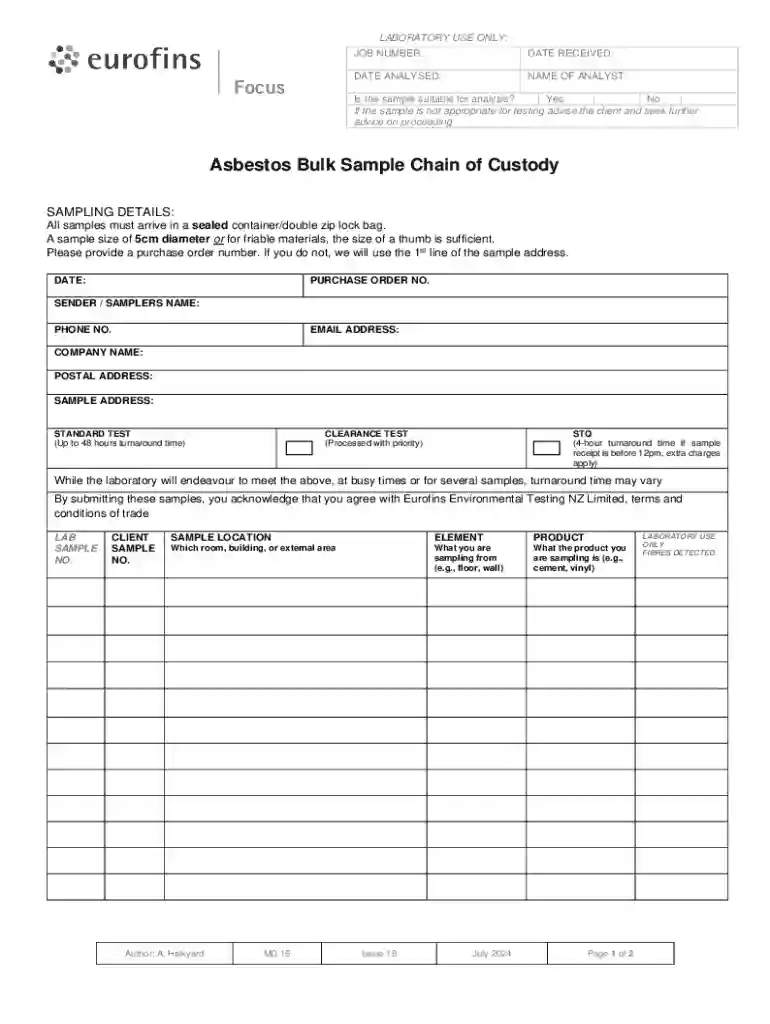
Type text, add images, blackout confidential details, add comments, highlights and more.

Draw your signature, type it, upload its image, or use your mobile device as a signature pad.

Send it via email, link, or fax. You can also download it, export it or print it out.
The 42 CFR 493 801, known as the "Enrollment and Testing of Samples," is a regulation under the Clinical Laboratory Improvement Amendments (CLIA) that outlines the procedures and requirements laboratories must follow to enroll in federally regulated testing programs. This regulation ensures that laboratories maintain high quality and accurate test results for the samples they analyze. It defines how laboratories should manage their enrollment, the criteria for acceptance, and the steps they must follow to comply with federal testing guidelines.
Successfully completing the requirements under 42 CFR 493 801 involves a series of systematic steps that laboratories must meticulously follow.
The regulation provides a legal framework for laboratories to ensure that their operations meet federal requirements. Proper application of these rules prevents legal ramifications and ensures trust in laboratory operations.
Understanding terminology specific to this regulation is crucial for proper compliance and operational success.
Practical application examples illustrate how laboratories can implement 42 CFR 493 801 procedures to align with the standards set by CLIA.
While the 42 CFR 493 801 form can typically be managed via traditional paper methods, many laboratories opt for digital solutions to enhance efficiency and accuracy.
Gathering the correct documents is essential for complying with 42 CFR 493 801 and ensuring a smooth enrollment process.
The 42 CFR 493 801 is governed by federal authorities responsible for overseeing laboratory quality and compliance with set standards.
While 42 CFR 493 801 provides federal guidance, states may implement specific rules to address regional needs.
We've got more versions of the 42 CFR 493 801 - Enrollment and testing of samples form. Select the right 42 CFR 493 801 - Enrollment and testing of samples version from the list and start editing it straight away!
At DocHub, your data security is our priority. We follow HIPAA, SOC2, GDPR, and other standards, so you can work on your documents with confidence.





Each laboratory must enroll in a proficiency testing (PT) program that meets the criteria in subpart I of this part and is approved by HHS.Read more
Each laboratory must enroll in a proficiency testing (PT) program that meets the criteria in subpart I of this part and is approved by HHS.


