






Definition & Meaning
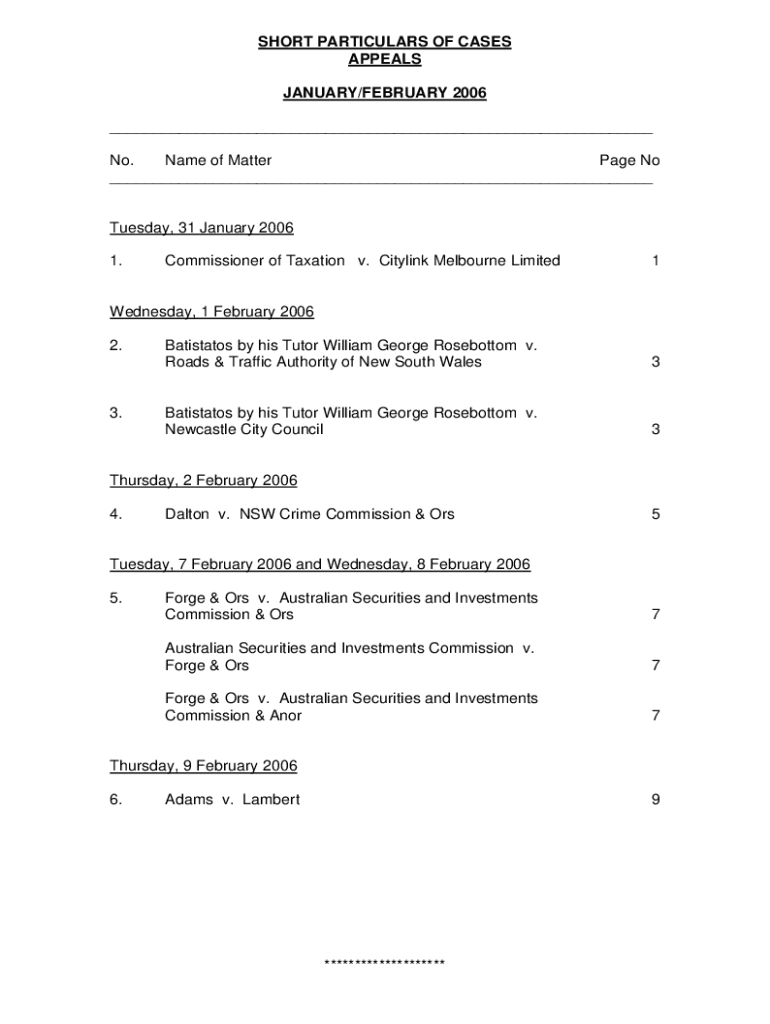
The Citylink Melbourne Ltd Case refers to a prominent legal matter involving Citylink Melbourne and the Full High Court of Australia. This case addresses significant issues related to tax deductions concerning concession fees. The case has been instrumental in shaping tax law interpretations and has broader implications for businesses, especially those dealing with substantial concession fees. The Full High Court's decision elucidates the application of tax law by dissecting complex financial arrangements and how they are perceived under the legal framework.
Key Elements of the Case
The Citylink Melbourne Ltd Case centers around several critical components that make it pivotal in legal circles:
- Concession Fees: The crux of the case involves whether the concession fees paid by Citylink Melbourne can be classified as deductible expenses for tax purposes.
- Tax Law Interpretation: A significant part of the deliberation is how tax laws are interpreted in the context of large infrastructure projects and associated financial obligations.
- Precedents: The case also sets a precedent for future tax-related cases, particularly involving infrastructure and concession agreements.
Important Terms Related to the Case
Understanding the Citylink Melbourne Ltd Case requires familiarity with several key terms relevant to the proceedings:
- Concession Fee: A payment structure between governments and private entities, often seen in public-private partnerships.
- Tax Deduction: A reduction in taxable income, typically tied to specific expenses considered allowable by tax authorities.
- Precedent: A legal decision that sets an example or rule for future cases.
Steps to Complete the Case Study Analysis
To effectively analyze and understand the Citylink Melbourne Ltd Case, follow these steps:
- Gather Source Materials: Obtain the official court documentation and verdicts related to the case.
- Identify Key Issues: Focus on the main legal questions and how the court addressed them.
- Analyze Legal Precedents: Examine how this case aligns or deviates from previous cases.
- Review Court's Decision: Understand the rationale behind the Full High Court's ruling.
- Consider Implications: Assess how the decision affects future tax law applications and similar cases.
Legal Use of the Case
The legal significance of the Citylink Melbourne Ltd Case lies in its application and influence on future judicial procedures:
- It serves as a key reference point for lawyers dealing with tax deduction cases related to concession fees.
- The case assists in forming legal strategies for infrastructure-related financial agreements.
- Its implications extend to the structuring of public-private partnerships under Australian tax law.
Who Typically Uses the Case
Several parties are likely to reference or utilize this case in their professional activities:
- Tax Attorneys: For building or defending cases related to tax deductions and infrastructure funding.
- Business Consultants: To guide clients in the infrastructure sector on the implications of concession agreements.
- Academic Researchers: As a case study in legal and financial courses focusing on taxation and business law.


Examples of Using the Case
The Citylink Melbourne Ltd Case can be utilized in several real-world scenarios:
- Tax Litigation: Serving as a cornerstone in legal arguments about allowable concession-related deductions.
- Legal Education: Being a foundational case in law school curriculums for studying the intersection of business and tax law.
- Policy Making: Influencing government policies around private participation in large infrastructure ventures.
State-by-State Differences
Although the Citylink Melbourne Ltd Case holds national significance in Australia, its interpretations may vary slightly among different states:
- Economic Impact: States with significant infrastructure projects funded through public-private models may reference the case more frequently.
- Tax Codes: Variations in state tax codes might affect how the case's principles are applied locally.
- Legal Precedents: Some states might have existing case law that influences how the Citylink ruling is integrated into local judicial systems.
Penalties for Non-Compliance
Non-compliance with the principles established in the Citylink Melbourne Ltd Case, specifically regarding the misclassification of concession fees, can result in several penalties:
- Financial Penalties: Incorrect tax deductions based on concession payments can lead to significant financial repercussions, including fines and back taxes.
- Legal Action: Businesses might face legal challenges and prolonged litigation if found non-compliant.
- Reputational Damage: Companies that fail to adhere to established tax precedents risk damaging their reputation among investors and partners.
Software Compatibility
In managing documentation and financial records related to cases like Citylink Melbourne Ltd, compatibility with various software can streamline processes:
- Document Management: Platforms like DocHub allow seamless editing, annotating, and signing of legal documents involved in case management.
- Tax Software: Integration with systems like TurboTax and QuickBooks can facilitate accurate financial reporting aligned with current legal standards.
- Cloud Integration: Utilizing cloud-based solutions ensures documents are accessible across devices, aiding legal teams in maintaining updated records.