






Definition & Meaning
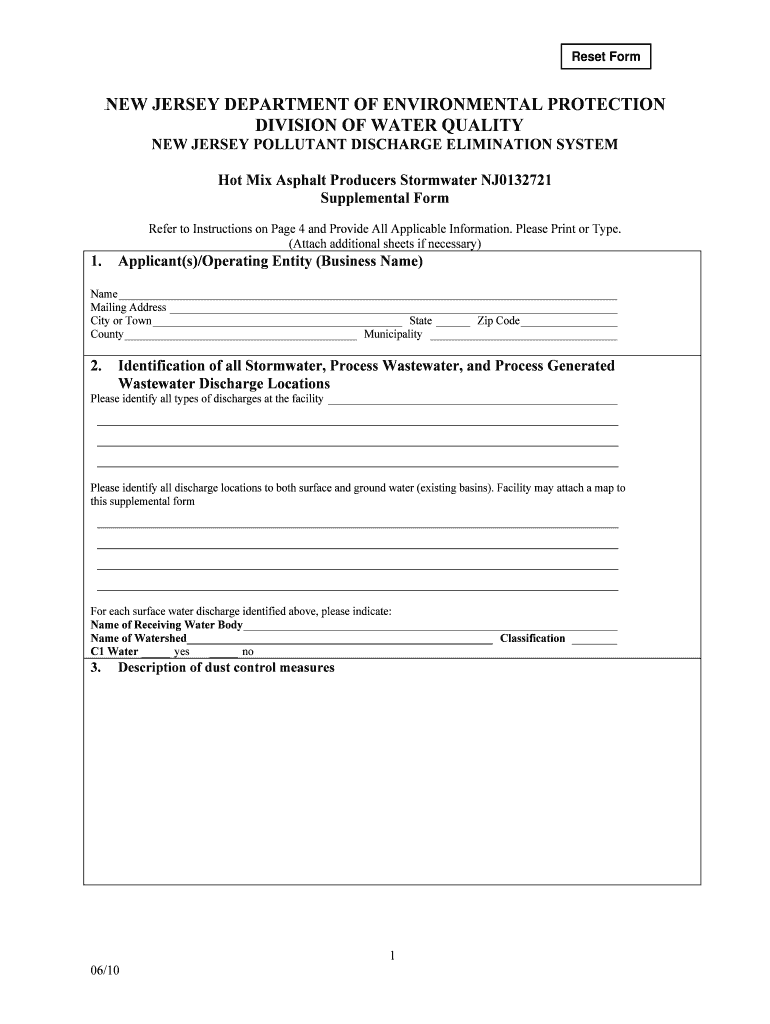
The "NEW JERSEY DEPARTMENT OF - State of New Jersey" form is a crucial document for environmental compliance, particularly within the guidelines set by the New Jersey Department of Environmental Protection (NJDEP). This form serves as a supplemental requirement specifically for Hot Mix Asphalt Producers in New Jersey. It is designed to capture essential information about stormwater and wastewater discharges, ensuring that the facility's operations align with the NJ Pollutant Discharge Elimination System requirements.
- Purpose: The form seeks detailed insights into a facility's environmental impact through its discharges, helping regulatory bodies monitor and manage environmental protection efforts.
- Target Audience: Primarily intended for owners and operators of asphalt production facilities who need to adhere to state-mandated environmental regulations.
By comprehensively capturing details regarding emissions, dust control, and process fuel usage, the form aids in maintaining ecological balance and minimizing environmental risks associated with industrial activities.
How to Use the NEW JERSEY DEPARTMENT OF - State of New Jersey
Using the "NEW JERSEY DEPARTMENT OF - State of New Jersey" form involves understanding its sections and accurately completing each part to meet compliance requirements.
- Gather Required Information: Before starting, collect all necessary details about your facility's operations, including discharge locations, measures for dust control, and types of fuels utilized.
- Follow Instructions Carefully: Each section of the form will guide you in providing the needed data. Ensure you understand the questions to provide comprehensive responses.
- Review and Double-check Entries: Accuracy is crucial. Common sections include facility identification details, operational categories, and environmental impact metrics.
- Submit as Specified: Once completed, submit the form along with the Request for Authorization to the NJDEP. Ensure that submission deadlines are met to avoid non-compliance issues.
The form is part of a broader regulatory framework aimed at safeguarding natural resources and requires meticulous attention to detail during completion.
Steps to Complete the NEW JERSEY DEPARTMENT OF - State of New Jersey
Completing the form requires a systematic approach to ensure all aspects are covered comprehensively.
- Read the Form Instructions: Start by understanding the scope and specific needs delineated in the form's instructions.
- Section-by-section Completion:
- Facility Information: Enter details such as name, address, and contact information.
- Discharge Details: Describe stormwater and process effluent discharges, utilizing precise measurements and descriptions.
- Dust and Emission Controls: Provide a detailed account of the technologies and methods used to control dust emissions.
- Review for Completeness: Ensure every section is complete. Omissions can lead to delays in processing.
- Submit Required Documents: Attach any additional necessary documentation that supports the entries made.
The process involves iterative reviews and consultations with operational staff to ensure all data is thoroughly vetted and accurate.
Key Elements of the NEW JERSEY DEPARTMENT OF - State of New Jersey
The form is composed of essential elements that capture various dimensions of an asphalt producer's impact on the environment.
- Facility Discharge Information: Covers important metrics such as discharge points, volume, and treatment measures.
- Environmental Practices: Details on activities that mitigate environmental impact from dust and emissions.
- Compliance Measures: Steps taken to align with state environmental standards and regulations.
Each element is integral to providing a holistic view of the operational and environmental practices of asphalt production facilities.
Legal Use of the NEW JERSEY DEPARTMENT OF - State of New Jersey
Legally, the form holds significant value in ensuring adherence to state and federal environmental laws.
- Environmental Compliance: Completion and submission fulfill legal obligations under New Jersey environmental laws.
- Protection Against Legal Repercussions: Proper documentation of discharges and control measures protects facilities from potential fines or legal action for non-compliance.
- Framework for Continuous Improvement: Provides a baseline for measuring improvements in mitigating environmental impact.
The form underscores legal accountability and responsible environmental stewardship requisite for operational compliance.
Examples of Using the NEW JERSEY DEPARTMENT OF - State of New Jersey
Consider the following example scenarios to understand how different operations would utilize the form:
- Example 1: Small Asphalt Facility: A small-scale producer primarily involved in local road developments uses the form to document low-volume discharges. Due to minimal emissions, their entries focus on process water management and community impact.
- Example 2: Large Industrial Operation: A larger facility with high production rates would detail extensive dust control measure implementations and collaborate with environmental engineers to accurately depict their emission management strategies.
- Example 3: New Installation: A newly authorized facility uses the form to outline expected discharge rates and its planned strategies for sustainable water use and dust minimization.
These examples reflect the form’s adaptability to various scales and scopes of production operations.
State-specific Rules for the NEW JERSEY DEPARTMENT OF - State of New Jersey
Understanding specific mandates and regulatory frameworks within New Jersey enhances compliance:
- State-Specific Environmental Regulations: The NJDEP oversees strict guidelines to ensure the protection of air and water quality.
- Permit Requirements: Facilities must hold appropriate permits, issued only after successful submission of forms and inspection processes, to legally discharge pollutants.
- Routine Monitoring: Agencies may require routine reporting and on-site auditing as part of ongoing compliance assessment.
The guidelines ensure proactive environmental regulation and management, serving both operational and community health interests.