






Definition & Meaning
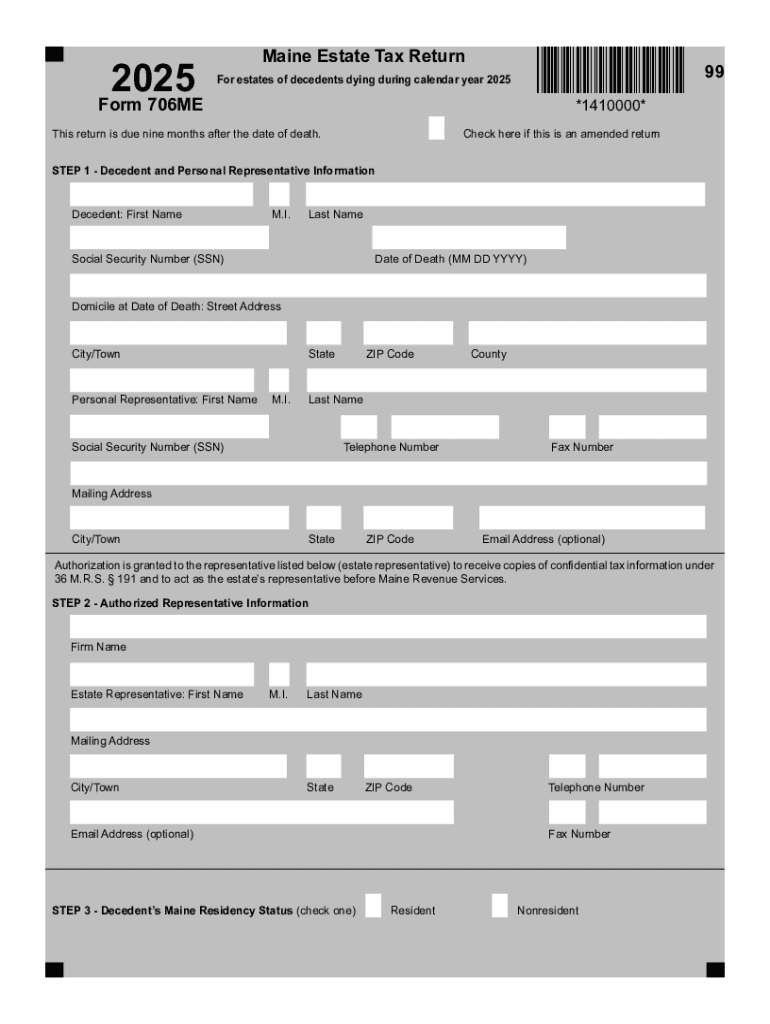
The Maine Revenue Services Estate Tax Return Form, often referred to as Form 706ME, is a legally mandated document used to report and calculate estate taxes due to the State of Maine following an individual's death. The form ensures compliance with state tax laws by detailing the value of the decedent's estate, applicable deductions, and tax credits. It plays a crucial role in assessing the estate's financial obligations to the state, impacting beneficiaries and estate planning strategies.
Purpose and Application
Form 706ME serves as an official record of the estate's financial scope, documenting assets, liabilities, and other financial elements. It is essential for executors or administrators handling estates to accurately report these details to prevent legal complications. By adhering to this process, the estate can fulfill its tax responsibilities efficiently, aiding in the smooth transfer of assets to heirs or beneficiaries.
How to Use the Maine Revenue Services Estate Tax Return Form
Step-by-Step Instructions
- Gather Required Information: Collect all pertinent data, including the decedent's personal information, detailed asset inventories, and existing debt obligations.
- Complete Personal Information: Start by filling out sections pertaining to the decedent's name, social security number, and date of death.
- Itemize Assets and Liabilities: List all assets, including real estate, investments, personal property, and liabilities, to ascertain the estate's gross value.
- Calculate Deductions: Identify applicable deductions such as debts, funeral expenses, and charitable donations to adjust the taxable estate value.
- Determine Taxable Estate and Applicable Taxes: Utilize the form's instructions to compute the estate's tax liability based on Maine's tax rates.
- Submit Supporting Documentation: Attach necessary documents like appraisals, bank statements, and prior tax returns to verify reported values.
- Review and Sign: Double-check entries for accuracy, sign the form, and acquire any required signatures from co-administrators.
- Submit the Form: Send the completed form with any due payments to the appropriate Maine Revenue Services address before the deadline.
Steps to Complete the Maine Revenue Services Estate Tax Return Form
Detailed Completion Process
- Initial Information: Accurately input the decedent’s key information to avoid processing delays or errors.
- Value Assessment: Ensure all estate components are valued based on current market standards and documented with credible appraisals or market analyses.
- Leverage Deductions: Utilize allowable deductions strategically to minimize taxable estate amounts, guided by Maine’s estate tax regulations and allowances.
- Cross-Verification: Systematically cross-verify each entry against financial statements and inventory lists to ensure completeness and precision.
Finalization and Submission
- Final Review: Conduct a thorough review or enlist a tax professional to validate calculations and compliance.
- Filing Deadline: The form must be submitted within nine months of the decedent's date of death. Extensions may be available under certain circumstances if requested timely through Form 700EXT-ME.
Who Typically Uses the Maine Revenue Services Estate Tax Return Form


Applicable Users
- Estate Executors: Individuals appointed by the decedent or courts to manage the estate settlement must complete and file the form.
- Trustees: In cases where estates fall under trust management, trustees are responsible for ensuring compliance with estate tax obligations.
- Beneficiaries with Executor Responsibilities: A beneficiary who is also named as executor or administrator bears the task of accurately completing the form to facilitate lawful asset distribution.
Special Considerations
The form is crucial for estates exceeding Maine's estate tax exemption threshold, necessitating the role of experienced legal or financial advisors to navigate complex tax scenarios.
Legal Use of the Maine Revenue Services Estate Tax Return Form
Compliance and Regulations
The document's legal function is cemented under Maine state law, providing a framework for transparent and accountable estate management. Misreporting or noncompliance can lead to significant legal repercussions, including penalties or estate litigation. Executors must adhere to all outlined guidelines, keeping abreast of any changes in state tax laws or procedures announced by Maine Revenue Services.
Audit Preparedness
To mitigate risks of audits, estates should maintain comprehensive records and thorough documentation of all reported items, ensuring alignment with legal standards and fiscal accuracy.
Key Elements of the Maine Revenue Services Estate Tax Return Form
Critical Components
- Decedent Information: Ensure clear and precise documentation of the decedent's identity and demographic data.
- Financial Breakdown: Comprehensive inventories of cash holdings, investments, real estate, and liabilities.
- Deductions and Adjustments: Valuable deductions aligned with legal stipulations for reducing taxable estate values.
- Signature and Verification: Proper execution with authenticated signatures of executors and required witnesses or notaries.
Case Study Examples
- Successful Estate Settlement: Examine scenarios where precise and meticulous form completion facilitated smooth probate proceedings and satisfied beneficiaries.
- Legal Challenges: Understand potential dispute outcomes stemming from inaccurate reporting or omission of key financial details.
Important Terms Related to Maine Revenue Services Estate Tax Return Form
Glossary of Key Terms
- Gross Estate: The total value of all assets before deductions, forming the baseline for estate tax calculation.
- Taxable Estate: The value remaining after deductions, subject to state taxes.
- Executor: The legal representative managing estate affairs posthumously.
- Beneficiary: Individuals or entities entitled to inherit assets from the estate.
Clarification of Terms
These terms form the foundational vocabulary necessary to grasp the obligations and procedural aspects of completing the estate tax return form effectively.
Filing Deadlines / Important Dates
Critical Timelines
- Standard Filing Period: The form is required to be filed by the nine-month post-death mark, critical for avoiding late penalties.
- Extension Provisions: Executors may petition for an extension using Form 700ME-EXT if additional time is necessary for complex estates.
Proactive Calendar Management
Advisors often recommend marking key deadlines in estate administration plans to ensure timely submission and compliance with Maine's filing requirements.