






Definition & Meaning
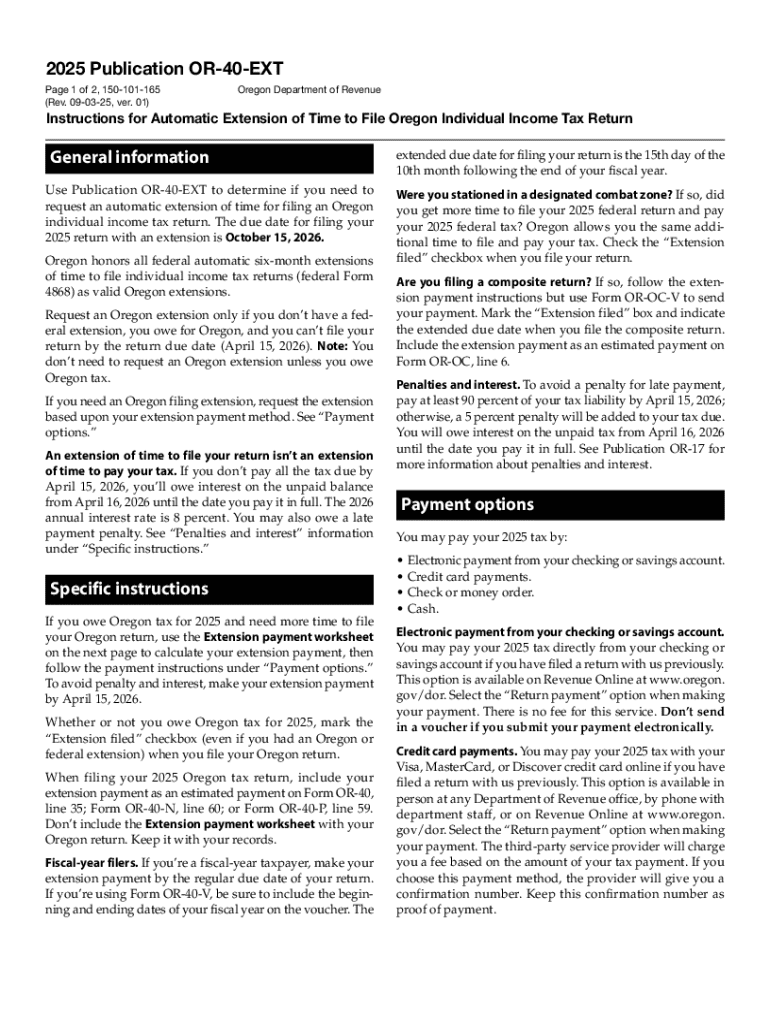
The Oregon Personal Tax ExtensionOR Form OR-40-EXT is an official document used to request an extension of time to file individual income tax returns in the state of Oregon. It provides taxpayers with additional time to prepare their filings accurately, ensuring compliance with state tax laws while minimizing errors and potential penalties. This form does not extend the time to pay any taxes owed; it solely extends the deadline for filing the tax return itself.
Key Features of the Form
- Used exclusively for personal income tax extensions in Oregon.
- Results in an automatic extension if filed correctly.
- Requires submission by the original tax filing deadline to be valid.
Examples and Scenarios
Consider a self-employed individual who experiences increased workload during tax season and requires more time to organize their financial statements. Filing the OR-40-EXT allows them to legally extend their filing period without facing immediate penalties.
How to Use the Oregon Personal Tax ExtensionOR Form OR-40-EXT
To effectively utilize this tax extension form, follow a series of steps designed to ensure compliance and timely submission.
- Determine Need for Extension: Assess whether additional time is required to gather and verify tax documentation.
- Download the Form: Access the OR-40-EXT from the Oregon Department of Revenue’s website or acquire a physical copy from relevant tax offices.
- Complete the Form: Provide accurate taxpayer details including name, Social Security Number, and intended filing period.
- Submit Prior to Deadline: File the completed form before the April 15th deadline to prevent issues with non-compliance.
Considerations
- Ensure any estimated tax payments are made by the original filing deadline to avoid penalties for underpayment.
- Maintain records of all communications and submissions related to the extension.
Steps to Complete the Oregon Personal Tax ExtensionOR Form OR-40-EXT
Completing the OR-40-EXT requires attention to specific details to ensure successful processing.
- Gather Required Information: Collect necessary personal and financial details, including previous year's tax documents if applicable.
- Enter Taxpayer Information: Fill in personal identification details as required.
- Estimate Tax Liability: Use current financial records to estimate taxes owed, ensuring alignment with state guidelines.
- Sign and Date the Form: Provide necessary signatures to validate the application before submission.
- Verify Submission Route: Decide whether to file online or through traditional mail, based on personal preference and accessibility.
Validation of Submission
Follow up to confirm that the form has been received by the Oregon Department of Revenue to avoid any complications arising from miscommunication or errors in delivery.
Filing Deadlines / Important Dates
Understanding important dates associated with the OR-40-EXT is crucial for timely and compliant filing.
- Regular Filing Deadline: The initial deadline for filing personal income taxes is April 15th. The extension application must be filed by this date.
- Extension Period: Successfully filing the OR-40-EXT generally provides an additional six months, moving the new filing deadline to October 15th.
Noteworthy Points
- Payment of any taxes due is still required by April 15th, regardless of the filing extension.
- Extensions apply solely to the filing of documentation, not to the settlement of owed taxes.
Form Submission Methods (Online / Mail / In-Person)
The OR-40-EXT can be submitted using various methods, each with specific requirements and benefits.
Online Submission
- Process: Upload the completed form through the Oregon Department of Revenue’s online platform.
- Advantages: Immediate confirmation of receipt and faster processing times.
Mail Submission
- Process: Send the document to the specified address for the Oregon Department of Revenue.
- Considerations: Ensure to use certified mail to obtain proof of delivery.
In-Person Submission
- Availability: Check if local IRS offices accept in-person submissions.
- Benefits: Direct submission allows for instant resolution of potential questions or clarification needs.
Required Documents
When filing for an extension using the OR-40-EXT, certain documents are necessary to support the request.
- Personal Tax Forms: Provide reference to previously filed returns.
- Income Statements: Gather tax year income details, including W-2s and 1099s.
- Payment Records: Submit evidence of any estimated tax payments made.
Tips for Documentation
To streamline the process, organize all documents before completing the extension form to ensure all required details are accurate and readily available.
Legal Use of the Oregon Personal Tax ExtensionOR Form OR-40-EXT
Understanding the legal implications of using the OR-40-EXT is vital for taxpayers.
Compliance
- Legal Basis: This form adheres to applicable state laws governing tax filing extensions, offering protection against penalties for late submission.
- Mandatory Deadlines: Timeliness is crucial—failure to adhere to specified deadlines might result in fines, regardless of the extension application.
Misuse and Consequences
- Penalties: Misrepresentation or failure to pay estimated taxes could lead to fines or interest charges.
- Resolution: In cases of dispute or error, contact the Oregon Department of Revenue for clarification and resolution procedures.