






Definition & Meaning
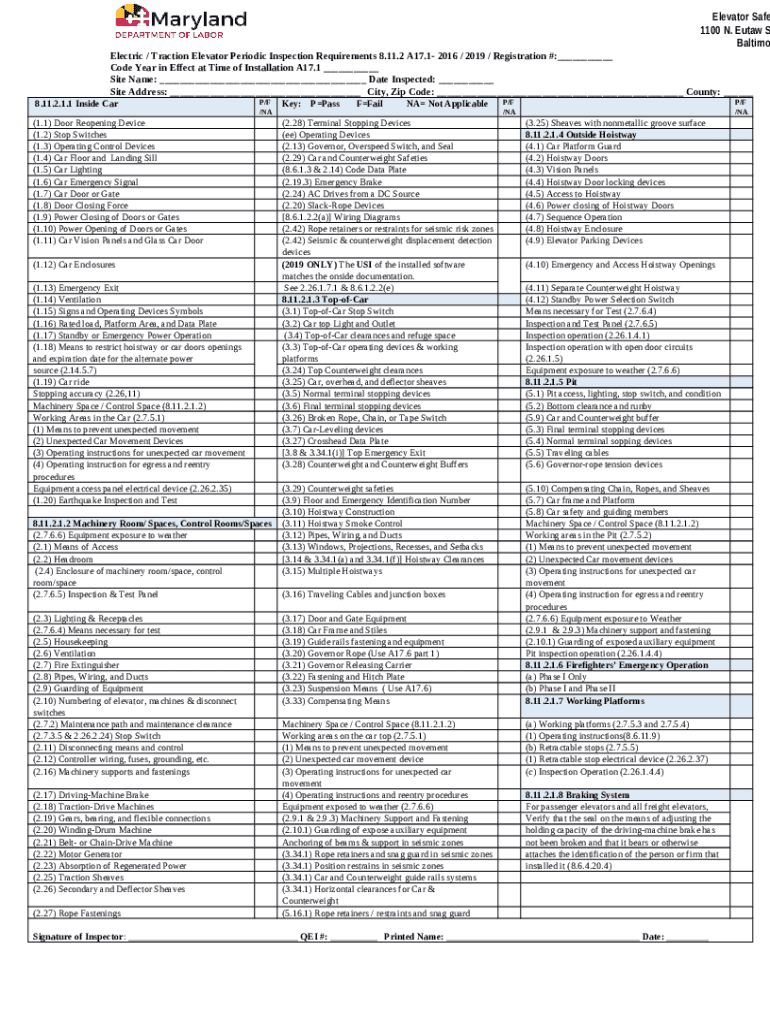
The "dllr state md us forms elevinspectionformMaryland Department of Labor" is a document used by the Maryland Department of Labor to ensure that elevators comply with safety and operational standards. It provides a structured format for inspectors to record their findings during periodic inspections. The form captures essential data such as the condition of door reopening devices, emergency signals, and braking systems, ensuring the elevators meet the safety criteria stipulated by A17.1 codes.
How to Use the Form
To effectively use the form, inspectors should adhere to a step-by-step approach:
-
Pre-Inspection Preparation: Gather all necessary tools and the form. Familiarize yourself with the elevator specifications and safety standards.
-
On-Site Inspection: Follow the checklist on the form to conduct a comprehensive assessment of the elevator's components.
-
Documentation: Record detailed notes on each checklist item, specifying any deficiencies or areas in need of repair.
-
Post-Inspection: Review the form for completeness and accuracy, ensuring all fields are filled out correctly.
-
Submission: Submit the completed form to the Maryland Department of Labor through the designated submission channels.
How to Obtain the Form
The form can be obtained through several channels to ensure accessibility:
-
Online Access: Visit the Maryland Department of Labor’s official website to download the form. Look for downloadable resources or forms sections.
-
Direct Request: Contact the Maryland Department of Labor directly via phone or email to request a physical copy.
-
Local Offices: Visit local Maryland Department of Labor offices where forms are typically available at reception or customer service counters.
Steps to Complete the Form
Successfully completing the form depends on attention to detail and knowledge of elevator systems. Here are the steps:
-
Fill Out General Information: Start by entering basic information, including inspection date and elevator location.
-
Component Check: Review each section dedicated to a specific elevator component. Assess the condition of each part, such as elevators' mechanical and safety systems.
-
Enter Findings: Clearly document any observations, including defects or compliance issues, in their respective sections.
-
Sign Off: The inspector must sign and date the form to validate the inspection.
-
Review and File: Double-check all entries for accuracy and completeness before filing the form with the appropriate department.
Key Elements of the Form
The form comprises several elements critical to evaluating elevator safety:
-
Elevator Identification: Includes specifications like model, capacity, and unique identifiers.
-
Component Checklist: Lists elements such as lighting, door sensors, and communication systems to be checked.
-
Safety Compliance Indicators: Sections to denote compliance with established safety codes.
-
Deficiency Reports: Spaces for recording any identified safety risks or non-compliance issues.
-
Inspector Comments: Area for additional notes and observations that may not fit within standard checklist items.
Legal Use of the Form
The form is legally binding and serves multiple purposes:
-
Regulatory Compliance: Ensures that elevators meet safety standards mandated by state regulations.
-
Legal Documentation: Acts as an official record in case of audits or incidents requiring investigation.
-
Liability Protection: Protects both elevator owners and inspectors by providing documented proof of compliance efforts.
Penalties for Non-Compliance
Failure to use or properly complete the form can lead to:
-
Fines: Imposed for not conducting required inspections or submitting fabricated data.
-
License Revocation: Inspectors may lose certification or right to operate if found negligent.
-
Legal Action: Potential lawsuits in the event of accidents or non-compliance incidents.
Digital vs. Paper Version
Both versions of the form offer distinct benefits:
-
Digital Version: Allows for easier editing, sharing, and storage. It can be filled out using document management platforms like DocHub, enhancing workflow efficiency.
-
Paper Version: Essential for locations lacking digital infrastructure and provides a tangible record for on-site reviews.
State-Specific Rules for Maryland
Compliance with the form requires awareness of Maryland's particular rules, which may include:
-
Inspection Frequency: Maryland may mandate specific intervals for elevator checks, requiring more frequent inspections in certain building types.
-
Certification Requirements: Inspectors must hold specific state certifications to use and submit the form.
-
Data Retention Policies: Guidelines on how long completed forms must be stored and who has access to them.