
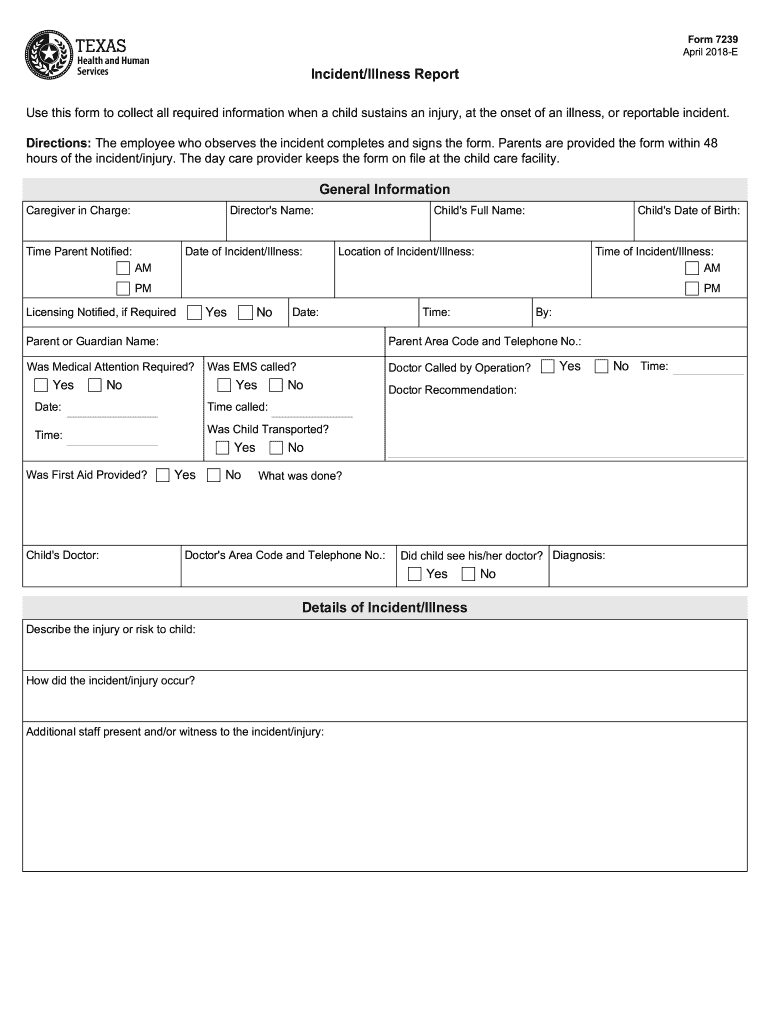







Definition and Significance of the 7239 Incident Illness Report
The 7239 Incident Illness Report is a crucial document deployed by childcare facilities, particularly in the state of Texas, to formally log any injuries, illnesses, or significant incidents involving children. This form is essential for maintaining compliance with state regulations regarding child safety and welfare. It serves both as a record for facility management and a communication tool for parents, ensuring that they are promptly informed about any incidents involving their children.
The report is designed to document a variety of situations, from minor injuries, such as scrapes and bruises, to more serious health concerns that necessitate immediate parental notification. By documenting the incident accurately, childcare facilities can maintain transparency and uphold their responsibility towards children's well-being. Additionally, the form can be instrumental in identifying potential areas of risk within the facility, helping to improve safety protocols and prevent future incidents.
Importance of Timely Notification
Parent notification is mandated, with the requirement that they are informed within 48 hours of the incident. This timing is vital not only for parental peace of mind but also for ensuring they can monitor their child’s health appropriately after any reported incident.
Steps to Complete the 7239 Incident Illness Report
Completing the 7239 Incident Illness Report requires several systematic steps to ensure that all necessary information is accurately recorded.
-
General Information Gathering:
- Collect basic details such as the child's name, age, and date of the incident.
- Document the time and location where the incident occurred.
-
Incident Description:
- Provide a comprehensive description of the incident. Include details about what happened, how it happened, and any factors that may have contributed to the incident.
- Note the actions taken immediately following the incident, including any first aid administered.
-
Assessment of Child’s Condition:
- Document the child's physical and emotional state post-incident.
- Include any observable injuries, symptoms, or behaviors that are significant.
-
Parent Notification:
- Clearly indicate whether the parents were notified, and if so, log the time and method of communication.
- Include any feedback or reactions from the parents following the notification.
-
Signature and Acknowledgment:
- The report must be signed by the staff member who observed the incident.
- Provide a space for parental acknowledgment, indicating they have received the report and understand the details.
Each step is critical for ensuring that all aspects of the incident are recorded comprehensively. Details may be reviewed later by regulatory bodies or legal entities if necessary.
Key Elements of the 7239 Incident Illness Report
The 7239 Incident Illness Report consists of several key components that must be meticulously filled out. Each section serves a distinct purpose in documenting the incident clearly and thoroughly.
- General Information: This includes the incident date, location, child’s name, and age.
- Description of Incident: A detailed narrative describing the event.
- Child’s Condition: Observations of the child's physical and emotional status.
- First Aid Administered: Documentation of any immediate care provided.
- Notifications Made: Record of communications with parents or guardians.
- Signatures: Required signatures of staff and acknowledgment by parents.
These elements work together to create a complete picture of the incident, ensuring all relevant facts are captured.
Legal Use of the 7239 Incident Illness Report
The 7239 Incident Illness Report is not just a reporting tool; it has legal significance, especially in child care settings. Legally, this report serves as documentation that a childcare facility complied with safety regulations and protocols mandated by state agencies.
- Regulatory Compliance: By maintaining these records, childcare providers demonstrate adherence to Texas child care licensing requirements, which can be critical during inspections or audits.
- Protection Against Liability: Accurate documentation can provide legal protection to childcare facilities. Should disputes arise regarding an incident, the report serves as a reference point illustrating the actions taken by caregivers and the condition of the child subsequent to the event.
- Transparency: The completed report fosters trust and transparency between childcare providers and parents. By keeping an accurate record, facilities are better equipped to address any concerns or issues that may arise regarding their care practices.
This legal framework is vital for ensuring that facilities operate within the bounds of the law while prioritizing the safety and welfare of the children under their care.
Common Scenarios for Completing the 7239 Incident Illness Report
When utilizing the 7239 Incident Illness Report, several common scenarios may necessitate its completion. These scenarios illustrate the form's utility in documenting various types of incidents.
-
Minor Injuries: For example, if a child trips and scrapes their knee during playtime, the staff will complete the form noting the incident details, any first aid applied such as cleaning the wound, and the parents’ notification.
-
Illness Reporting: If a child presents with a fever or shows signs of illness while at the facility, the report should document the symptoms observed and the steps taken to contact the parents and discuss the child's condition.
-
Behavioral Incidents: In cases where a child exhibits aggressive behavior towards another child, the facility should document the event, how it was handled, and any follow-up actions taken regarding behavioral management with both the involved children and their parents.
Each example highlights how diverse incidents in childcare settings require careful documentation to ensure compliance, safety, and effective communication with parents.




