
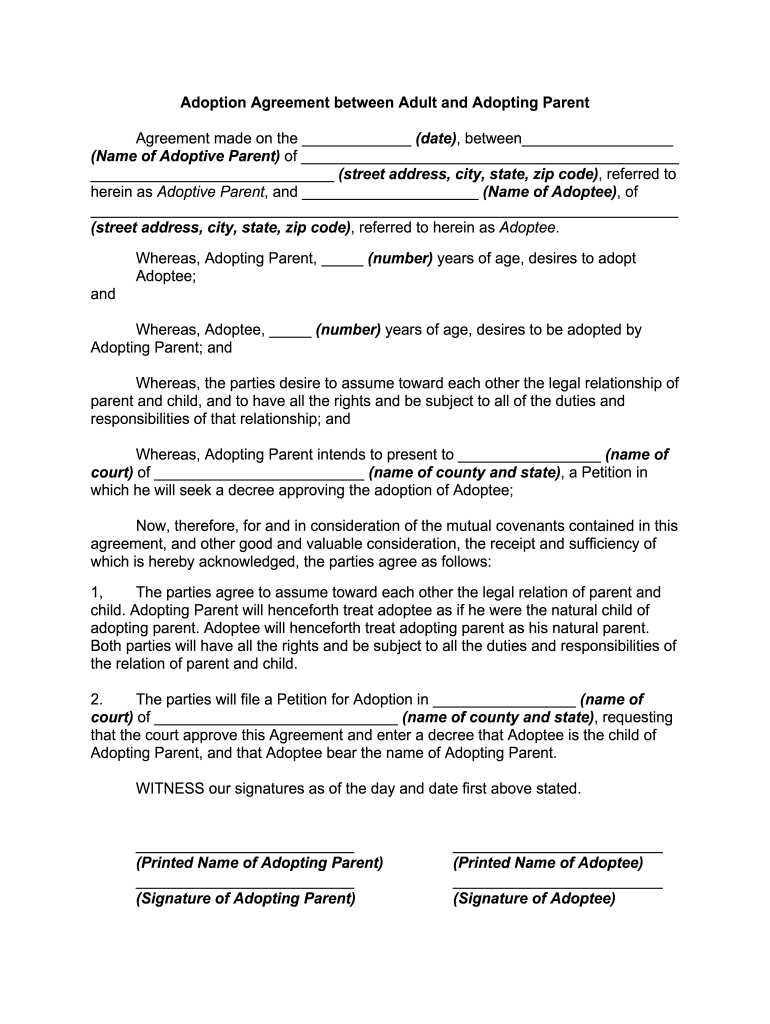







Definition and Meaning of Adult Adoption
Adult adoption refers to the legal process through which one adult can adopt another adult, establishing a parent-child relationship recognized by law. This type of adoption is often pursued by individuals who wish to formalize a familial bond, often in the context of step families or where there is a significant emotional connection, such as mentors or guardians adopting their mentees. Adult adoption does not require the consent of the biological parents once the adoptee is over the age of eighteen, making it simpler in many respects compared to minor adoption.
Key Legal Considerations
- Age Requirement: The adoptee must be at least eighteen years old.
- Petition for Adoption: A formal request needs to be submitted to the court.
- Consent: While the biological parents' consent is not necessary for adults, the adoptee must agree to the adoption.
- Court Approval: The final approval rests with the court, which ensures the adoption aligns with state laws.
Steps to Complete the Adult Adoption
Engaging in the adult adoption process involves several key steps to ensure all legal requirements are met and that the adoption is recognized by state authorities.
- Consult with an Attorney: It's advisable to seek legal counsel who specializes in adoption law to navigate the complex requirements specific to your location.
- Draft and File a Petition: Complete the necessary adult adoption forms, which may vary by state, and file them with the appropriate court.
- Set a Hearing Date: Once the petition is filed, a court date will be assigned. Both parties involved in the adoption must attend this hearing.
- Present Evidence: During the court hearing, present evidence of your relationship and any supporting documents that may strengthen your case.
- Obtain Finalization Order: If the court approves the adoption, you will receive a decree of adoption, legally recognizing the new parent-child relationship.
Important Terms Related to Adult Adoption
Understanding the terminology associated with adult adoption can clarify the process and expectations during this legal procedure. Familiar terms include:
- Petitioner: The individual initiating the adoption process.
- Adoptee: The adult being adopted.
- Decree of Adoption: The legal document issued by the court finalizing the adoption.
- Home Study: While typically not required for adult adoption, it may be requested in some jurisdictions if additional background is necessary.
State-Specific Rules for Adult Adoption
The regulations governing adult adoption can differ significantly from one state to another. In general, most states follow a similar procedure, but specific requirements or forms may vary:
- Oklahoma: In Oklahoma, the process is relatively straightforward. Required forms include the Petition for Adoption and Consent.
- Indiana: Indiana has specific adult adoption forms that include the Petition and Adoption Agreement, available as PDFs online.
- Michigan: In Michigan, the process includes submitting proof of relationship and might require a background check, depending on circumstances.
Understanding these variations is crucial, as each state may impose different documentation and approval timelines.
Examples of Using the Adult Adoption
Adult adoption can serve a wide variety of purposes and foster bonds in unique situations:
- Stepfamily Integration: A step-parent can adopt a stepchild over eighteen to formalize their relationship and possibly facilitate inheritance rights.
- Mentorship Bonds: A mentor who has played a significant role in an individual's life can adopt that mentee, providing a legal framework for their supportive relationship.
- Cultural Practices: In some cultures, adult adoption is used to signify familial bonds that are non-biological, allowing individuals to formally recognize significant relationships without traditional constraints.
Required Documents for Adult Adoption
When pursuing adult adoption, you'll need specific documentation to facilitate the process. Key documents typically include:
- Petition for Adoption: This legal document outlines the intentions of the adoption and includes identification details of both the petitioner and the adoptee.
- Consent Form: While biological parent consent is not mandatory for adult adoption, a consent form signed by the adoptee is required.
- Criminal Background Checks: Some jurisdictions might request background checks for the petitioner.
- Identification Documents: Both parties will need to provide identification, typically state-issued IDs or passports.
Gathering these documents ahead of time helps streamline the adoption process and ensures all necessary information is available for court review.




