






Definition and Meaning
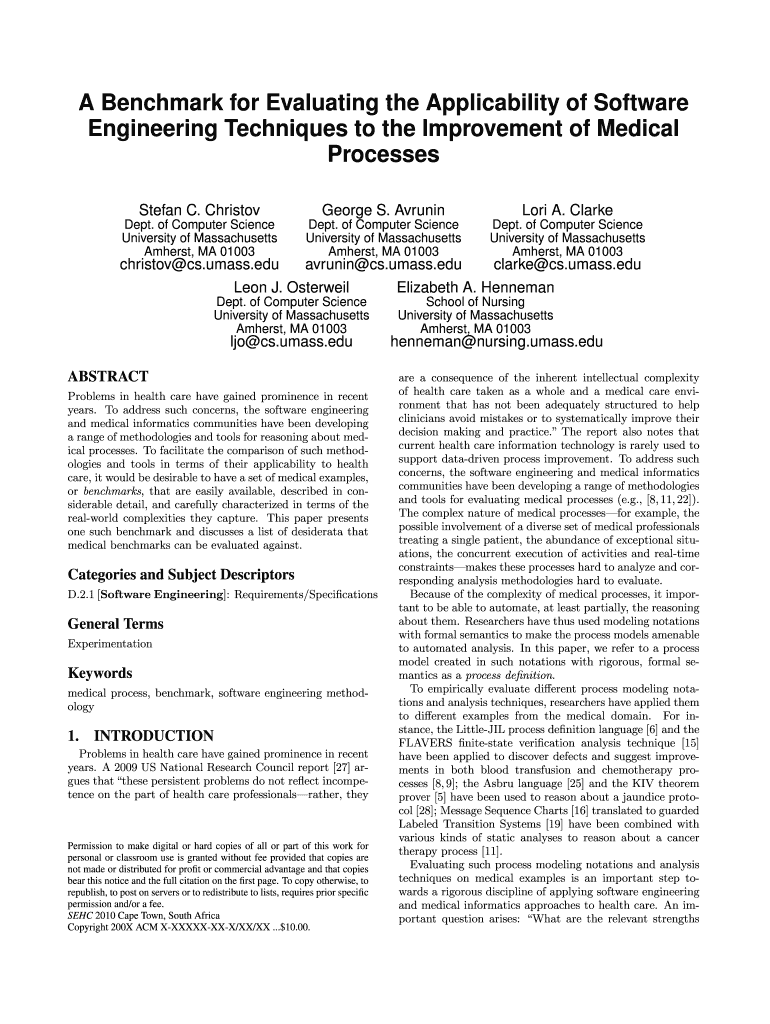
A benchmark for evaluating the applicability of software serves as a standardized metric that assesses the effectiveness of various software engineering techniques. Primarily applied in industry sectors like healthcare, these benchmarks focus on ensuring software methodologies align with real-world needs. In medical settings, for example, they might determine how efficiently a software process supports and enhances critical activities such as blood transfusion procedures. By imposing strict criteria on precision, detail, and representative scenarios, these benchmarks help ensure that software solutions meet rigorous, industry-specific standards.
Key Elements of the Benchmark
A comprehensive benchmark for evaluating software applicability includes several critical components:
- Desiderata: These are the desired attributes and characteristics that the software must possess or achieve.
- Use Cases: Scenarios that outline the software's application, its workflows, and environment, often illustrated through detailed medical examples.
- Process Definitions: Specifications that clearly describe the steps involved, using models like Little-JIL to ensure consistency and clarity.
- Properties and Bindings: Essential attributes the software must satisfy during operation, alongside the relationships that connect these properties to process steps. Each element contributes to a precise evaluation, measuring how well software can support intricate processes in different fields.
How to Use the Benchmark
Using this benchmark involves multiple steps:
- Identify the Software: Select the software intended for evaluation against specific benchmark criteria.
- Establish Goals: Define what improvements or capabilities the software should demonstrate post-evaluation.
- Apply the Benchmark Criteria: Use the benchmark's desiderata, use cases, and properties to measure software performance.
- Analyze Results: Review how the software performed across different scenarios, identifying areas for enhancement or modification. Employing this benchmark ensures a thorough analysis of the software's suitability, providing actionable insights for its refinement or deployment.
Steps to Complete the Evaluation
Conducting a software applicability evaluation entails several key steps:
- Preparation: Gather all necessary documentation and resources to conduct an informed evaluation.
- Incorporate Real-World Scenarios: Use representative examples that simulate actual operational environments, such as a blood transfusion process.
- Assessment and Measurement: Utilize the properties and definitions outlined in the benchmark to evaluate how well the software meets specified standards.
- Documentation: Record the evaluation process and outcomes, highlighting both strengths and areas requiring improvement.
- Feedback Integration: Use the evaluation findings to refine the software, incorporating feedback into future development cycles. Following these steps facilitates a structured and effective evaluation, contributing to informed decision-making regarding software deployment.
Examples of Using the Benchmark
This benchmark can be applied in various contexts, providing different examples of its utility:
- Healthcare Process Optimization: Improving the efficiency and accuracy of blood transfusion procedures by benchmarking process software.
- Enhancing Data Security: Evaluating software against criteria that prioritize data protection and compliance in handling sensitive medical records.
- Streamlining Administrative Workflows: Assessing tools that automate documentation and patient management in a medical facility. Each example underscores the benchmark's versatility in assessing diverse software solutions, promoting precision and reliability in implementation.
Who Typically Uses the Benchmark
Certain professionals and entities consistently rely on this benchmark for software evaluation:
- Software Developers: Seeking to align products with industry requirements and improve software applicability.
- Healthcare Administrators: Ensuring that system implementations meet rigorous healthcare standards and enhance operational safety.
- Quality Assurance Teams: Conducting detailed evaluations to verify that software products meet required benchmarks before deployment. These individuals, among others, benefit from using such benchmarks to achieve their respective goals of improved functionality, compliance, and enhanced service delivery.


Important Terms Related to the Benchmark
Several key terms are crucial when discussing software applicability benchmarks:
- Desiderata: Defines the essential attributes sought in the software being evaluated.
- Properties: The characteristics the software must exhibit to meet benchmark criteria.
- Little-JIL: A process modeling language used for precise process definitions in the benchmark.
- Bindings: Connections between properties and the steps in a process, critical for evaluating compliance with the benchmark. Understanding these terms aids in fully grasping the benchmark’s structure and the criteria used for software evaluation.
Legal Use of the Benchmark
Utilization of this benchmark must comply with legal and ethical considerations:
- Adherence to Standards: Ensuring all evaluations meet prevailing industry and regulatory standards.
- Intellectual Property Rights: Respecting proprietary software features while conducting assessments.
- Compliance with Laws: In healthcare settings, aligning the evaluation process with HIPAA and other relevant legislation for data security. Abiding by these legal aspects ensures that the benchmark is used responsibly and maintains its integrity across different applications.