






Definition and Purpose of Medical School Admissions Interviews
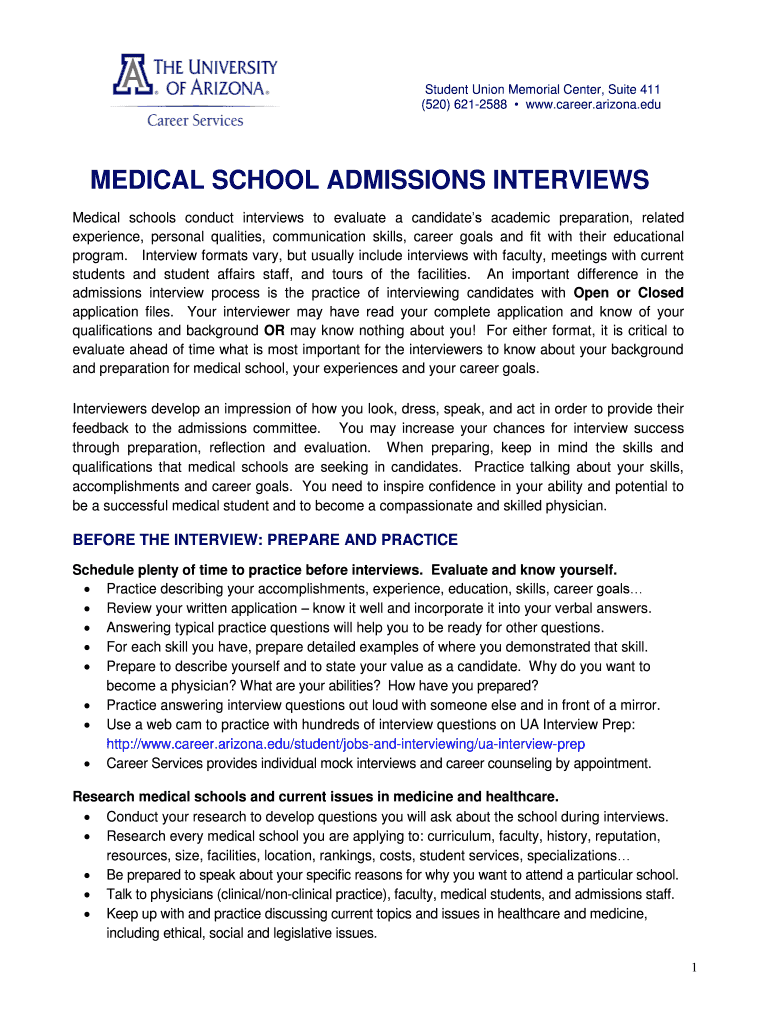
Medical school admissions interviews serve as a pivotal component in the evaluation process for prospective medical students. These interviews are designed to assess not only academic qualifications but also the interpersonal skills, ethical reasoning, and motivation of candidates. They allow admissions committees to gain a deeper understanding of applicants beyond written applications, ensuring candidates possess the qualities necessary for a successful medical career.
Evaluation Criteria
- Communication Skills: Candidates must effectively articulate their thoughts and ideas.
- Analytical Thinking: The ability to analyze complex problems and propose effective solutions.
- Empathy and Compassion: Demonstrating understanding and care for others' feelings and perspectives.
- Ethical Judgment: Capability to navigate moral and ethical challenges common in the medical field.
Preparation Strategies for Applicants
To excel in medical school interviews, thorough preparation is crucial. Applicants should engage in several strategies to ensure they present the best version of themselves.
Self-Reflection and Research
- Identify Motivation: Understand and articulate reasons for pursuing a medical career.
- Research Schools: Gather information about specific programs, faculty, and unique offerings.
- Review Personal Experiences: Reflect on past experiences that showcase qualities such as leadership and teamwork.
Practice and Feedback
- Mock Interviews: Participate in simulated interviews to build confidence and receive constructive feedback.
- Behavioral Question Techniques: Practice the STAR method (Situation, Task, Action, Result) for responding to common questions.
- Non-Verbal Skills: Work on body language, eye contact, and posture.
Appropriate Professional Attire
Presenting oneself professionally in attire is vital as it reflects respect and seriousness about the opportunity.
Dress Code Guidelines
- Men's Attire: Opt for a conservative suit in a neutral color like navy or charcoal. Pair with a light-colored dress shirt and a subdued tie.
- Women's Attire: Choose a tailored suit with a skirt or pants in a neutral shade, complemented by a professional blouse.
Steps to Completing the Interview Process
The medical school admissions interview process consists of several phases, each critical to the overall impression candidates leave.
Pre-Interview Preparation
- Confirm Interview Dates: Acknowledge receipt of interview details promptly.
- Gather Required Materials: Compile any requested documents, such as transcripts and a resume.
- Arrange Logistics: Plan travel or virtual setup well in advance to avoid last-minute issues.
During the Interview
- Engage with Interviewers: Listen carefully and ask insightful questions about the program.
- Respond Thoughtfully: Answer questions clearly and concisely, utilizing real examples when applicable.
- Demonstrate Enthusiasm: Show genuine interest in the medical field and the specific school.
Post-Interview Steps
- Send Follow-Up Notes: Express gratitude through a thank-you email to interviewers.
- Self-Assessment: Evaluate personal performance and note areas for improvement for future interviews.
Legal and Ethical Considerations
Adhering to legal and ethical standards is crucial for both interviewers and candidates within the admissions process.
Confidentiality and Fairness
- Equal Opportunity: Ensure non-discriminatory practices throughout the interview process.
- Data Protection: Safeguard applicant information with robust data privacy measures.
Common Questions and Scenario Examples
Preparing for common questions and likely scenarios helps applicants provide well-considered responses.
Typical Interview Questions
- "Why do you want to attend our medical school?"
- "How would you handle a challenging ethical dilemma in a clinical setting?"
- "Describe a time you worked effectively within a team."
Real-World Scenarios
- Ethical Dilemmas: Discuss approaches to situations where patient confidentiality might conflict with public interest.
- Team Dynamics: Describe handling disagreement resolution within a healthcare team context.
Key Elements of the Interview Event
The interview structure is composed of essential elements that guide the process.
Multi-Mini Interviews (MMI)
- Station-Based Evaluation: Candidates rotate through a series of stations where various skills are assessed.
- Role-Playing Scenarios: Engage in mock clinical or ethical situations.
Traditional Panel Interviews
- Panel of Interviewers: Typically includes faculty and sometimes current students or alumni.
- Comprehensive Discussion: Allows for deeper exploration of candidate’s experiences and aspirations.
Importance of the Interview Process
Interviews play an essential role in separating candidates who are not only academically qualified but also personally suited for the healthcare environment.
Benefits for Institutions
- Assess Holistic Fit: Determine how well a candidate aligns with the school’s mission and values.
- Build Diverse Cohorts: Select individuals from various backgrounds to foster a rich learning environment.
Benefits for Candidates
- Showcase Interpersonal Skills: Highlight traits that written applications cannot capture.
- Clarification Opportunity: Address any potential concerns or gaps in the application.