




01. Edit your non massachusetts portion of deductions online
Type text, add images, blackout confidential details, add comments, highlights and more.

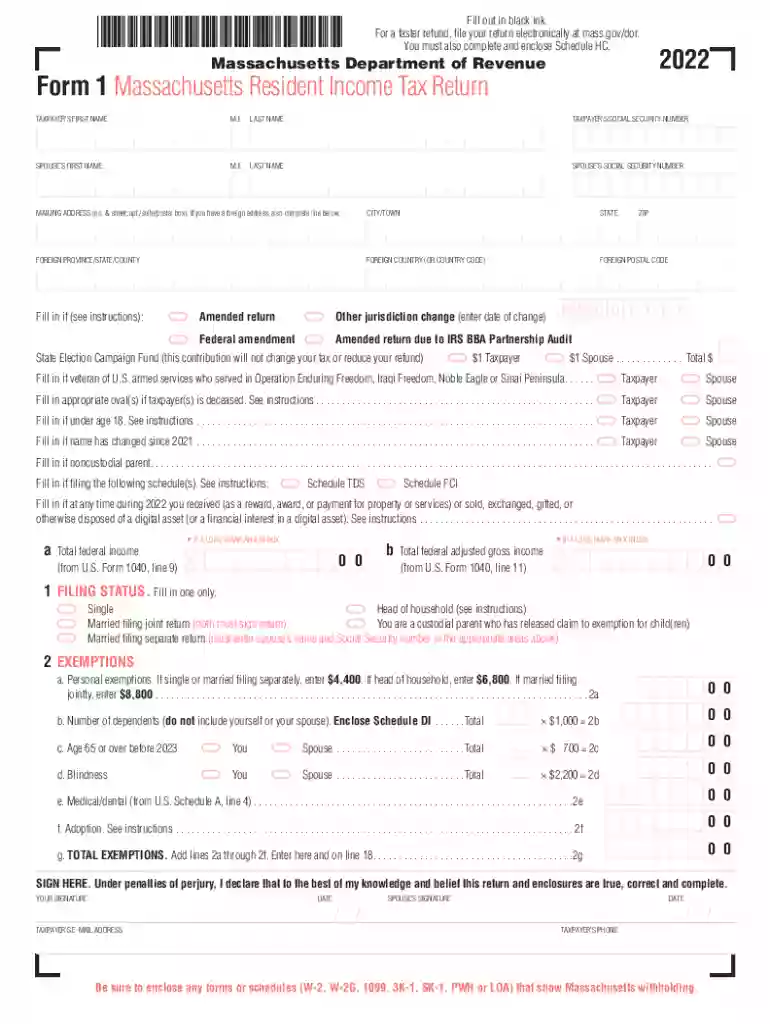
Type text, add images, blackout confidential details, add comments, highlights and more.

Draw your signature, type it, upload its image, or use your mobile device as a signature pad.

Send how to calculate non massachusetts portion of deductions via email, link, or fax. You can also download it, export it or print it out.
Form 1-NR/PY, known as the Massachusetts Nonresident/Part-Year Tax Return, is a crucial document for individuals who were either nonresidents or part-year residents of Massachusetts during the tax year. It enables such taxpayers to report income received from Massachusetts sources and determine the correct tax amount due.


Individuals who should file Form 1-NR/PY include:
Massachusetts has unique taxation rules for nonresidents and part-year residents that differ from other states.
Being thorough and accurate when completing Form 1-NR/PY can help avoid issues with the Massachusetts Department of Revenue and ensure compliance with state tax obligations.
We've got more versions of the non massachusetts portion of deductions form. Select the right non massachusetts portion of deductions version from the list and start editing it straight away!
| Versions | Form popularity | Fillable & printable |
|---|---|---|
| 2025 | 4.4 Satisfied (54 Votes) | |
| 2024 | 4.9 Satisfied (28 Votes) | |
| 2023 | 4.5 Satisfied (35 Votes) | |
| 2022 | 4.8 Satisfied (26 Votes) | |
| 2021 | 4.8 Satisfied (30 Votes) | |
| 2020 | 4.3 Satisfied (154 Votes) | |
| 2019 | 4.1 Satisfied (27 Votes) | |
| 2018 | 4.1 Satisfied (52 Votes) | |
| 2017 | 4.2 Satisfied (65 Votes) | |
| 2017 | 3.9 Satisfied (48 Votes) | |
| 2016 | 4.4 Satisfied (637 Votes) | |
| 2015 | 4.4 Satisfied (317 Votes) | |
| 2014 | 4 Satisfied (60 Votes) | |
| 2013 | 4 Satisfied (44 Votes) | |
| 2012 | 4 Satisfied (49 Votes) |
At DocHub, your data security is our priority. We follow HIPAA, SOC2, GDPR, and other standards, so you can work on your documents with confidence.
If filing both as a nonresident and part-year resident, complete and enclose. Schedule R/NR, Resident/Nonresident Worksheet, before proceeding any further. 5Read more
The MA Form 1-NR/PY should be mailed to the address listed in the Form instructions for part-year and nonresident individuals. Please be aware that the addressRead more


