Definition & Meaning
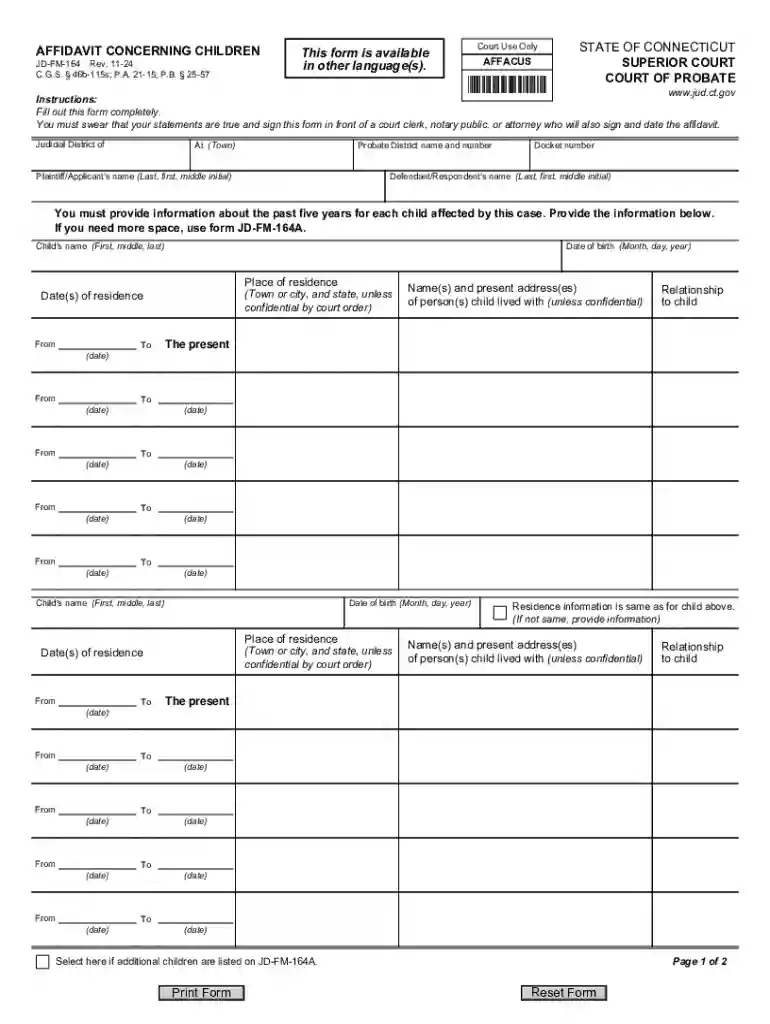
An Affidavit Concerning Children is a formal document required by the Connecticut Superior Court. It gathers critical information regarding the past five years of residency and details about the custody and living arrangements of children who are part of a legal case. This affidavit is crucial in family law proceedings where child custody and visitation rights are being determined. It serves as a sworn statement that provides the court with factual insights into the child's history and current situation.
- Purpose: The affidavit offers a clear view of the child's upbringing and stability, enabling the court to make informed decisions in the best interest of the child.
- Nature: It is a sworn statement, meaning the individual who signs it must do so under oath, affirming that all the information provided is true to the best of their knowledge.
How to Use the AFFIDAVIT CONCERNING CHILDREN
To efficiently utilize the Affidavit Concerning Children, it is essential to understand the required steps and contents.
- Gather Information: Collect all pertinent details about the children's residences and guardians over the past five years. This includes addresses, dates of residence, and the names of the people with whom the children lived.
- Complete Required Sections: Fill in all sections personal to the plaintiff and defendant information, children's current living arrangements, and any relevant legal matters such as previous custody cases.
- Ensure Truthfulness and Accuracy: Double-check all details for accuracy. The affidavit must reflect honest accounts to maintain its validity.
Signing the Document
- Court Official Involvement: The affidavit must be signed in the presence of a court official to verify the authenticity and truthfulness of its contents.
- Witness Requirements: In some cases, additional witnesses may be required to validate the document under state laws.
Steps to Complete the AFFIDAVIT CONCERNING CHILDREN
Completing the affidavit involves several critical steps that must be followed meticulously to ensure its acceptance by the court.
- Read Instructions Carefully: Familiarize yourself with the form's requirements by reading all the instructions thoroughly.
- Provide Personal Information: Include detailed personal information for both the plaintiff and the defendant. Ensure names, addresses, and contact information are current.
- Detail Living Arrangements: Accurately describe the living arrangements of the children over the past five years, specifying who provided care and for what time periods.
- Disclose Previous Legal Matters: Note any prior custody or visitation cases to provide a complete legal history.
- Review and Verify: Before signing, review the complete form to verify that all information is correct and comprehensive.
- Sign Under Oath: Sign the affidavit in front of a court official, attesting to the truthfulness of the information provided.
Why Should You Use the AFFIDAVIT CONCERNING CHILDREN
The Affidavit Concerning Children is vital for various reasons in legal proceedings related to child custody.
- Legal Compliance: Provides required documentation in family law cases as mandated by the court.
- Supporting Child's Best Interest: Helps the court evaluate what custody arrangement best supports the child's well-being and stability.
- Comprehensive Documentation: Supplies a detailed account of the child's past and current home environments and care situations.
Key Elements of the AFFIDAVIT CONCERNING CHILDREN
Understanding the core components of this affidavit is crucial for accurate completion.
- Residency Information: Addresses and dates of all residences for children in the past five years.
- Personal Information: Detailed data on both plaintiff and defendant involved in the case.
- Custody Details: Current and past custody arrangements, including visitation schedule histories.
- Legal Matters: Information on any previous or ongoing legal proceedings regarding the children.
State-Specific Rules for the AFFIDAVIT CONCERNING CHILDREN
In Connecticut, specific rules and guidelines govern the submission and content of the affidavit.
- Submission Deadlines: Must adhere to filing deadlines set by the court which can vary per case.
- Signature Verification: Requires signing before authorized officials to verify authenticity.
- Format and Submission Guidelines: Follow state court instructions regarding format, which may include electronic submission options or format-specific requirements.
State-by-State Differences
While this content is tailored to Connecticut, it's important to note differences that may exist in other states regarding affidavits for similar purposes.
- Different Form Requirements: Some states may have distinct forms or additional requirements regarding child information.
- Varied Legal Frameworks: State laws differ in custody and residency documentation, influencing what details are necessary for inclusion.
- Presentation and Signing Protocols: The allowed methods for signing and submitting such documents, whether digital or in-person, can vary significantly.
Important Terms Related to AFFIDAVIT CONCERNING CHILDREN
Understanding key terminology assists in accurately completing and interpreting the affidavit.
- Plaintiff/Defendant: The parties involved in the legal dispute concerning the children.
- Residency & Custody: Terms refer to the living arrangements and care responsibilities for the children.
- Oath and Affirmation: These legal assurances accompany the signing of the affidavit, which confirms the truthfulness of the information provided.
Penalties for Non-Compliance
Non-compliance with the affidavit's submission can have serious repercussions.
- Legal Sanctions: Potential for penalties or adverse judgments if the form is not completed or submitted accurately.
- Custody Impact: Incomplete or dishonest affidavits may negatively affect custody proceedings, possibly influencing the final court decision against the non-compliant party.
These diverse aspects of the Affidavit Concerning Children provide vital insights and guidance for users needing to interact with this critical legal document.