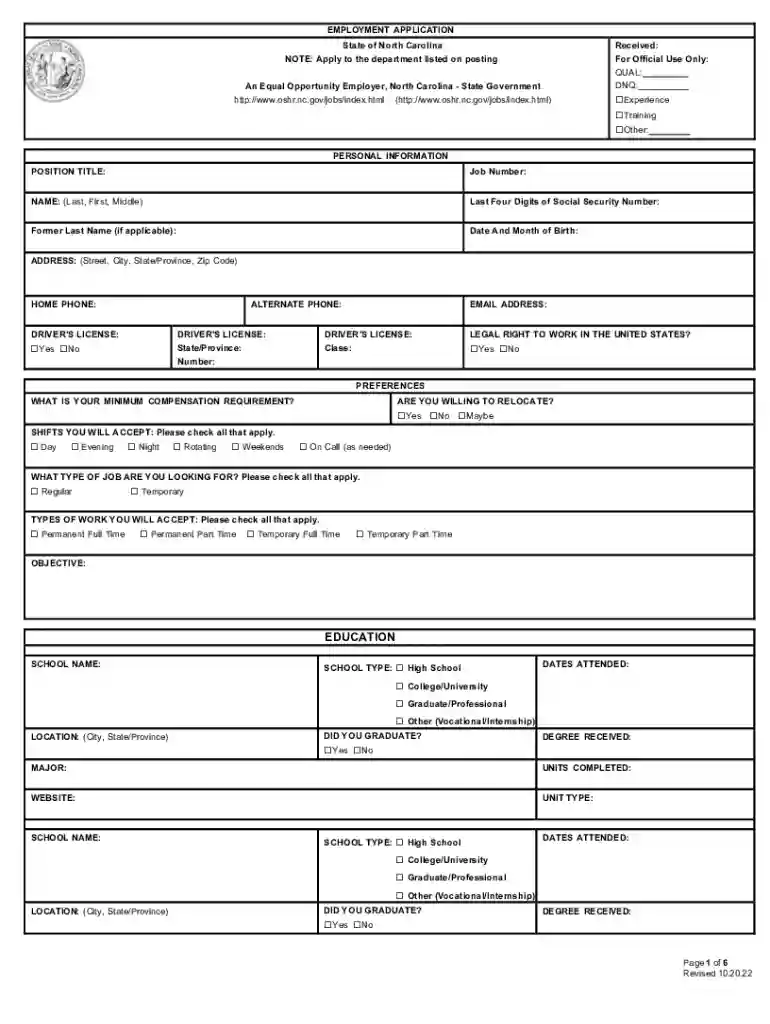
Definition and Meaning of Employment Application
An employment application is a standardized form used by employers during the hiring process to collect detailed information about job applicants. It serves as a preliminary step to assess suitability for a particular role within an organization. Typically, these forms gather personal data, educational background, work experience, and additional qualifications.
- Purpose: Primarily used to screen applicants and ensure they meet initial criteria for open positions.
- Consistency and Fairness: By requiring all applicants to fill out the same form, employers maintain consistency in evaluation procedures, contributing to fair hiring practices.
- Documentation: The form provides a documented record that can be referenced throughout the hiring process.
Steps to Complete the Employment Application
Completing an employment application typically involves several steps that must be meticulously followed to ensure accuracy and completeness:
- Review Instructions: Carefully read any guidelines provided with the application to understand what information is required.
- Gather Necessary Information: Collect all necessary details such as personal identification, education history, employment history, references, and certifications.
- Fill Out Personal Information: This includes name, address, contact details, and, sometimes, social security numbers.
- Detail Work History: List previous employers, job titles, responsibilities, and dates of employment.
- Provide Educational Background: Include schools attended, degrees earned, and other relevant training or certifications.
- Answer Optional Questions: Many applications have sections for voluntary disclosures, such as equal opportunity data or background checks.
- Review and Proofread: Double-check all entries for accuracy and completeness before submission.
Key Elements of the Employment Application
A comprehensive employment application contains several critical elements that employers rely on for making informed hiring decisions:
- Personal Identification: Full name, address, phone number, and email.
- Employment History: Detailed descriptions of past jobs, including roles, responsibilities, and tenure.
- Education: Institutions attended, degrees earned, and certifications obtained.
- Skills and Qualifications: Proficiency in relevant skills and any special qualifications that align with the job.
- References: Contact information for professional references who can vouch for the applicant’s work ethic and skills.
- Legal Disclosures: Statements or questions regarding legal eligibility to work and any necessary background checks.
How to Use the Employment Application
An employment application is typically employed at the early stages of the hiring process:
- Screening Tool: Initially, applications help in shortlisting candidates who meet the basic job qualifications.
- Verification: Employers may use the information provided to verify credentials, contact references, and authenticate employment history.
- Interview Preparation: Application details can guide interviewers in tailoring their questions based on the applicant's experiences and skills.
Why Should You Use the Employment Application
Employers and applicants benefit from the structured format of an employment application:
- Standardization: Provides a consistent framework for collecting applicant information, facilitating easier comparison.
- Efficiency: Speeds up initial applicant screening by clearly displaying all relevant data systematically.
- Compliance: Helps employers maintain compliance with labor laws by documenting required disclosures and consent forms.
Legal Use of the Employment Application
Employers must navigate various legal considerations when creating and using employment applications:
- Avoid Discrimination: Ensure compliance with Equal Employment Opportunity laws by excluding questions that may lead to discrimination.
- Confidentiality: Implement measures to protect the applicant's personal information, complying with data protection laws.
- Consent Forms: Include sections for applicants to consent to background checks or drug testing.
State-Specific Rules for the Employment Application
Employment applications may be subject to specific regulations varying by state:
- Ban-the-box Laws: Some states restrict inquiries about criminal history on job applications.
- Pay History Bans: Regulations in certain jurisdictions prohibit asking for salary history to prevent biased salary offers.
Software Compatibility for Employment Applications
Using the right software can streamline the process of managing and processing employment applications:
- DocHub: Supports various file formats, enabling easy editing, signing, and sharing of electronic employment applications.
- Integration with HR Systems: Compatibility with platforms like Google Workspace facilitates efficient handling of digital employment applications.
- Security: Ensures data protection through SSL encryption and secure authentication protocols, maintaining applicant confidentiality.
Examples of Using the Employment Application
Real-world scenarios highlight how employment applications are practically employed:
- Retail Chains: Use them for hiring seasonal workers, leveraging the application to quickly gather and process numerous applicants.
- Educational Institutions: Academic admins might use them for hiring faculty within strict legal and educational qualifications.
- Technology Firms: Assess varied technical expertise amongst applicants through targeted application questions.
Each block offers detailed insight, ensuring comprehensive understanding and usability of the employment application process, aligning with the goal of maximizing reader utility and clarity.