






Definition & Meaning
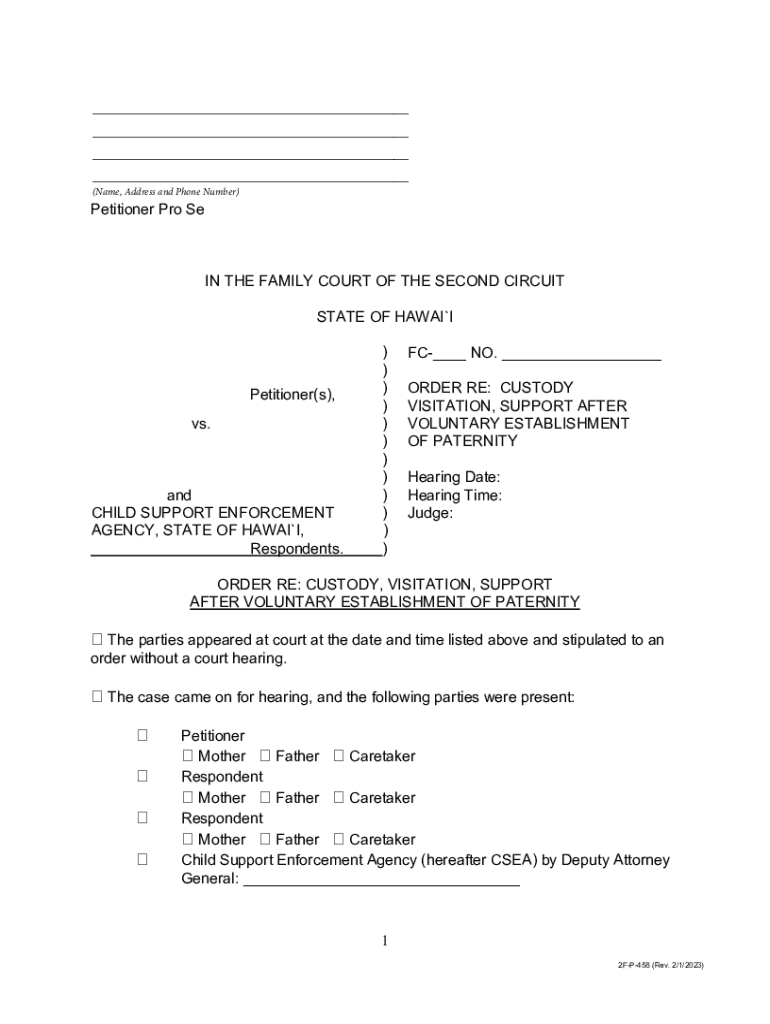
The "Order Re: Custody, Visitation, Support After Voluntary Establishment of Paternity" is a legal document primarily used in family law within the United States. It outlines various arrangements for children following the voluntary establishment of paternity. Such arrangements include legal and physical custody agreements, visitation rights, and child support obligations. This order is crucial for formalizing responsibilities and rights, ensuring both parents understand their roles in raising their children and complying with legal guidelines.
Key Elements of the Order
Several core elements determine the structure and enforceability of this order. These include:
- Custody Arrangements: Specifies legal and physical custody, including primary residence and decision-making authority over the child's welfare, education, and health.
- Visitation Rights: Details the schedule and guidelines for the non-custodial parent to spend time with the child, which may include holidays and school vacations.
- Child Support Obligations: Outlines payment responsibilities of the non-custodial parent, including monthly payments and provisions for healthcare coverage.
Legal Use of the Order
This order acts as a binding legal contract enforceable by the court. It is essential for:
- Enforcing Compliance: Ensures both parents adhere to the agreed terms, minimizing disputes over custody, visitation, and support.
- Legal Protection: Provides legal recourse if a parent fails to meet their obligations or violates the established terms.
- Modification: Allows for future modifications based on significant changes in circumstances, ensuring the child's welfare remains a priority.
Steps to Complete the Order
Completing this order involves several key steps, ensuring all legal requirements are met:
- Obtain the Form: Access the form from your local family court or its website.
- Complete Required Information: Include details about both parents, the child, and the voluntary establishment of paternity.
- Specify Arrangements: Clearly outline custody, visitation, and support details.
- Review for Accuracy: Check all information to ensure accuracy and completeness.
- File with the Court: Submit the completed form to the family court for approval.
How to Obtain the Order
Obtaining the order requires interaction with the local family court system:
- Online Access: Many courts provide downloadable forms on their official websites.
- In-Person Request: Visit the local family court to request a physical copy of the necessary documentation.
- Legal Assistance: Hiring a family law attorney can streamline the process and ensure all legal nuances are appropriately addressed.
Important Terms Related to the Order
Understanding key terms associated with this order aids in proper comprehension and application:
- Paternity: The legal acknowledgment of the parental relationship between a father and a child.
- Custody: Legal authority to make decisions about the child's welfare and the child's living arrangements.
- Visitation: The non-custodial parent's right to spend time with the child.
- Child Support: Financial payments made by a non-custodial parent to support the child's living expenses and needs.
State-Specific Rules
Family law varies significantly across different U.S. states. Key considerations include:
- Jurisdictional Variations: Different states have unique laws governing the establishment of paternity and related orders.
- State-Specific Requirements: Certain states have specific documentation and procedural requirements for finalizing the order.
- Adherence to Local Laws: Parents must comply with state-specific guidelines to obtain a legally enforceable order.
Examples of Using the Order
Real-world scenarios illustrate the practical application of this order:
- Case of Joint Custody: Parents may agree on equal custody rights, with alternating weeks or weekdays.
- Visitation Plan for Non-Custodial Parents: A structured weekday and weekend visiting schedule ensures ongoing parent-child interaction.
- Annual Child Support Adjustments: Orders may include clauses for annual reviews of financial obligations to reflect changes in income or living costs.
Required Documents
Accurate completion of the order requires specific documentation:
- Paternity Proof: Documentation of voluntary acknowledgment or legal establishment of parental status.
- Financial Information: Payroll data or tax returns for calculating child support obligations.
- Previous Court Orders: Any existing orders related to custody, visitation, or support.
Who Typically Uses the Order
The order is primarily utilized by:
- Separated or Divorced Parents: Establishing clear terms post-separation.
- Unmarried Parents: Legalizing custody and support arrangements after voluntary paternity acknowledgment.
- Family Law Practitioners: Lawyers specializing in family law to assist clients in crafting comprehensive agreements.