
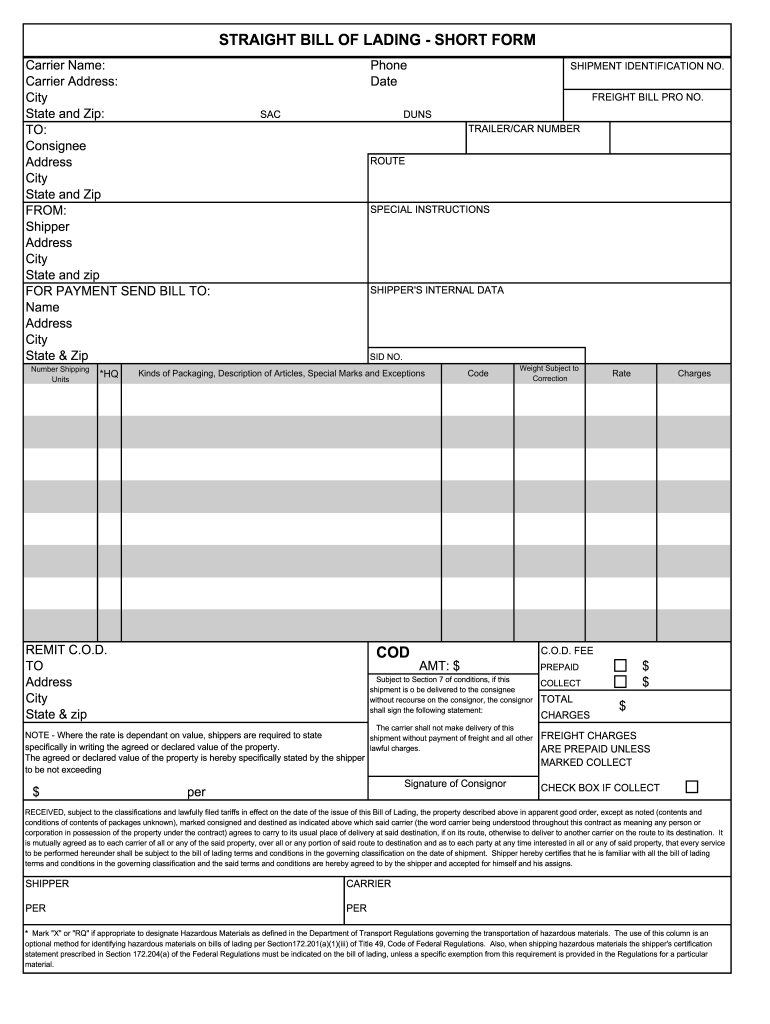







Definition and Meaning of a Bill of Lading (BOL)
The Bill of Lading, commonly referred to as BOL, is a pivotal document in the shipping industry, functioning as a contract between the shipper and the carrier. It serves three primary purposes: it is a receipt for the goods being transported, a document of title, and evidence of the contract of carriage. In practical terms, a BOL includes crucial details about the shipment such as the quantity, type, and destination of the goods. This document is essential for tracking the consignments and verifying delivery.
Key Elements of a Bill of Lading
Understanding the core components of a Bill of Lading is vital for its effective use. Essential elements include:
- Shipper and Consignee Details: Names and addresses are crucial for clear identification and delivery specifications.
- Shipment Identification Numbers: These track and trace cargo from origin to destination.
- Description of Goods: Information such as the nature, quantity, and special handling instructions ensure proper care and compliance during transit.
- Freight Charges and Payment Terms: Specifies who is responsible for freight payments and any additional transport-related costs.
- Carrier Information: Identifies the transport company responsible for moving the goods, including contact information.
How to Use the Bill of Lading
For shippers and logistics professionals, using a Bill of Lading effectively requires understanding its structure and purpose. Here are some key steps:
-
Check Shipment Details: Before shipment, ensure all listed details such as quantity, weight, and type of goods accurately match the consignment.
-
Verify Legal Agreements: Ensure the terms and conditions satisfy both shipper and carrier obligations.
-
Confirm with Carrier: Both parties should acknowledge any special handling instructions and terms of delivery to avoid disputes.
-
Signatures and Date: Ensure the document has the necessary signatures from the shipper and the carrier to validate the contract.
Legal Use and Compliance of the BOL
A Bill of Lading holds significant legal weight in shipping transactions. Its enforceability lies in its role as a document of title, which allows the holder to take possession of the consigned goods. Certain regulations govern the terms detailed within a BOL, and compliance is mandatory to enforce the contractual obligations legally. This includes adherence to the Uniform Commercial Code in the U.S., which outlines obligations and liability in shipping contracts.
Steps to Complete the Bill of Lading
-
Prepare Shipper and Consignee Information: Include full names, addresses, and contact details.
-
Document Carrier Details: Include the carrier's name, contact details, and identification numbers.
-
List Description of Goods: Itemize each shipment with descriptions, dimensions, and weights.
-
Define Payment Terms: Clearly outline the freight charges, billing details, and payment methods.
-
Sign and Date the Document: Obtain all necessary signatures to validate the agreement.
Who Typically Uses the Bill of Lading
The Bill of Lading is most commonly used by businesses and entities involved in the logistics and transportation of goods. This includes:
- Manufacturers shipping products to distributors or directly to retailers.
- Logistics Companies coordinating transportation and delivery.
- Importers and Exporters handling international shipments.
- Retailers that directly manage freight transportation for products.


State-Specific Rules for the Bill of Lading
Though standardized across the country, certain states may have specific mandates regarding the terms and conditions or additional documentation needed alongside the BOL. For instance, compliance with state-level road haulage regulations may require additional permits or endorsements in specific regions. It's crucial for shippers and carriers to be aware of these variances to ensure legal conformity.
Digital vs. Paper Version of the Bill of Lading
The shipping industry is increasingly adopting digital BOLs due to their convenience and efficiency. Digital versions streamline the documentation process, allowing for faster completion, easier edits, and straightforward transmission. However, paper BOLs remain prevalent in certain sectors where digital adoption is slow or where physical documentation is legally required. Each format has its distinct advantages and considerations:
- Digital BOLs: Offer speed, ease of access, and enhanced data accuracy through automation.
- Paper BOLs: Are often used where digital infrastructure is lacking or when hard copies are mandatory.
Important Terms Related to the Bill of Lading
Several terms are integral to understanding how BOLs function:
- Consignor: The party shipping the goods.
- Consignee: The individual or organization intended to receive the shipment.
- Freight Prepaid: Indicates freight charges are paid by the shipper before shipment.
- Freight Collect: Freight charges are payable by the receiver upon delivery.
- Notify Party: The individual or organization to be informed about the cargo's arrival.
Form Submission Methods
A Bill of Lading can be processed through several methods, ensuring flexibility for all involved parties. While traditional methods include mailing or handing over a printed BOL to the carrier, more contemporary approaches utilize online platforms and email submissions. These digital solutions enhance efficiency and allow for effective tracking of documentation, which is increasingly critical in modern logistics.




