






Definition & Meaning
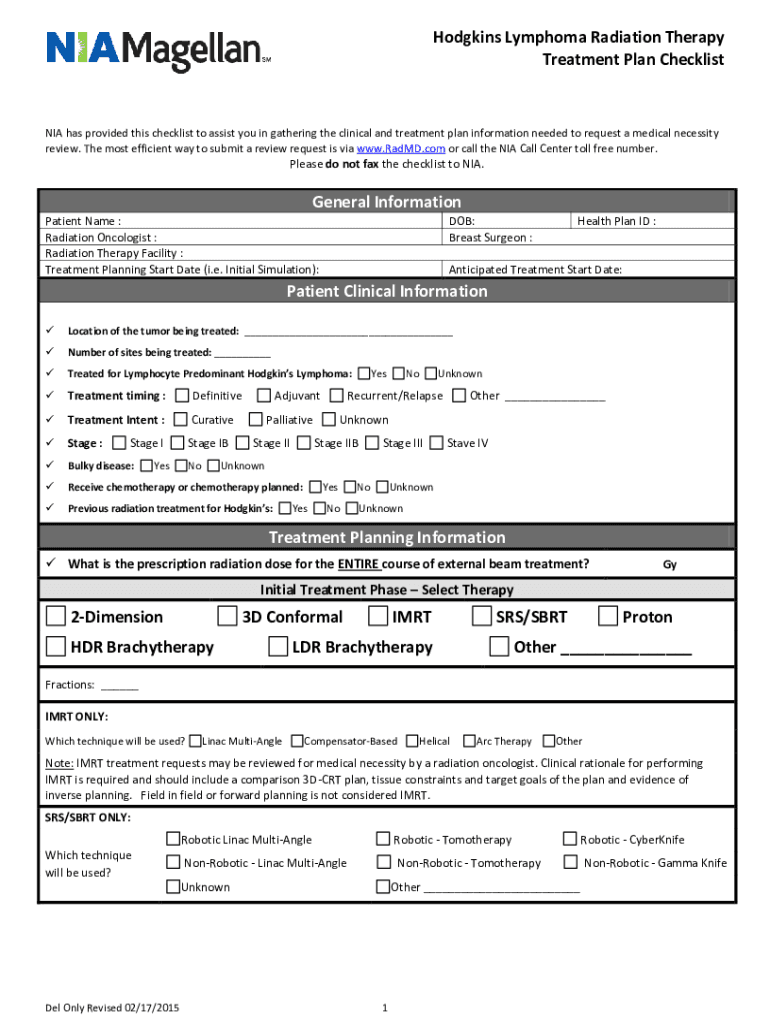
A Hodgkin's Lymphoma Radiation Therapy Treatment Plan is a comprehensive document used by medical professionals to outline the specific details of radiation therapy prescribed to a patient diagnosed with Hodgkin's Lymphoma. This plan is vital in ensuring that the treatment administered is tailored to the patient's unique medical needs, optimizing their chances for a successful outcome. The plan typically includes doses, schedules, and techniques best suited for the patient. It is crafted by oncologists and radiation therapists based on clinical guidelines and diagnostic results. This document serves as a critical guide for both healthcare providers and patients throughout the treatment process.
Key Elements of the Hodgkin's Lymphoma Radiation Therapy Treatment Plan
The treatment plan comprises various elements that provide a comprehensive overview of the therapy approach. These elements include:
- Patient Information: Includes details such as the patient's name, age, medical history, and specific diagnosis of Hodgkin's Lymphoma.
- Radiation Details: Specifies the type and dose of radiation, the frequency of treatments, and the duration of the therapy.
- Treatment Goals: Outlines the intended outcomes, such as the reduction or elimination of lymphoma cells.
- Safety Measures: Identifies precautions to minimize exposure to healthy tissue and manage potential side effects.
- Therapy Techniques: Describes the methodologies used, such as intensity-modulated radiation therapy (IMRT) or proton beam therapy.
This structured approach helps ensure that every aspect of the therapy is meticulously planned to maximize efficacy and minimize risks.
Steps to Complete the Hodgkin's Lymphoma Radiation Therapy Treatment Plan
- Consultation with Oncologist: Begin with an in-depth discussion with an oncologist to understand the diagnosis and discuss treatment options.
- Radiation Planning Session: Attend a planning session where imaging scans are used to map out the radiation target areas.
- Approval and Review: Review the proposed treatment plan with your healthcare team to ensure all components align with clinical guidelines.
- Signing Off the Plan: The treatment plan is finalized and signed off by the medical team and the patient, acknowledging understanding and consent.
- Implementation: Initiate the scheduled radiation therapy as outlined in the treatment plan, with continual monitoring for adjustment if necessary.
This step-by-step process ensures a thorough and patient-centered approach to planning and delivering radiation therapy.
Eligibility Criteria
Eligibility for receiving a Hodgkin's Lymphoma Radiation Therapy Treatment Plan involves several considerations:
- Confirmed Diagnosis: A confirmed diagnosis of Hodgkin's Lymphoma through biopsy and imaging studies.
- Oncologist Recommendation: A recommendation from an oncologist or a radiation specialist suggesting radiation therapy as an appropriate treatment course.
- Health Assessment: An overall health assessment to determine the patient's ability to tolerate radiation therapy.
- Insurance & Financial Review: Verification of health insurance coverage or financial resources to cover treatment costs.
These criteria ensure that candidates for radiation therapy are well-suited for this form of treatment and can manage the associated commitments.


Important Terms Related to Hodgkin's Lymphoma Radiation Therapy Treatment Plan
- Lymphoma Cells: The cancerous cells originating in the lymph nodes.
- Radiation Oncology: The field of medicine focusing on treating cancer with radiation.
- IMRT: Intensity-Modulated Radiation Therapy, a technique that modifies the radiation dose to spare healthy tissue.
- CT Simulation: A process using CT scans to visualize the treatment area and plan delivery accurately.
- Fractionation: The division of the total radiation dose into smaller doses given over several days.
Understanding these terms is essential for patients and healthcare providers to ensure effective communication and informed decision-making throughout the treatment process.
Legal Use of the Hodgkin's Lymphoma Radiation Therapy Treatment Plan
The Radiation Therapy Treatment Plan is a legally binding document that ensures the agreed-upon terms between the healthcare provider and the patient are followed. It provides a record of consent from the patient, acknowledging understanding and agreement to the proposed treatment. This document is also used as a medical record that may be consulted in cases of treatment review or legal disputes. Compliance with federal and state healthcare regulations is critical to ensure the therapeutic process adheres to legal and ethical standards.
How to Use the Hodgkin's Lymphoma Radiation Therapy Treatment Plan
Patients and healthcare providers use the treatment plan as a roadmap for the therapy journey:
- Patient Use: Patients should use the plan to understand their treatment schedule, expected outcomes, and precautions.
- Provider Use: Healthcare providers use the plan to ensure that treatments are conducted exactly as outlined, maintaining consistency and quality of care.
- Monitoring Progress: Regular updates and assessments are conducted based on the plan, allowing adjustments in response to changes in the patient's condition.
The plan is a dynamic document that can evolve with ongoing feedback and results from the treatment sessions.
State-Specific Rules for the Hodgkin's Lymphoma Radiation Therapy Treatment Plan
While generally following national guidelines, states may have specific regulations regarding radiation therapy and documentation:
- Licensing and Certification: States require specific licensing for facilities and practitioners delivering radiation therapy.
- Insurance Mandates: Differences may exist in insurance coverage requirements for radiation therapy across states.
- Consent Laws: State laws dictate how patient consent must be obtained and documented.
It's important for healthcare providers and patients to be aware of these variations to ensure compliance with local legal requirements and avoid potential disputes or delays in treatment.