






Understanding the Role of a Medical Office Technician
Medical office technicians play a crucial role in managing administrative tasks in healthcare settings. They handle a range of responsibilities, from scheduling appointments to maintaining medical records and managing patient interactions. These professionals serve as the backbone of medical offices, ensuring that processes run smoothly and effectively. Their work requires a combination of clerical skills, medical knowledge, and customer service expertise, making them indispensable in various healthcare environments.
- Scheduling and coordinating patient appointments
- Maintaining and organizing patient records
- Managing billing and insurance claims
- Assisting with patient inquiries and providing information
- Ensuring compliance with medical laws and regulations
How to Obtain the Skills of a Medical Office Technician
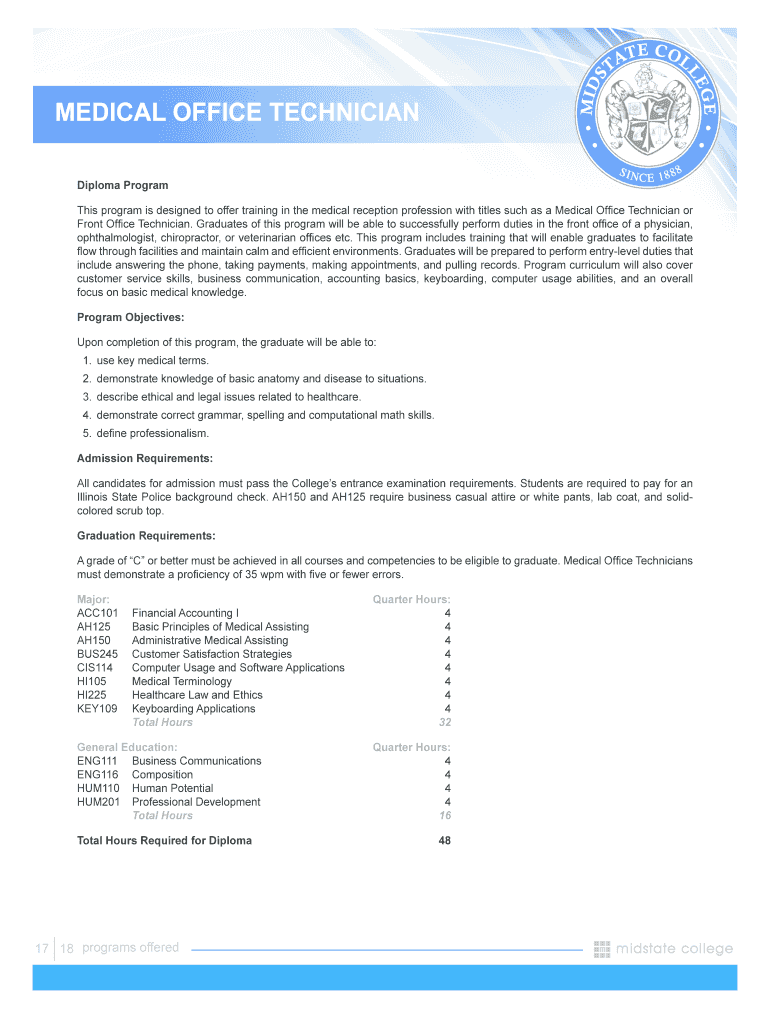
To become a medical office technician, one must typically complete a diploma or certificate program. These educational programs focus on imparting essential skills and knowledge required in medical office settings. In addition to coursework, candidates might need to pass entrance exams and undergo background checks.
Key Skills Acquired
- Mastery of medical terminology
- Proficiency in office software and record management systems
- Understanding of healthcare billing and coding
- Strong customer service and communication skills
- Basic knowledge of accounting and financial management
Steps to Becoming a Medical Office Technician
- Research Educational Programs: Look for accredited programs that offer a curriculum aligned with the role of a medical office technician.
- Complete Required Education: Enroll in and complete a diploma or certificate program, typically lasting around 36 weeks.
- Pass Any Entrance Exams: Ensure you meet any examination or prerequisite requirements.
- Undergo Background Checks: Be prepared to pass background checks that may be required by educational institutions or employers.
- Achieve Necessary Grades: Most programs require a minimum of a 'C' grade in all courses to graduate.
- Seek Job Placement Assistance: Many programs offer job placement services to help graduates find employment in the healthcare industry.
Who Typically Uses Medical Office Technicians
Medical office technicians are vital in various healthcare environments, including:
- Private medical practices
- Hospitals
- Clinics and outpatient care centers
- Dental and chiropractic offices
- Public health organizations
These institutions rely on trained technicians to manage daily operations efficiently, maintain patient relations, and ensure compliance with regulations.
Important Terms Related to Medical Office Technicians
Understanding the terminology associated with medical office technicians is crucial for anyone pursuing a career in this field. Key terms include:
- EMR/EHR: Electronic Medical Records/Electronic Health Records, digital versions of patients' paper charts.
- ICD Codes: International Classification of Diseases codes used in healthcare settings for clinical documentation and billing.
- HIPAA: Health Insurance Portability and Accountability Act, a significant regulation to protect patient information.
- CPT Codes: Current Procedural Terminology codes necessary for billing insurance companies.
Legal Use and Ethical Considerations
Medical office technicians must adhere to various legal and ethical standards. They are required to handle patient information with utmost confidentiality and follow guidelines established by healthcare laws such as HIPAA. Compliance with these legal standards is a fundamental aspect of their role.
Key Legal Requirements
- Secure handling and storage of patient data
- Accurate billing and coding practices
- Compliance with all state and federal healthcare regulations
- Maintaining a professional code of conduct in patient interactions
Key Elements of a Medical Office Technician Program
A comprehensive medical office technician program encompasses several core elements:
- Medical Terminology: Understanding medical language to facilitate effective communication.
- Office Management: Skills to efficiently manage office tasks, including scheduling and record-keeping.
- Customer Service: Training to ensure patient satisfaction and effective communication with healthcare providers.
- Legal Knowledge: Education about laws and regulations impacting healthcare administration.
Example Scenarios of Medical Office Technicians in Action
Medical office technicians often have nuanced roles, as demonstrated by the following scenarios:
- Patient Check-In: Greeting patients, verifying their appointment details, and ensuring all necessary documentation is completed.
- Record Management: Updating electronic health records after each patient visit to ensure all information is current and accurate.
- Appointment Coordination: Managing the daily schedule of a busy healthcare office, ensuring minimal wait times and efficient workflow.
- Insurance Processing: Handling interactions with insurance providers to confirm patient coverage and process claims efficiently.
These scenarios highlight the diverse responsibilities of medical office technicians, demonstrating their importance in healthcare settings.