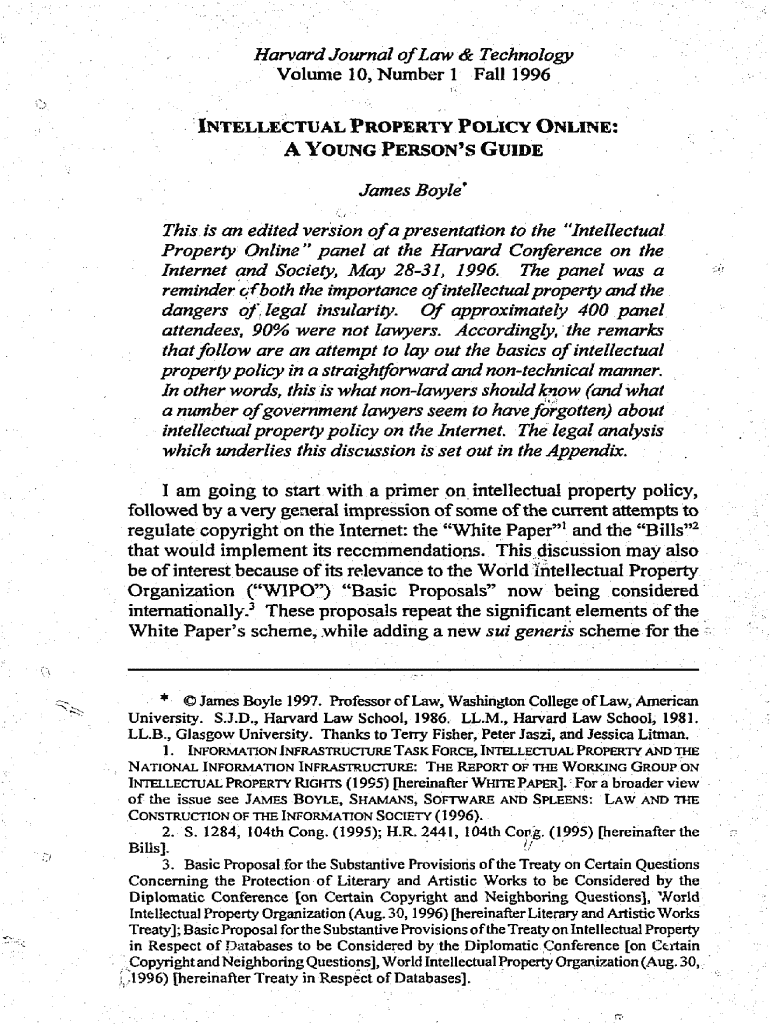







Definition & Meaning
Intellectual Property Policy Online refers to a set of guidelines and legal frameworks that govern the management, use, and protection of intellectual property (IP) on the internet. This policy encompasses areas such as copyrights, trademarks, patents, and trade secrets, aiming to balance the rights of creators and the public. It ensures that online content creators can protect their innovations while allowing others fair use of existing materials.
Intellectual property policy online seeks to address challenges unique to the digital environment. These challenges include unauthorized sharing, piracy, and the global reach of online content. By outlining the rights and responsibilities of different stakeholders, these policies aim to foster innovation and creativity in the digital landscape.
Key Elements of the Intellectual Property Policy Online
- Copyright Protection: Safeguards the rights of authors and creators over their original works, such as written content, music, and videos. This includes the exclusive right to reproduce, distribute, and display the work.
- Trademark Rules: Protects symbols, names, and slogans used to identify goods or services. This prevents confusion in the marketplace and ensures brand integrity.
- Patent Policies: Covers inventions and processes, granting inventors exclusive rights to their innovations for a limited time.
- Trade Secret Regulations: Protects confidential business information from unauthorized use or disclosure, which can include formulas, practices, or processes.
These elements collectively ensure that creators can control how their intellectual property is used online while promoting a fair and dynamic digital ecosystem.
Who Typically Uses the Intellectual Property Policy Online
Various stakeholders utilize intellectual property policy online, each with distinct interests and challenges:
- Content Creators: Writers, artists, musicians, and developers who create original online content and wish to protect their works from unauthorized use or duplication.
- Businesses: Companies seeking to protect their brands, proprietary technology, and trade secrets in the online domain.
- Legal Professionals: Lawyers and consultants specializing in IP law who advise and represent clients dealing with online intellectual property disputes or infringements.
- Online Platforms: Companies like social media networks, e-commerce stores, and streaming services that need to establish clear IP policies to govern user-generated content and licensing agreements.
Each group relies on these policies to secure intellectual property rights and manage risks associated with online interactions.


Legal Use of the Intellectual Property Policy Online
Intellectual property policies online must adhere to various legal standards and international agreements, such as the World Intellectual Property Organization (WIPO) guidelines and the Berne Convention for the Protection of Literary and Artistic Works. These frameworks provide a legal backbone for enforcing IP rights online and offer dispute resolution mechanisms.
Legal compliance ensures that digital forums and entities respect intellectual property laws, thus avoiding legal disputes and potential penalties. For example, a company might use these policies to ensure that all materials posted on its platform by users comply with copyright laws, helping protect both the platform and its users from infringement claims.
Steps to Complete the Intellectual Property Policy Online
- Determine Intellectual Property Needs: Identify the specific types of IP you need to protect, such as copyrights, patents, or trademarks.
- Research Applicable Laws: Understand the relevant IP laws that apply to your situation, including international standards if your content is accessible globally.
- Draft a Comprehensive Policy: Create a detailed policy specifying how your IP will be managed, used, and protected online.
- Seek Legal Advice: Consult with a legal professional to ensure that your policy complies with all applicable regulations and accurately addresses potential legal issues.
- Implement and Communicate: Distribute the policy within your organization or platform and ensure stakeholders understand their rights and obligations.
By following these steps, stakeholders can effectively manage their IP rights online, reducing the risk of infringement and legal complications.
Why You Should Use the Intellectual Property Policy Online
Using an intellectual property policy online is critical for several reasons:
- Protects Creative Assets: Ensures creators and businesses retain control over their valuable IP, preventing unauthorized use and potential financial loss.
- Facilitates Business Growth: By safeguarding brands and innovations, businesses can confidently expand their operations and explore new markets.
- Promotes Innovation: Provides a secure environment where creators can share ideas and collaborate without fear of exploitation.
- Reduces Legal Risk: Minimizes the likelihood of legal disputes, fines, or sanctions by ensuring compliance with relevant IP laws and regulations.
Adopting a robust IP policy online contributes to a safer, more vibrant digital ecosystem that benefits creators and consumers alike.
State-Specific Rules for the Intellectual Property Policy Online
Intellectual property rules can vary by state within the United States, underscoring the importance of understanding local laws:
- State Registrations: While federal law protects trademarks nationally, registering at the state level can provide additional protection within specific jurisdictions.
- Patent Processes: Although patents are federal, different states may have unique rules regarding enforcement and business considerations surrounding patented technologies.
- Copyright Enforcement: States may offer distinct remedies for copyright infringement, affecting how cases are prosecuted and resolved locally.
Being aware of these variations is crucial for stakeholders who operate in multiple states or have a significant presence in specific regions.
Important Terms Related to Intellectual Property Policy Online
- Infringement: Unauthorized use of protected intellectual property, which can lead to legal action.
- Fair Use: A legal doctrine allowing limited use of copyrighted material without permission, under specific circumstances.
- Licensing: Granting permission to use intellectual property rights, often in exchange for a fee.
- Public Domain: Creative works that are not protected by IP laws and can be freely used by anyone.
- Non-Disclosure Agreement (NDA): A legal contract protecting confidential information from being disclosed.
Understanding these terms helps stakeholders navigate the complexities of intellectual property management online, ensuring effective protection and use of IP assets.
Examples of Using the Intellectual Property Policy Online
Real-world scenarios illustrate how intellectual property policies are applied online:
- E-commerce Platforms: An online retail company uses a trademark policy to prevent sellers from listing counterfeit goods on its website, protecting both its brand and customers.
- Content Creators on Social Media: A photographer utilizes copyright policies to prevent unauthorized use of their images on social media, using platform-specific tools to report and remove infringing content.
- Software Companies: A tech firm drafts a comprehensive patent policy to safeguard its proprietary algorithms and maintain a competitive edge in the industry.
These examples demonstrate the practical applications of intellectual property policies in various online settings, highlighting their significance in protecting digital assets.