
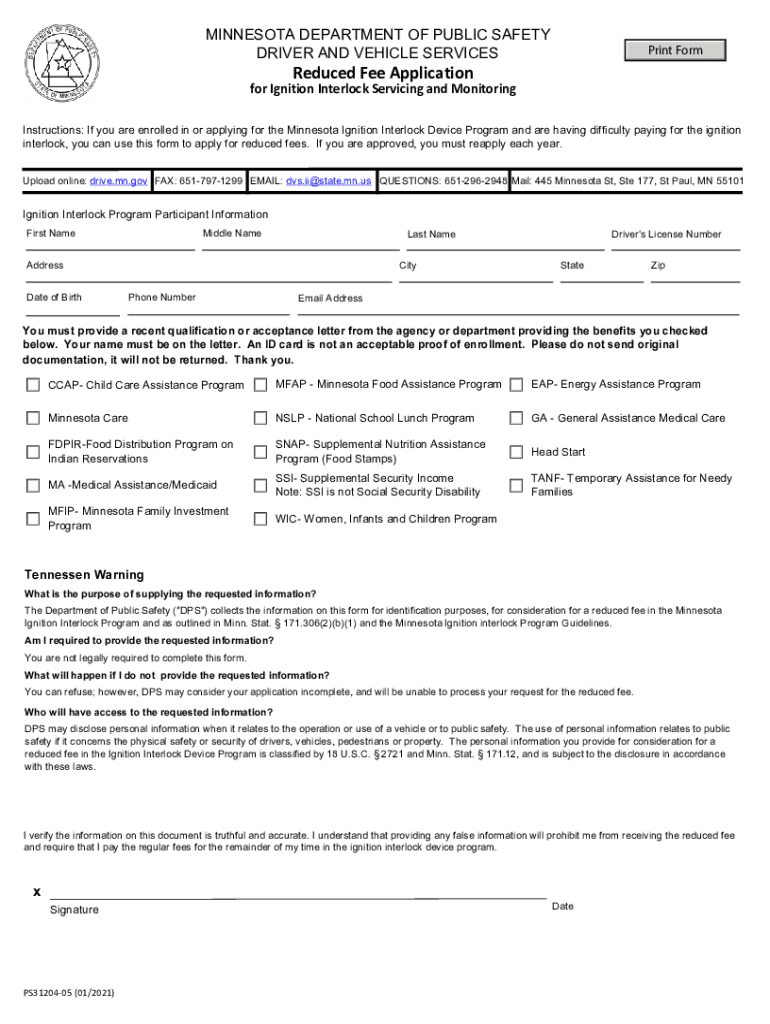







Definition and Purpose of Form PS31202 "Ignition Interlock Participation Agreement"
Form PS31202, known as the "Ignition Interlock Participation Agreement," is an official document used primarily within the United States. It is a contractual agreement between the participant and the monitoring agency responsible for overseeing the ignition interlock device program. The primary purpose of this form is to outline the conditions and responsibilities associated with the use of an ignition interlock device, a mechanism installed in a vehicle to prevent it from starting if the driver's breath alcohol concentration exceeds a pre-set limit.
Key Features
- Behavioral Agreement: Form PS31202 specifies the participant's obligation to use the ignition interlock device as mandated by legal or court order.
- Monitoring: The agreement includes terms related to the monitoring and maintenance of the device, ensuring it functions correctly throughout the program duration.
- Compliance Enforcement: The form serves as a legal tool to enforce compliance, detailing the repercussions of non-compliance or tampering with the device.
How to Use the Form PS31202 "Ignition Interlock Participation Agreement"
Successfully using Form PS31202 requires a clear understanding of its sections and the information required to complete them.
Step-by-Step Instructions
- Personal Information: Begin by entering accurate personal details such as full name, address, and contact information.
- Device Information: Include specifics about the ignition interlock device being installed, including device serial number and installation date.
- Participant Obligations: Carefully read and acknowledge the participant responsibilities, ensuring you comprehend the legal requirements.
- Signature and Date: The form must be signed and dated to confirm understanding and agreement to the terms. This signature signifies legal consent to the terms outlined.
Steps to Complete the Form PS31202 "Ignition Interlock Participation Agreement"
Completing this form accurately is crucial to ensuring compliance and avoiding potential legal issues.
Detailed Process
- Understand the Requirements: Familiarize yourself with the entire form before filling it out to ensure all sections are understood.
- Gather Necessary Documents: Prepare any additional documents that might be required, such as proof of identity or legal notices.
- Submission of the Form: After completion, submit the form through the preferred method of the monitoring agency, which could be online, via mail, or in person.
- Confirmation of Acceptance: Await confirmation from the agency that the form has been received and accepted as part of the program process.
Eligibility Criteria for Form PS31202 "Ignition Interlock Participation Agreement"
Not everyone is eligible to participate in the ignition interlock program, and understanding the eligibility criteria is essential.


Eligibility Requirements
- Legal Mandate: Typically, enrollment in this program is legally mandated following certain driving offenses, such as DUI convictions.
- Compliance with Court Orders: Only individuals who are mandated by a court order to install an ignition interlock device are eligible to sign this agreement.
Legal Use of the Form PS31202 "Ignition Interlock Participation Agreement"
The legal implications of Form PS31202 are significant, as it forms a binding agreement with legal consequences.
Understanding Legalities
- Binding Contract: By signing this form, you enter a legal contract that obligates you to comply with all specified terms and conditions.
- Consequences for Breach: Failure to adhere to the form’s stipulations can result in penalties, which may include legal action, fines, or extended suspension of driving privileges.
Important Terms in the Form PS31202 "Ignition Interlock Participation Agreement"
Several essential terms within the form are critical for understanding its conditions and stipulations.
Key Terminology
- Ignition Interlock Device (IID): A device installed in a vehicle to measure breath alcohol concentration and prevent operation if alcohol is detected.
- Participant: The individual required to use the IID as per the agreement.
- Compliance: Adherence to the terms outlined in the agreement, a failure of which may result in penalties.
State-Specific Rules for the Form PS31202 "Ignition Interlock Participation Agreement"
Regulations concerning the use and requirements of ignition interlock devices can vary significantly across different states.
State Variations
- Installation Requirements: Some states may have additional requirements or more extended periods for device installation.
- Program Duration: The length of time an individual must remain in the program can differ depending on the state legislation and specific court rulings.
Penalties for Non-Compliance with Form PS31202 "Ignition Interlock Participation Agreement"
Non-compliance with the form’s terms can lead to severe repercussions, which underscore the importance of adherence.
Potential Consequences
- Legal Ramifications: Failing to comply may result in additional legal penalties, including increased fines or extensions of driving bans.
- Program Extension: Non-compliance can lead to a longer program duration, requiring extended use of the interlock device.
- License Revocation: In severe cases, repeated non-compliance may lead to the revocation of driving privileges.
Examples of Using the Form PS31202 "Ignition Interlock Participation Agreement"
To better understand the practical application, consider these real-world examples of how Form PS31202 is used.
Case Scenarios
- First-Time Offender: A first-time DUI offender is court-ordered to use an IID for six months. They must complete Form PS31202 to begin the program.
- Repeat Offender: A repeat offender has stricter requirements, including a longer duration and more frequent device maintenance checks, as detailed in the form.
Submission Methods for Form PS31202 "Ignition Interlock Participation Agreement"
Submissions for the Form PS31202 must align with the methods endorsed by the monitoring authority.
Available Methods
- Online Submission: Many states offer an online platform for convenient form submission and tracking.
- Postal Mail: For those preferring traditional methods, completing the form and sending it via mail remains an option.
- In-Person Delivery: Direct submission to the monitoring agency ensures immediate processing and eliminates postal delays.




