




01. Edit your form online
Type text, add images, blackout confidential details, add comments, highlights and more.

Type text, add images, blackout confidential details, add comments, highlights and more.

Draw your signature, type it, upload its image, or use your mobile device as a signature pad.

Send it via email, link, or fax. You can also download it, export it or print it out.
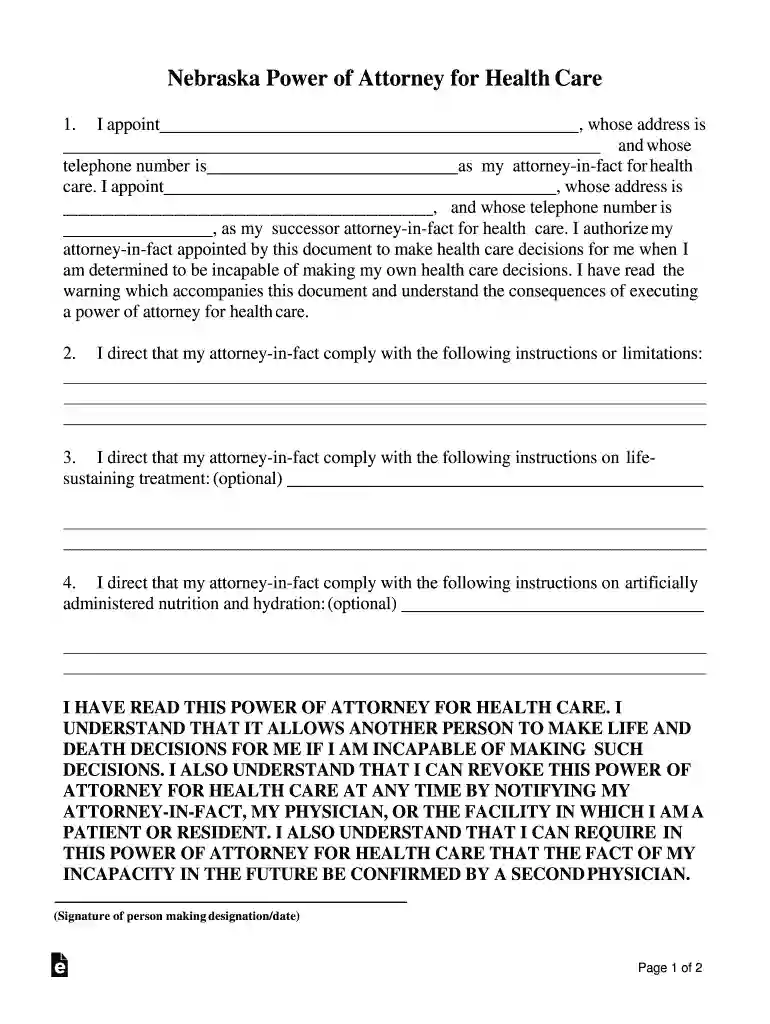
The Nebraska Durable Power of Attorney for Health Care is a legal document that allows an individual, known as the principal, to appoint another person, the attorney-in-fact, to make health care decisions on their behalf. This delegation of authority comes into play when the principal is incapacitated and unable to make informed decisions themselves. This document extends its effectiveness beyond temporary incapacities by being durable, meaning it remains effective even if the principal becomes mentally incapacitated. It includes provisions for critical decisions such as life-sustaining treatments and nutrition, empowering the attorney-in-fact to make decisions that align with the principal's wishes and best interests.
To effectively use this document, the principal must ensure it is completed accurately and in accordance with Nebraska state law. Once executed, the appointed attorney-in-fact can make medical decisions, consent to or refuse treatments, and ensure that the principal's healthcare instructions are followed. The document should be readily available to healthcare providers and family members to prevent any delays in its recognition and implementation. It's important that both the principal and the attorney-in-fact have a thorough understanding of the terms and conditions specified within the document to ensure its intended use.
Choose an Attorney-in-Fact: Select a trusted individual who will act in your best interests regarding health care decisions.
Discuss Your Wishes: Have a thorough conversation with your chosen attorney-in-fact to explain your healthcare preferences and treatment wishes.
Fill Out the Form: Complete the form by providing all required personal information and specifying any particular instructions or limitations.
Sign the Document: Sign the document in the presence of either two adult witnesses or a notary public to ensure its legal authenticity.
Distribute Copies: Provide copies to your attorney-in-fact, family members, and healthcare providers to ensure they are informed and able to act when necessary.
The legal framework for this document is governed by Nebraska state law, which dictates how the power of attorney must be executed and used. It is legally binding and must be recognized by health care providers once validated. The document must be signed by the principal and witnessed correctly for full legal effect. It allows the attorney-in-fact to make a wide range of health care decisions, from routine medical issues to critical life-sustaining treatment choices. However, it is crucial to ensure all actions taken under this power of attorney align with any instructions stated in the principal’s living will, if one exists.
Nebraska requires that a Power of Attorney for Health Care be properly executed to be legally effective. This means the document must be signed by the principal, witnessed by two disinterested adults or notarized. The witnesses must be at least 19 years old and should not be related by blood, marriage, or adoption or have a direct financial responsibility for the principal’s health care costs. Understanding these state-specific rules ensures that the document is legally valid and enforceable when needed.
This legal tool is primarily used by adults in Nebraska who wish to proactively manage their health care decisions in the event they become incapacitated. Common users include elderly individuals, those with chronic health conditions, individuals planning for future healthcare needs, and anyone interested in ensuring their healthcare preferences are honored. It is an essential document for anyone wanting peace of mind about their medical care and decision-making in a time of crisis.


Consider a scenario where an elderly individual has dementia and is no longer able to communicate effectively with medical providers. Having designated their adult child as their attorney-in-fact, the child can make informed decisions about their parent’s health care, including approving necessary surgeries, selecting care facilities, or choosing hospice services. Another example includes a young adult who appoints a sibling to decide on their behalf after an unexpected accident leaves them temporarily incapacitated. These examples illustrate how the document serves as a critical tool for families to ensure that care aligns with the principal’s values and directions.
We've got more versions of the Nebraska Durable Power of Attorney for Health Care form. Select the right Nebraska Durable Power of Attorney for Health Care version from the list and start editing it straight away!
At DocHub, your data security is our priority. We follow HIPAA, SOC2, GDPR, and other standards, so you can work on your documents with confidence.
An advance directive is a written instruction, such as a living will or durable power of attorney for health care, recognized under applicable law that
California Probate Code Section 4700-4701 permits you as signing principal to issue California POA Form for Health Care to grant powers to your agent.
I also understand that I can require in this power of attorney for health care that the fact of my incapacity in the future be confirmed by a second physician.


