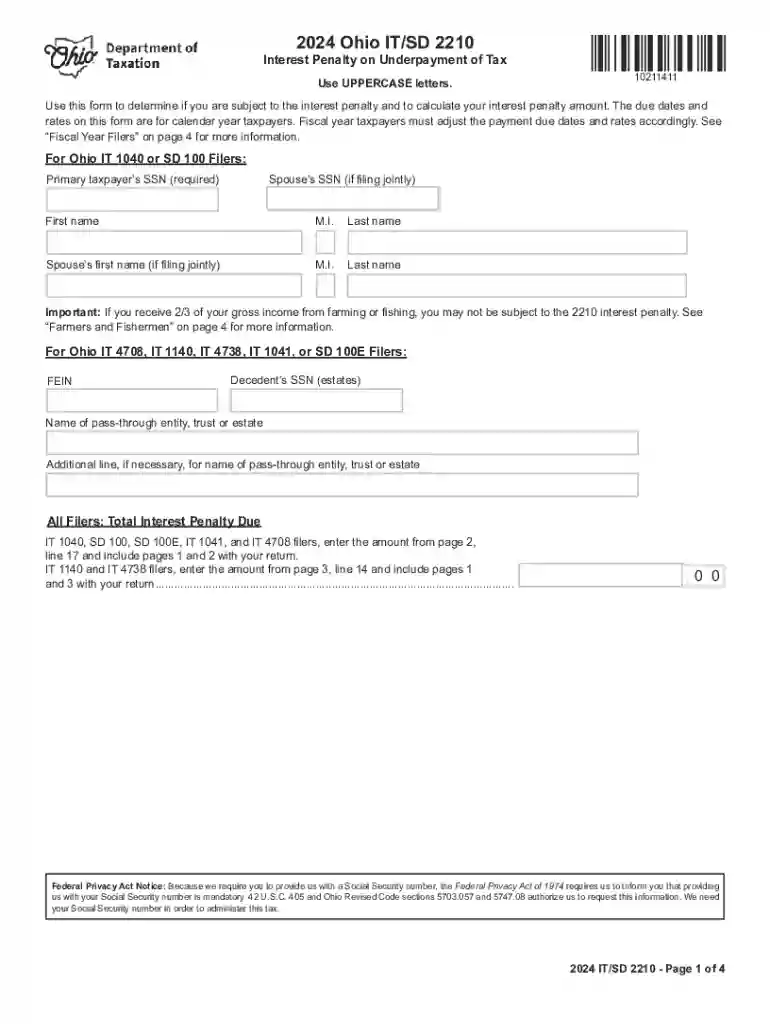
PIT IT2210 2018 082118 indd-2026

Get Form
PIT IT2210 2018 082118 indd Preview on Page 1

Here's how it works

01. Edit your form online
Type text, add images, blackout confidential details, add comments, highlights and more.

02. Sign it in a few clicks
Draw your signature, type it, upload its image, or use your mobile device as a signature pad.

03. Share your form with others
Send it via email, link, or fax. You can also download it, export it or print it out.

Definition and Purpose of the PIT IT2 082118 indd

The PIT IT2 082118 indd is a specific form used for tax-related purposes. Its primary function is to determine whether a taxpayer is subject to interest penalties resulting from underpayment of taxes. The form includes various sections to help calculate potential penalties and provides instructions tailored for different types of filers, including both individuals and businesses.

  • Taxpayer Guidance: This form helps taxpayers assess their fiscal responsibilities against their tax obligations, ensuring compliance and helping to avoid potential fines.
  • Penalty Calculations: It outlines methods for computing interest penalties based on payment timelines and the amount of unpaid taxes.

Steps to Complete the PIT IT2 082118 indd

Filling out the PIT IT2 082118 indd involves several key steps to ensure accuracy and compliance. Here is a detailed breakdown of the completion process:

  1. Gather Personal Information: Enter personal details, including name, address, and taxpayer identification number.
  2. Review Tax Payments: List all estimated tax payments made during the tax year.
  3. Calculate Underpayments: Use the form's sections to determine any underpayments based on your tax obligations and actual payments made.
  4. Apply Penalty Exceptions: Identify any potential exemptions, such as those for farmers or fishermen, which might allow you to avoid penalties.
  5. Finalize Calculations: Complete the form by ensuring all calculations reflect the accurate penalty amount or proof of compliance.

Who Typically Uses the PIT IT2 082118 indd

This form is widely used by a variety of taxpayers, each with specific needs and contexts:

  • Individual Taxpayers: Individuals who pay quarterly estimated taxes might need to use this form to ensure they are on track with their payments.
  • Business Owners: Businesses, including corporations and partnerships, must use this form to calculate any underpayment penalties.
  • Special Circumstances: Farmers, fishermen, and other groups with unique tax situations often rely on this form to apply specific waivers or exceptions.
decoration image ratings of Dochub

Important Terms Related to the PIT IT2 082118 indd

Understanding the terminology used within the PIT IT2210 can be crucial for accurate completion:

  • Estimated Tax Payments: These are periodic payments made throughout the year to cover tax liabilities.
  • Underpayment Penalty: A fine imposed when taxes paid during the year are less than the owed amount.
  • Exempt Categories: Certain groups may qualify for penalty exceptions due to the nature of their work, such as agriculture.

Legal Use and Compliance Requirements

Filing the PIT IT2 082118 indd involves adherence to legal standards and regulations. Key compliance aspects include:

  • Accuracy: Ensuring that all data entered is precise to avoid discrepancies and potential audits.
  • Documentation: Maintaining records of tax payments and financial transactions to support the information provided.
  • Deadlines: Submitting the form within required timelines to avoid additional penalties.

Filing Deadlines and Important Dates

Meeting filing deadlines is essential for avoiding fines and receiving potential benefits:

  • Quarterly Payments: Taxpayers typically make estimated tax payments quarterly—January, April, June, and September.
  • Final Submission: The final due date for full tax filing, including the PIT IT2210, usually falls on April 15th unless extensions are granted.

Form Submission Methods (Online, Mail, In-Person)

There are multiple ways to submit the PIT IT2210, offering flexibility and convenience:

  • Online Submission: Many taxpayers opt to file electronically through authorized IRS platforms or compatible tax software like TurboTax.
  • Mailing: Traditional mail submission remains an option, but it requires tracking timelines for mail delivery.
  • In-Person Drop-Off: In certain instances, direct submission at tax offices may be possible, though less common.

IRS Guidelines and Penalties for Non-Compliance

Following established IRS guidelines for the PIT IT2210 is imperative:

  • Guideline Adherence: Ensure all instructions are followed precisely to avoid errors.
  • Consequences of Non-Compliance: Failure to file the form correctly or on time can result in additional penalties, including interest on past due amounts.

These synthetically structured blocks provide comprehensive insights into the PIT IT2 082118 indd form, ensuring users can complete and submit their taxes accurately and lawfully.

be ready to get more

Complete this form in 5 minutes or less

Get form

Got questions?

We have answers to the most popular questions from our customers. If you can't find an answer to your question, please contact us.
Contact us
An underpayment penalty is a charge the IRS imposes on taxpayers who did not pay all of their estimated income taxes for the year or paid their taxes late. Youll face an underpayment penalty if you: Didnt pay at least 90% of the tax on your current-year return or 100% of the tax shown on the prior years return.
You may qualify for penalty relief if you demonstrate that you exercised ordinary care and prudence and were nevertheless unable to file your return or pay your taxes on time. Examples of valid reasons for failing to file or pay on time may include: Fires, natural disasters or civil disturbances.
You should figure out the amount of tax you have underpaid. Keep in mind this form contains both a short and regular method for determining your penalty. You can let the IRS figure your penalty if you didnt withhold enough tax by the end of the year.
You may need this form if: Youre self-employed or have other income that isnt subject to withholding, such as investment income. You dont make estimated tax payments or paid too little. You dont have enough taxes withheld from your paycheck.
Purpose of Form Use Form 2210 to see if you owe a penalty for underpaying your estimated tax. The IRS will generally figure your penalty for you and you should not file Form 2210. You can, however, use Form 2210 to figure your penalty if you wish to include the penalty on your return.

Security and compliance

At DocHub, your data security is our priority. We follow HIPAA, SOC2, GDPR, and other standards, so you can work on your documents with confidence.
Learn more
ccpa2
pci-dss
gdpr-compliance
hipaa
soc-compliance
be ready to get more

Complete this form in 5 minutes or less

Get form

People also ask

Conditions for Waiving an Underpayment Penalty A penalty will not be imposed if: Your tax return shows you owe less than $1,000. You paid 90% or more of the tax that you owed for the taxable year or 100% of the tax that you owed for the year prior, whichever amount is less. 1.
If you didnt pay enough taxes during the year by withholding taxes from your paycheck or by making estimated tax payments, the IRS may charge you a penalty for underpayment of your estimated taxes.