
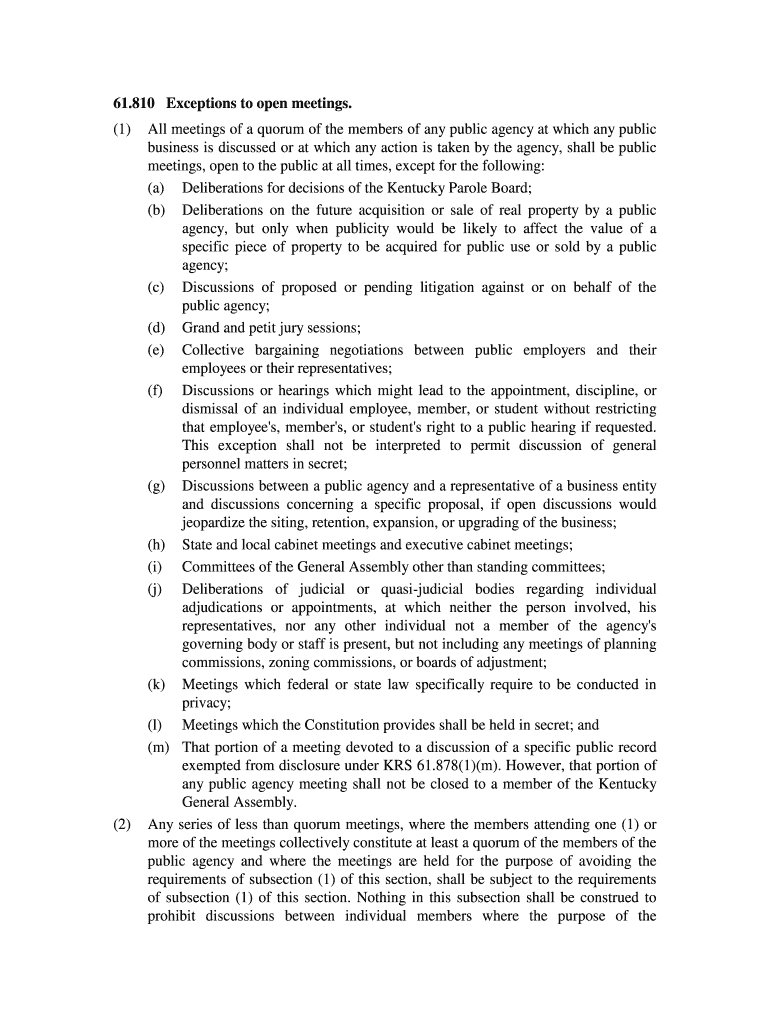







Definition & Meaning
The concept "business is discussed or at which any action is taken by the agency, shall be public" underscores the principle of transparency in public agency meetings. This principle mandates that discussions and decisions made by governmental bodies must be accessible to the public, reinforcing accountability and openness. This requirement is rooted in the idea that citizens have the right to be informed about governmental operations and decisions, ensuring that public agencies function with integrity and in the public's best interest.
Importance of Transparency
- Accountability: Ensures that agencies are answerable to the public, preventing secrecy and potential abuse of power.
- Public Trust: Fosters confidence in governmental processes by demonstrating openness.
- Informed Citizenship: Allows citizens to stay informed about the actions and decisions that affect their communities.
Steps to Complete the Process
Understanding the process of ensuring meetings are public involves several key steps:
- Identify Relevant Meetings: Determine which meetings fall under the purview of public accessibility laws.
- Public Notification: Agencies must provide timely notice regarding the meeting's time, location, and agenda.
- Prepare Documentation: Ensure all materials related to the meeting are prepared and available for public review.
- Conduct the Meeting: Execute the meeting in a manner that allows for public observation, either physically or via digital platforms, adhering to state-specific guidelines.
- Record and Publish Outcomes: Document the meeting minutes and make them accessible to the public, highlighting key decisions and discussions.
Legal Use of the Principle
The legal framework surrounding the requirement varies but generally mandates public agency meetings' openness unless specific exceptions apply. These exceptions are legally defined under circumstances like:
- Confidential Personnel Matters: Where privacy is paramount.
- Sensitive Legal Processes: Situations involving litigation strategy or negotiations.
- Security Issues: Matters that could compromise security if disclosed.
Key Legislative Acts
- Freedom of Information Act (FOIA): Supports transparency by granting public access to information held by governmental bodies.
- Open Meetings Laws: State-specific regulations that dictate the openness of public agency meetings.
Who Typically Uses This Principle
Primarily, this principle is used by:
- Public Agencies: Federal, state, and local governmental bodies that are required to hold open meetings.
- Civic Organizations: Groups that monitor government activities to ensure compliance with transparency laws.
- Media Outlets: Journalists and reporters who attend and report on public meetings as part of their role in informing the public.
Important Terms Related to the Principle
Familiarity with specific terminology improves understanding:
- Public Notice: Announcement detailing where and when a meeting will occur, and what it will cover.
- Minutes: A documented record of the topics discussed and decisions made during a meeting.
- Quorum: The minimum number of members required to conduct official business in a meeting.
State-Specific Rules
Each state has unique regulations concerning public meetings. For instance:
- California's Brown Act: Specifies that meetings of public bodies must be open to the public, with certain exceptions.
- New York's Open Meetings Law: Requires public notice and transparency in governmental proceedings.
Variations Across States
- Notification timelines for meetings.
- Methods for ensuring public access (varying from physical attendance to live streaming).
- Regulations regarding closed sessions.
Key Elements of the Requirement
The core components that define this principle include:
- Public Access: Requirement for meetings to be open to all citizens.
- Notice and Agenda: Necessity for prior communication regarding meeting details.
- Documentation: Ongoing record-keeping, including meeting minutes and resolutions.
Practical Examples
- A city council meeting open to local residents where community budgets are discussed.
- A school board meeting available for parents to attend, focusing on educational policy changes.
Penalties for Non-Compliance
Failing to adhere to these transparency requirements can result in:
- Legal Challenges: Potential for lawsuits demanding enforcement of open meeting laws.
- Public Backlash: Erosion of trust and credibility with the public.
- Fines and Sanctions: Possible financial penalties imposed on agencies violating the laws.
Preventive Measures
- Thorough training for public officials on relevant laws.
- Routine audits to ensure compliance with open meeting requirements.
Select these blocks based on their relevance and depth, ensuring a comprehensive understanding of the requirement that public agency business discussions and actions be accessible and transparent to the public.




