







Definition & Meaning
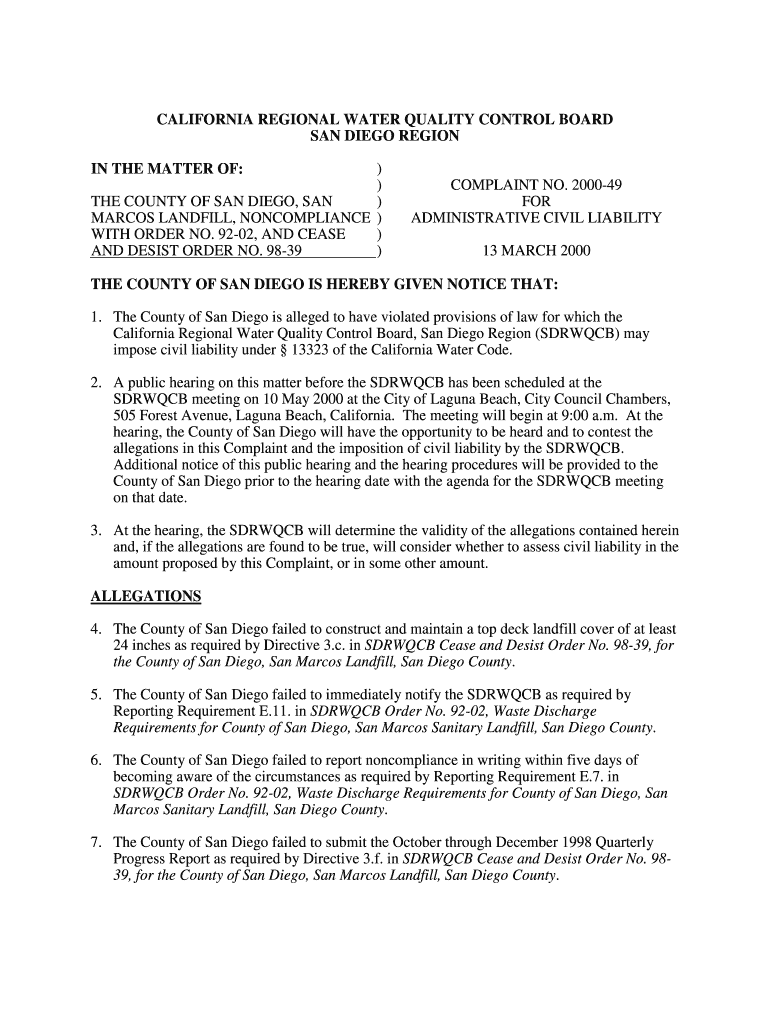
The formal complaint issued by the California Regional Water Quality Control Board against the County of San Diego revolves around specific violations related to the San Marcos Landfill. This regulatory action underscores the importance of maintaining compliance with water quality standards in California. The board's complaint highlights various infringements, such as failing to uphold landfill cover standards and neglecting to report noncompliance, accentuating the integral role of environmental protection in state land management practices.
Key Elements of the San Marcos Landfill Compliance Issues
The complaint details several critical elements connected to the San Marcos Landfill's regulatory infractions:
- Landfill Cover Maintenance: Ensuring the integrity of the landfill cover is crucial for minimizing environmental impact and controlling leachate generation.
- Noncompliance Reporting: Accurate and timely reporting of noncompliance to the relevant authorities is a mandatory requirement and essential for transparent oversight.
- Civil Liability: The proposed fine of $284,700 serves as a punitive and corrective measure aimed at enforcing adherence to environmental regulations.
Who Typically Uses This Document
The primary stakeholders involved with the "County of San Diego, San Marcos Landfill - State Water Resources" documentation include:
- Environmental Regulators: To ensure adherence to state environmental standards.
- County Officials: Responsible for implementing corrective measures and compliance with state mandates.
- Legal Teams: To represent interests of the County of San Diego during hearings or settlements.
Steps to Address Compliance Concerns
- Review Violation Notices: Carefully scrutinize the complaint to understand the specific allegations and required corrective action.
- Plan Remedial Measures: Develop a detailed action plan focusing on remedying the cited deficiencies.
- Engage Stakeholders: Collaborate with environmental experts, legal advisors, and county officials to implement compliance strategies.
- Submit Correction Reports: Document and report the corrective actions undertaken to the water resources control board.
Legal Use of the Document
This official document serves as a legal basis for environmental enforcement actions by the California Water Resources Control Board. It establishes the procedural requirements for addressing regulatory noncompliance and offers the county an option to either contest the allegations during a public hearing or accept the proposed civil liability. This delineates the statutory obligations of municipal authorities in upholding state-imposed environmental standards.
Important Terms Related to Compliance
- Leachate: A liquid that has percolated through solid landfill waste, potentially carrying environmentally harmful substances.
- Civil Liability: A legal obligation to pay fines imposed as a punishment for noncompliance.
- Regulatory Enforcement: The legal process of ensuring compliance with established guidelines and standards.
State-Specific Rules Governing Landfill Operations
California's stringent environmental regulations encompass specific mandates for the maintenance and monitoring of landfill sites:
- Monitoring of Environmental Impact: Landfills must implement systems to monitor for any environmental or public health impacts.
- Post-Closure Standards: The state requires long-term care and maintenance of landfill sites to prevent potential contamination and environmental hazards.
Examples of Regulatory Compliance Cases
- Santa Clara County Landfill Incident: A similar case where the county faced penalties for insufficient cover maintenance, demonstrating the obligatory nature of regulatory compliance.
- Los Angeles Landfill Remediation: Required extensive remedial actions to address methane emissions and groundwater contamination, showcasing collaborative resolution approaches involving multiple stakeholders.
Penalties for Non-Compliance
Non-compliance with water quality orders in California can lead to severe consequences, including:
- Financial Penalties: Substantial fines, such as the $284,700 in this case, are issued to enforce compliance.
- Legal Sanctions: Potential legal battles that may result in additional costs and public censure, highlighting the importance of swift and efficient compliance efforts.
State-by-State Differences in Landfill Regulations
While the San Marcos Landfill compliance issue centers around California's regulations, landfill management and environmental compliance vary across states:
- Michigan: Focuses heavily on closures and post-closure plans.
- New York: Emphasizes public involvement and transparency in landfill operations.
- Texas: Implements more lenient post-closure regulations compared to California.
Understanding these nuanced differences can assist other jurisdictions in navigating and refining their environmental compliance strategies.




