







Definition and Meaning
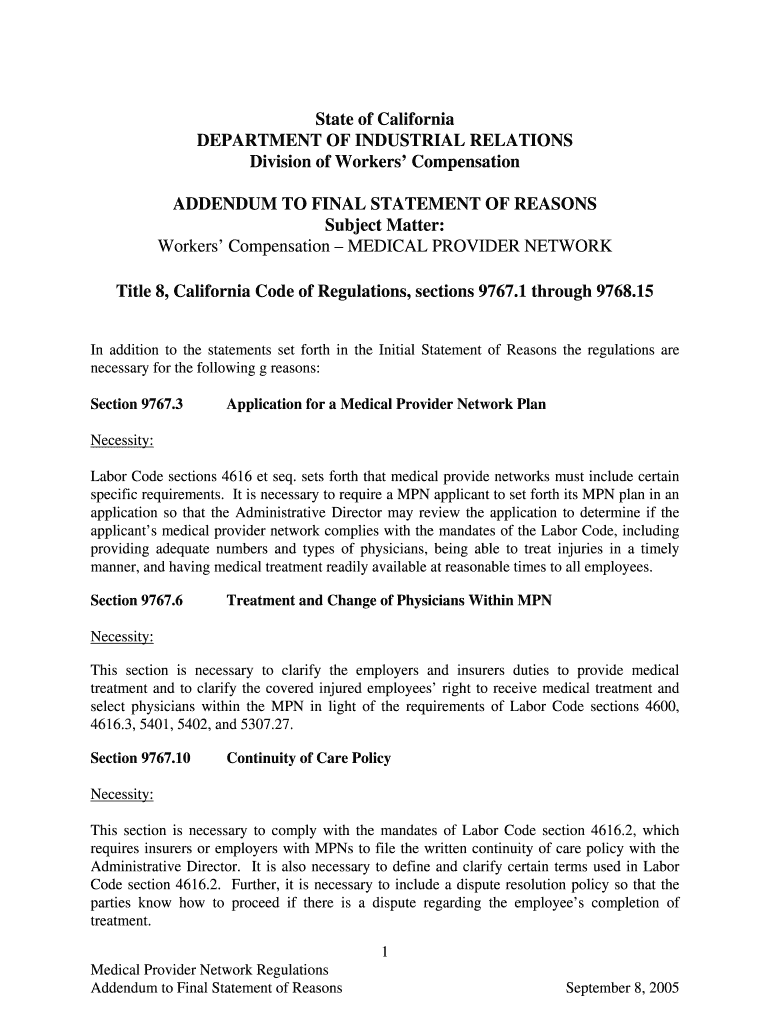
Workers Compensation Medical Provider Network (MPN) is a network of healthcare providers created by workers' compensation insurers or self-insured employers, aimed at offering medical treatment to injured workers. The goal of an MPN is to ensure workers receive appropriate medical care while controlling costs and facilitating a smoother recovery process. Under California's Workers' Compensation system, MPNs are subject to specific regulations to ensure they meet the standards set forth by the Labor Code, ensuring the protection and rights of employees.
Key Elements
- Regulatory Compliance: MPNs must comply with standards set by state labor codes, which includes maintaining a minimum number of providers and ensuring adequate geographical coverage.
- Treatment Protocols: The network must follow specific medical treatment guidelines to ensure consistent and effective care.
- Continuity of Care: MPNs provide continuous care for workers, even if a provider is removed from the network.
- Employee Notification: Employers must inform employees about their rights and how to access the MPN.
How to Use the Workers Compensation Medical Provider Network
To utilize the MPN, injured workers must select a healthcare provider from within the network approved by their employer or insurer. The process typically involves:
- Receiving an Injury: An employee suffers a work-related injury.
- Employer Notification: The injured worker reports the injury to their employer.
- Selecting a Provider: The employee chooses a medical provider within the MPN to commence treatment.
- Receiving Treatment: The employee receives ongoing medical care as needed from network providers.
- Follow-Up: The worker adheres to prescribed treatment plans and attends follow-up appointments.
Practical Scenarios
- Immediate Care Needs: If immediate care is required, the employee may be guided to a pre-designated emergency facility listed in the MPN.
- Specialist Care: If the injury requires specialist care, the MPN should provide access to a range of specialists ensuring comprehensive treatment options.
How to Obtain the Workers Compensation Medical Provider Network
Employers provide access to an MPN through their workers' compensation insurance or as part of their self-insured arrangements.
Obtaining MPN Access
- Employer Provided Information: Employers share MPN details with new employees, including brochures and contact numbers.
- Online Resources: Many employers and insurance providers offer websites where workers can access MPN directories.
- Detailed Inquiries: Workers can contact their HR department or insurance provider to learn more about their specific MPN.
Steps to Complete the Workers Compensation Medical Provider Network Process
Completing the MPN process involves several steps starting from the injury to finalized treatment.
- Report the Injury: Notify the employer immediately after the injury occurs.
- Submit Required Forms: Complete any required initial paperwork, such as incident reports or claim forms.
- Choose a Provider: Select a provider from the MPN list to initiate the treatment.
- Treatment Plan: Follow the treatment plan as prescribed by the MPN doctors.
- Document Progress: Keep records of all medical visits and treatments undertaken for ease of claim processing.
- Complete Treatment: Finish the prescribed medical care and attend any follow-up sessions if necessary.
Important Terms Related to Workers Compensation Medical Provider Network
Understanding the terminology associated with MPNs is essential for navigating the workers' compensation process effectively.
- Insurer: The company that provides workers' compensation insurance.
- Self-Insured: Employers who assume the financial risk for providing workers' compensation benefits.
- Provider Network: A list of approved healthcare providers that employees must use for treatment.
- Claimant: The employee filing for workers' compensation benefits.
Legal Use of the Workers Compensation Medical Provider Network
Under U.S. labor laws, MPNs must adhere to strict legal requirements to operate.
Compliance Requirements
- Approval: MPNs need to receive state-specific approval before operating.
- Monitoring: Regular state audits ensure compliance with healthcare standards and labor laws.
- Revisions: MPN plans must be updated regularly, accommodating any regulatory changes.
Responsibilities
- Employer: Must provide access to MPN information and ensure the MPN complies with statutory requirements.
- Employee: Must use the designated MPN for care to ensure coverage by workers' compensation.
State-Specific Rules for the Workers Compensation Medical Provider Network
MPNs are governed by state-specific rules, with each jurisdiction having unique requirements.
California MPN Regulations
- Network Adequacy: In California, MPNs must have a sufficient number of providers available to injured workers within a reasonable geographic distance.
- Economic Profiling: The use of economic profiling in California's MPNs is strictly regulated to prevent discrimination.
Other States
- Variations: States like Texas and Florida have their own MPN structures and requirements, with distinctions in provided care and network formation.
Filing Deadlines and Important Dates
Timelines are crucial in the workers' compensation process, especially when relating to the MPN.
- Injury Reporting: Most states require immediate or same-day reporting of workplace injuries.
- Claim Filing: States may allow several days to weeks post-injury for submitting formal claims.
- Ongoing Treatments: Follow-ups and prescribed treatments must be adhered to according to MPN guidelines for claims to remain active.
Exceptions and Straightforward Cases
- Emergency Care: May not require immediate MPN adherence if initial treatment is outside of network due to urgent circumstances, with subsequent treatments transitioning to MPN providers.
Providing an organized, easily navigable system for injured employees is the cornerstone of the Workers Compensation Medical Provider Network. Through these structured pathways, employees receive timely recovery guidance, safeguarding their health and interests while maintaining legal and procedural compliance.




