
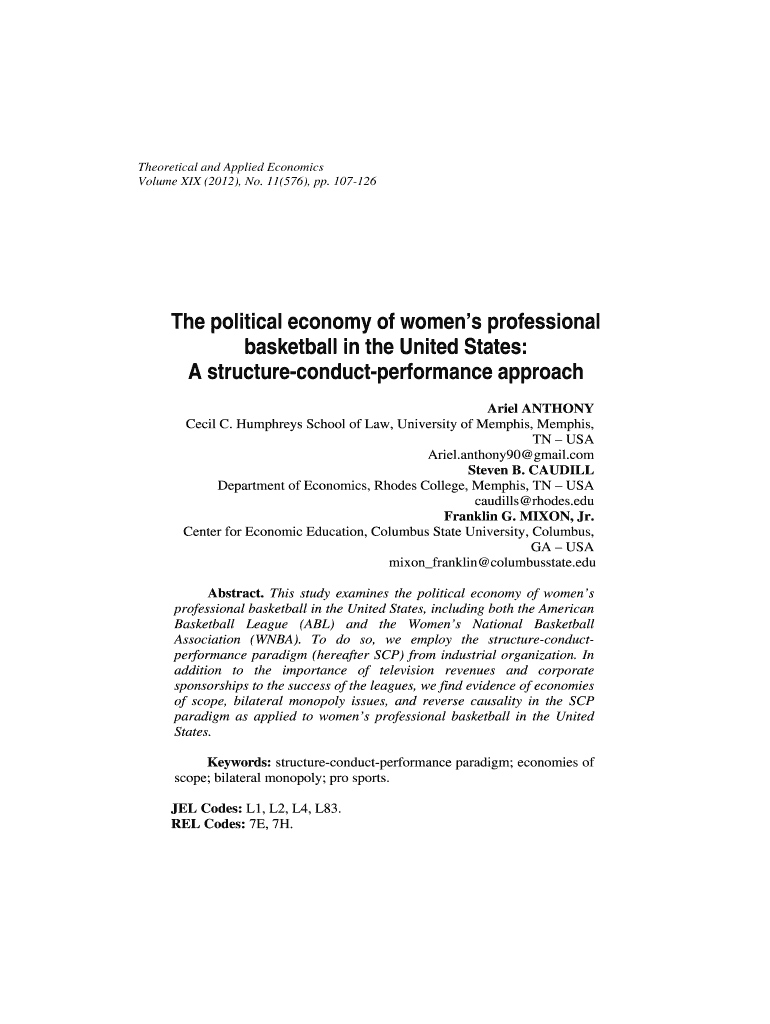







Key Elements of the Political Economy of Women's Professional Basketball
The political economy of women’s professional basketball in the United States is shaped by various factors. This analysis focuses on key elements such as financial landscapes, television revenues, competitive dynamics, marketing strategies, and labor relations.
Financial Landscape
- Revenue Streams: Women's basketball leagues primarily generate income through ticket sales, merchandise, broadcasting rights, and sponsorships.
- Cost Structures: Salaries, venue costs, and marketing expenses are major considerations in financial planning.
- Financial Challenges: Securing long-term sponsorships and partnerships remains a significant hurdle.
Television Revenues
- Broadcasting Rights: The negotiation of television rights is critical as it provides substantial revenue and expands viewer reach.
- Impact on Visibility: Increasing television presence aids in boosting league popularity and attracting sponsors.
Competitive Dynamics
- ABL vs. WNBA: The American Basketball League (ABL) and the Women's National Basketball Association (WNBA) represent historical competitive dynamics within women's basketball.
- Influence of SCP Paradigm: Utilizing the Structure-Conduct-Performance (SCP) framework helps analyze how league structures influence market conduct and performance.
Labor Relations in Women's Professional Basketball
Labor relations are a cornerstone of the political economy of women's professional basketball, shaping league operations and athlete experiences.
Economics of Labor
- Salary Negotiations: Pay scales and negotiation processes influence team dynamics and player retention.
- Collective Bargaining: Agreements between players’ unions and league management are pivotal in setting standards for salaries, working conditions, and benefits.
Player Mobility
- Free Agency: Rules surrounding player trades and free agency impact the competitive balance of leagues.
- International Players: Integrating international talent contributes to diversity and competitiveness.
Marketing Strategies in Women's Professional Basketball
Effective marketing strategies are crucial for the growth and sustainability of women's professional basketball leagues.
Brand Positioning
- Community Engagement: Leagues leverage local communities and grassroots programs to build fanbases.
- Merchandising: Developing distinctive team and player merchandise promotes engagement and generates revenue.
Sponsorships and Partnerships
- Corporate Sponsorships: Key to financial viability, these are crafted through aligning corporate values with league missions.
- Media Partnerships: Collaborations with media outlets enhance exposure and fan interaction globally.
Historical Context of Women's Professional Basketball
Understanding the historical context provides insights into the current political economy of women’s professional basketball.
League Development
- Evolution of Leagues: Tracing the history from the ABL to the establishment and growth of the WNBA.
- Pioneering Athletes: Recognition of trailblazers who have advanced the sport and inspired future generations.
Societal Impact
- Influence on Gender Norms: Women’s basketball has played a role in challenging traditional gender roles and promoting equality.
- Cultural Significance: The sport’s evolution reflects broader societal changes regarding women in athletics.
Marketing and Media Impact
The marketing and media presence of women’s professional basketball significantly influences its political economy.
Media Coverage
- Digital Platforms: Social media and streaming services are vital for reaching new audiences.
- Narrative Building: Compelling storytelling around players and games enhances fan engagement.
Audience Engagement
- Fan Interactions: Events, fan clubs, and digital engagement tactics strengthen audience loyalty.
- Demographic Reach: Identifying and catering to diverse audience demographics ensures broad market appeal.
Structure-Conduct-Performance Paradigm
The SCP paradigm provides a framework to analyze competitive markets and strategic league decisions.
Structural Analysis
- Market Entry Barriers: Regulatory requirements and capital intensity can deter league entry but also define market landscapes.
- League Concentration: Market concentration affects competitive strategies and consumer choices.
Conduct and Strategic Behavior
- Strategic Alliances: Partnerships and alliances influence league dynamics and competitive positioning.
- Innovative Play Styles: Adapting playstyles and strategies impacts team performance and league appeal.
State-by-State Differences in Women's Professional Basketball
Understanding state-specific rules helps navigate the complexities of running women’s professional basketball leagues.
Legal and Financial Regulations
- Taxation Policies: Varying state tax codes affect financial planning for teams and players.
- Player Recruitment Rules: State regulations regarding player recruitment and contracts can differ, influencing team strategy.
Venue and Infrastructure
- Access to Facilities: Availability of sports infrastructure affects team operations and local fan engagement.
- Regulation Compliance: Compliance with local sports and labor laws is crucial for legal operations.
Practical Examples and Case Studies
Real-world scenarios equip stakeholders with actionable insights into the political economy of women’s professional basketball.
Successful League Models
- Case Study Analysis: Examination of successful league models provides lessons in overcoming financial and operational challenges.
- Player Advocacy: Examples of successful player-led initiatives influencing league policies.
Lessons from History
- Historical Failures: Analyzing past league failures helps understand risk factors and potential pitfalls.
- Cultural Milestones: Important milestones in women’s basketball history illustrate the sport's evolution and impact.
By examining these components, stakeholders can gain a comprehensive understanding of the political economy surrounding women's professional basketball in the United States.




