





Essential Components of a Daily Child Care Safety Checklist Template
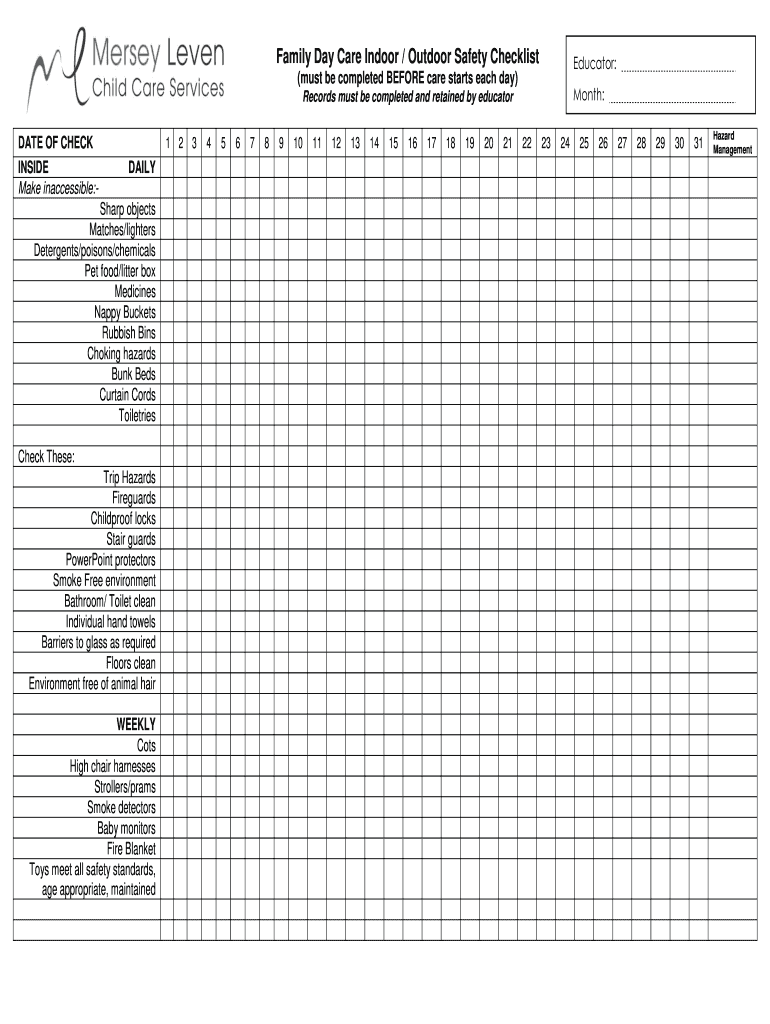
A daily child care safety checklist template is crucial for ensuring a safe environment for children in day care settings. This template will help staff systematically review safety measures to protect children from hazards. Below are the key components of a comprehensive checklist:
Indoor Safety Checks
Conducting indoor safety checks involves assessing various aspects of the environment to minimize risks. Consider the following elements:
- Toy Safety: Ensure all toys are age-appropriate, free of sharp edges, and well-maintained. Regularly inspect for broken or damaged items that may pose a choking hazard.
- Furniture Safety: Verify that heavy furniture is anchored securely to walls to prevent tipping. Check for sharp corners that can be cushioned or moved out of reach.
- Cleaning Supplies: Store cleaning products and other chemicals out of reach of children. Use child-proof locks on cabinets where such items are stored.
Outdoor Safety Considerations
Safety checks for outdoor play areas are just as critical. Important aspects include:
- Play Equipment: Assess all play structures for stability and damage. Ensure that soft landing surfaces, such as mulch or rubber mats, are adequately maintained.
- Fence Integrity: Make sure fences surrounding play areas are secured and free from gaps that could allow a child to wander off.
- Environmental Hazards: Inspect the area for broken glass, sharp objects, or any potential dangers like bee nests or poisonous plants.
Daily Health Checklist
Integrating a daily health checklist plays a vital role in maintaining the well-being of children. Key items to check include:
- Temperature Checks: Record the temperature of each child upon arrival to identify any potential illness early.
- Illness Reporting: Establish a system for parents to report any contagious illnesses that may affect other children.
- Hygiene Practices: Ensure proper handwashing protocols are followed, particularly before meals and after play.
Compliance with Regulations
Adhering to local regulations is crucial in maintaining operational standards for day care facilities. Areas to focus on:
- Licensing Requirements: Confirm that all staff members meet background check requirements and are properly trained.
- Emergency Procedures: Ensure that emergency exits are clearly marked and accessible. Staff should be trained regularly on fire drills, lockdowns, and first aid.
Documentation and Record-Keeping
A thorough record-keeping system supports best practices in safety and compliance:
- Incident Reports: Maintain a log of any incidents or accidents that occur, detailing the circumstances and actions taken.
- Daily Checklists: Use daily checklists to track completion of safety inspections and health checks. These documents serve as evidence during audits and inspections.
Items Needed for Compliance
Producing a comprehensive daily child care safety checklist template requires specific tools:
- Printable Templates: Have access to a printable child care safety checklist template to facilitate easy tracking and review.
- First Aid Kits: Ensure all facilities are stocked with up-to-date first aid kits, including emergency contact numbers readily available.
Strategies for Effective Implementation
Effective implementation of the checklist ensures that safety measures are consistently followed. Strategies include:
- Staff Training: Regularly train staff on the importance of adhering to safety practices and how to utilize the checklist effectively.
- Daily Briefings: Conduct brief discussions each morning to address the day’s specific safety concerns, ensuring all personnel are informed.
Review and Improvement Processes
Regular review of the daily child care safety checklist allows for continuous improvement:
- Feedback Loops: Encourage staff to provide input on the checklist's effectiveness and suggest areas for enhancement.
- Periodic Audits: Schedule regular audits of safety practices and environments to identify potential risks and implement corrective actions where necessary.
This robust daily child care safety checklist template supports staff in maintaining a structured approach to child safety, fostering an environment where children can play, learn, and grow securely. By focusing on indoor and outdoor safety, health monitoring, regulatory compliance, and effective documentation practices, day care centers can create a safer experience for every child in their care.