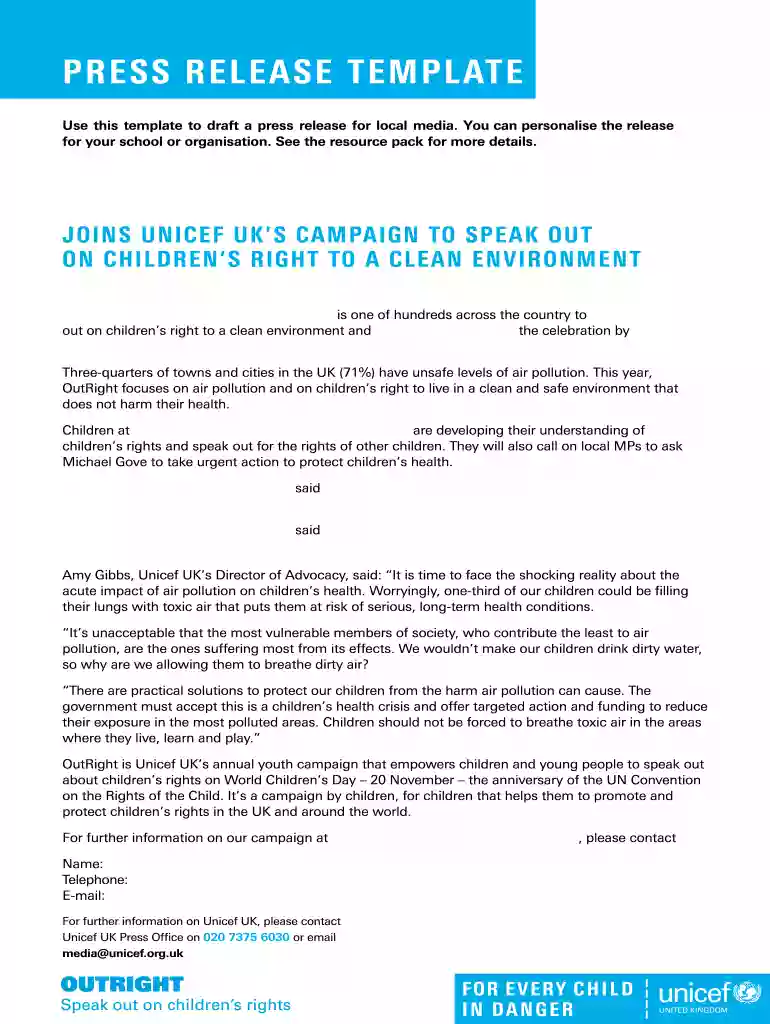
Definition and Meaning of "You can personalise the release"
The term "You can personalise the release" relates to the ability to tailor public announcements or information dissemination to target specific audiences or achieve particular goals. In the context of document management, this involves customizing the content or format of a release to meet distinct requirements or preferences. This personalization might include adjusting the messaging to resonate with a specific demographic, ensuring that formatting aligns with brand guidelines, or integrating content that aligns with the strategic objectives of an organization.
- Personalization could be applied in various scenarios, such as media communications, corporate announcements, or marketing campaigns.
- It involves modifying elements like text, images, and distribution channels to better suit the audience's expectations or achieve intended outcomes.
- This approach helps enhance engagement, relevance, and the impact of the release on its intended recipients.
How to Use the "You can personalise the release"
Using "You can personalise the release" effectively requires a strategic approach to editing and disseminating information. The process involves understanding the goals of the release, evaluating the target audience, and identifying ways to customize the content and delivery.
- Identify Objectives: Start by defining what the release aims to achieve, such as educating the public, promoting a new initiative, or responding to current events.
- Audience Analysis: Consider the demographics, interests, and needs of the target audience to ensure the content is relevant and engaging.
- Customization Techniques: This could include altering the tone, language, or visuals in the release. Consider adding interactive elements to digital releases to engage viewers.
- Distribution Strategies: Select channels that align with where the audience is most likely to encounter and engage with the release, such as social media, email newsletters, or press distribution services.
Key Elements of "You can personalise the release"
Certain elements are central to effectively personalizing a release. These components ensure each release is tailored to achieve its unique goals while maintaining consistency with broader communication strategies.
- Message Consistency: Ensure the message aligns with the organization’s voice and mission.
- Content Relevance: Each item should be pertinent to the topic and audience interests, avoiding superfluous information.
- Visual Components: Use images, graphs, or videos that enhance understanding and appeal to the audience’s preferences.
- Call to Action: A well-defined call-to-action guides the audience on the next steps, whether it’s attending an event, visiting a website, or engaging on social platforms.
Steps to Complete "You can personalise the release"
To complete the personalization of a release, follow these methodical steps, ensuring that each component aligns tightly with the overall objectives and audience insights.
- Draft the Initial Content: Begin with a rough draft highlighting key points, core information, and essential calls to action.
- Customize the Content: Adjust language and messaging to suit the audience and objectives, incorporating feedback to enhance engagement.
- Choose Appropriate Visuals: Select images, infographics, or videos that align with content goals and capture audience interest.
- Review and Refine: Conduct thorough reviews for clarity, precision, and alignment with goals.
- Determine Distribution Channels: Analyze the most effective way to distribute the release to ensure maximum exposure and impact.
Why Should You "Personalise the Release"
Personalizing the release is essential for maximizing engagement, relevance, and effectiveness in communication endeavors.
- Enhanced Audience Engagement: Tailored content is more likely to capture and retain audience interest, encouraging interaction and sharing.
- Increased Relevance: Personalization ensures that the content meets the audience’s specific needs and expectations, leading to greater impact.
- Alignment with Goals: By customizing the release, organizations can better align communication efforts with strategic objectives, ensuring that messages serve their intended purpose efficiently.
Who Typically Uses "You can personalise the release"
Various groups and individuals can benefit from personalized releases, depending on their roles and objectives.
- Corporate Teams: Utilize personalized releases for internal communications, such as updates on corporate policies or achievements.
- Marketing Departments: Tailored marketing releases can target specific consumer segments, generating more leads and fostering deeper customer connections.
- Public Relations Agencies: PR professionals craft customized releases for events, brand announcements, and crisis communications to manage public perception and engagement.
Important Terms Related to "You can personalise the release"
Understanding key terms related to the personalization of releases is crucial for applying the concept effectively.
- Target Audience: The specific group of people a release is intended to reach and influence.
- Messaging: The core information and communication style used within the release to convey the intended message.
- Distribution Strategy: The plan to disseminate the release through chosen channels to maximize reach and impact.
- Engagement Metrics: Data collected to evaluate the success of a release, including views, clicks, shares, and conversions.
Examples of Using "You can personalise the release"
Several scenarios demonstrate how personalized releases are employed to achieve distinct goals effectively.
- Local Government Announcements: Releasing information about new policies or community events, tailored to highlight local benefits and timelines while addressing residents directly.
- Corporate Earnings Reports: Utilizing personalized messaging to present financial results to stakeholders, focusing on data and analysis relevant to investors' interests.
- Charity Campaigns: Communicating with potential donors through personalized messages that resonate with their previous involvement or interests in similar campaigns.
These sections are meticulously tailored considering audience needs and the strategic intent behind personalizing releases, providing a comprehensive guide on leveraging this practice in various contexts.