
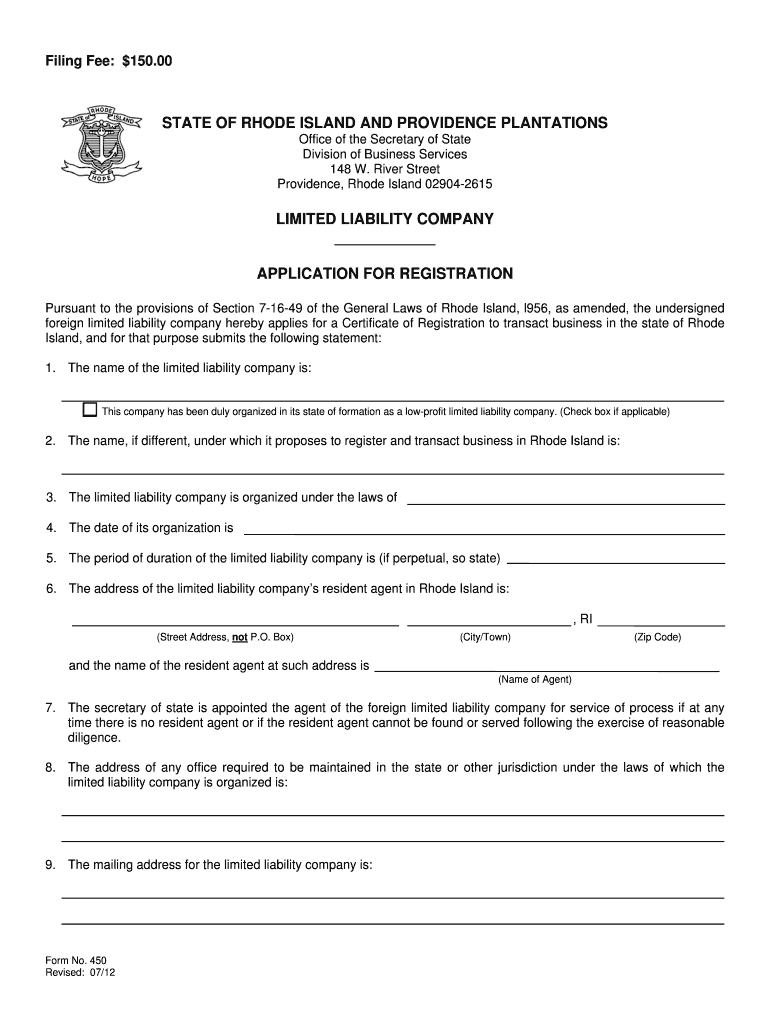







Definition & Meaning
The "State of Rhode Island and Providence - SOS RI" refers to the registration process for businesses within the state of Rhode Island. It is managed by the Office of the Secretary of State (SOS), responsible for maintaining business records, facilitating business filings, and ensuring compliance with state laws. This registration is crucial for companies seeking to operate legally within Rhode Island, providing them with a formal presence and recognition by the state.
Key Elements of the STATE OF RHODE ISLAND AND PROVIDENCE - SOS RI
- Business Registration: This is a mandatory requirement for any entity wishing to conduct business in Rhode Island. It includes filing various articles and forms that establish the business legally with the state.
- Certificate of Good Standing: Businesses must maintain a Certificate of Good Standing to ensure they comply with state regulations and taxes. This certificate is often a prerequisite for further business activities.
- Legal Compliance: The state requires adherence to business laws to prevent the revocation of registration. This involves timely filings and updates on business activities.
Steps to Complete the STATE OF RHODE ISLAND AND PROVIDENCE - SOS RI
- Choose a Business Structure: Decide on the appropriate structure, such as LLC, corporation, or partnership, based on the business’s needs and goals.
- Register the Business Name: Ensure the chosen name is unique and meets state naming requirements. This step typically involves checking availability and reserving the name through the SOS.
- File Articles of Organization/Incorporation: Submit the necessary formation documents depending on the business structure, along with the required filing fee.
- Obtain a Resident Agent: Designate a registered agent with a physical address in Rhode Island to receive legal documents on behalf of the business.
- Submit Certificate of Good Standing: If applicable, this certificate should be acquired to demonstrate compliance with state obligations.
Important Terms Related to STATE OF RHODE ISLAND AND PROVIDENCE - SOS RI
- Resident Agent: A designated individual or business entity authorized to receive service of process notices, government correspondence, and compliance-related documents on behalf of the business.
- Application for Registration: A document that businesses, especially foreign entities, need to file to legally operate within Rhode Island.
- Filing Fee: The monetary charge assessed by the state for processing business registration applications. This fee varies based on the type of entity and nature of filings.
Filing Deadlines / Important Dates
- Annual Reports: Businesses are required to submit annual reports to the Secretary of State, and the deadlines for these reports vary by business type. The filing ensures that the business remains in good standing.
- Renewal Deadlines: Companies must adhere to renewal deadlines for any licenses or permits associated with their business operations to avoid penalties.
Required Documents
- Articles of Organization: For LLCs, this document outlines the structure and operational guidelines for the company.
- Articles of Incorporation: For corporations, this document formally establishes the business as a legal entity and contains pertinent details about its governance.
- Certificate of Good Standing: Particularly for existing foreign entities, this document verifies that the company has maintained its registration and met all obligations in its home state.
Legal Use of the STATE OF RHODE ISLAND AND PROVIDENCE - SOS RI
- Compliance: Businesses operating in Rhode Island must strictly comply with all state laws and regulations, ensuring that all filings, payments, and updates are made accurately and timely to maintain their legal status.
- Legal Recognition: Proper registration provides businesses with the legal recognition needed to enforce contracts, participate in legal proceedings, and apply for business licenses and permits.
Penalties for Non-Compliance
- Revocation of Business License: Failure to comply with SOS RI requirements may result in losing the license to operate within Rhode Island.
- Fines and Penalties: The state may impose financial penalties for late filings or non-compliance with statutory obligations.
- Legal Action: Persistent non-compliance may lead to legal proceedings initiated by the state, which can further damage the business’s reputation and operations.
Business Entity Types Benefiting Most
- Limited Liability Companies (LLC): Due to flexibility in management and favorable tax treatment.
- Corporations: For those seeking to raise capital or expand operations significantly.
- Partnerships: Beneficial for small and medium-sized enterprises looking to collaborate with other individuals or entities.
Form Submission Methods
- Online: The most efficient method, providing immediate confirmation and easier management of submissions.
- Mail: An option for those preferring traditional submission, though it requires allowance for processing time.
- In-Person: Suitable for individuals who prefer direct assistance or need real-time clarification of submission details.




