
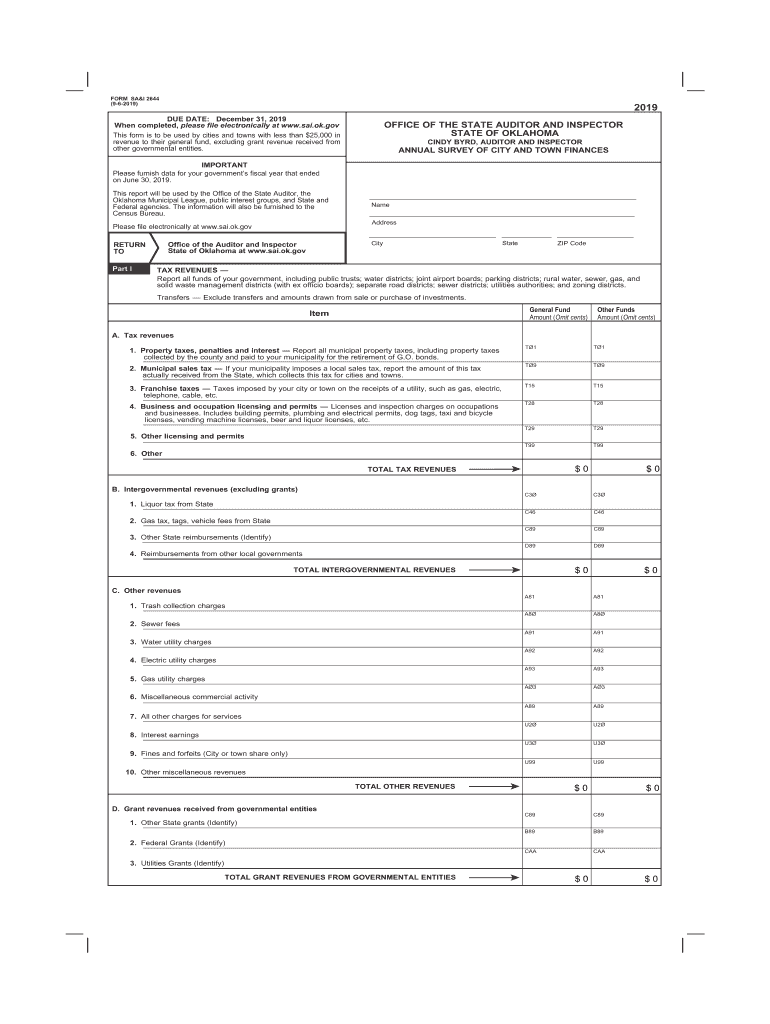







Definition and Purpose of the Publications and Forms - Oklahoma State Auditor - OK
The Publications and Forms issued by the Oklahoma State Auditor are essential documents for financial compliance and transparency in municipalities across Oklahoma. These forms are designed to facilitate the collection and submission of financial data, ensuring that local government entities adhere to state regulations. The documents serve a variety of purposes, including auditing, reporting, and financial analysis for public accountability.
Key Users and Beneficiaries
- Municipal Governments: Primarily used by city and town officials in Oklahoma for annual financial reporting.
- Local Government Auditors: Essential for auditors conducting reviews of municipal finances.
- State Agencies: Used to aggregate and analyze financial data across different municipalities for policymaking and budget allocation.
How to Use the Publications and Forms - Oklahoma State Auditor - OK
To effectively use these forms, understanding their structure and requirements is crucial. The forms typically involve sections for inputting various financial details such as:
- Revenue and Expenditures: Sections for detailing tax revenues, intergovernmental revenues, and other income sources.
- Debt Information: Including outstanding debts and repayment schedules.
- Assets: Details on municipal assets for comprehensive accounting.
Step-by-Step Procedure
- Access: Download the relevant form from the Oklahoma State Auditor's official website.
- Fill Out: Enter data as per the instructions provided, ensuring accuracy and completeness.
- Review: Double-check all entries to avoid discrepancies.
- Submit: Follow the prescribed method for form submission, which could be electronic or via mail.
How to Obtain the Publications and Forms
These forms are readily accessible on the Oklahoma State Auditor's official website. For digital copies:
- Visit the Website: Navigate to the 'Forms' section.
- Select the Desired Form: Choose based on your specific requirement, whether it's for annual reporting or other financial documentation.
- Download: The forms are available in multiple formats, ensuring compatibility with different software applications.
Alternative Acquisition Methods
- Physical Copies: Request a hard copy from the local auditor's office if digital access is an issue.
- Workshops and Seminars: Attend state-organized sessions where these documents are often distributed.
Steps to Complete the Publications and Forms - Oklahoma State Auditor - OK
Filling out these forms requires attention to detail and adherence to specific guidelines:
- Gather Necessary Data: Ensure you have access to financial statements, transaction records, and previous years' reports.
- Input Information: Use the form fields to enter data accurately.
- Validation: Use built-in validation tools if provided, to check data accuracy.
- Consultation: If necessary, consult with financial advisors or legal experts for guidance on complex sections.
Important Considerations
- Deadlines: Ensure that forms are submitted before the specified deadline to avoid penalties.
- Accuracy: Double-check figures to prevent reporting errors that could lead to compliance issues.
Legal Use and Compliance
Submitting these forms is not only a matter of procedural compliance but also a legal requirement under Oklahoma state law. Being familiar with the legal context is important for public officials:
- Data Security and Privacy: By complying with state guidelines, you ensure the confidentiality and security of sensitive financial data.
- Accuracy Requirements: Legal stipulations require forms to be complete and accurate to avoid potential audits or penalties.
Potential Penalties for Non-Compliance
- Fines: Submissions beyond the deadline may result in financial penalties.
- Increased Scrutiny: Consistent delays or inaccuracies might trigger audit proceedings.
Key Elements of the Publications and Forms
Each form comprises several critical sections that must be thoroughly understood and completed:
- Financial Summary: Offers a high-level overview of the municipality's fiscal status.
- Detailed Breakdown: In-depth sections dedicated to specific categories such as revenue, expenses, and loans.
- Certification: A mandatory section where the responsible official affixes their signature to certify the accuracy of the information provided.
State-Specific Rules and Guidelines
Oklahoma has distinct rules that govern the completion and submission of these forms:
- Fiscal Year Specifications: Adherence to the Oklahoma fiscal year calendar is mandatory.
- Reporting Standards: Compliance with the state's standardized reporting format ensures consistency across submissions.
Financial Thresholds
Certain forms have thresholds that dictate their applicability, which is often based on revenue or population size.
Examples and Real-World Scenarios
Municipalities in Oklahoma utilize these forms for various practical applications:
- Annual City Audits: Cities like Norman and Stillwater use these documents in their annual auditing processes.
- Budget Analysis: Smaller towns use the forms to align their budget plans with actual financial inflows and outflows.
Case Study: A Small Town Implementation
A town in Oklahoma with less than $25,000 in general fund revenue utilizes FORM SA&I 2644 to report annually. This ensures they maintain compliance with state guidelines while effectively managing limited financial resources.
Filing Deadlines and Important Dates
Staying informed on the critical dates for submission ensures compliance:
- Annual Deadline: Most forms need to be filed by December 31 each year.
- Mid-Year Reports: Some forms require updates or additional submissions partway through the fiscal year.
Pre-Submission Checklist
- Review Fiscal Year Data: Ensure all data pertains to the correct fiscal period.
- Verify All Entries: Confirm that all financial entries align with internal records.
Overall, proper use and submission of the Publications and Forms - Oklahoma State Auditor - OK are vital for maintaining fiscal transparency and regulatory compliance at the municipal level in Oklahoma.


