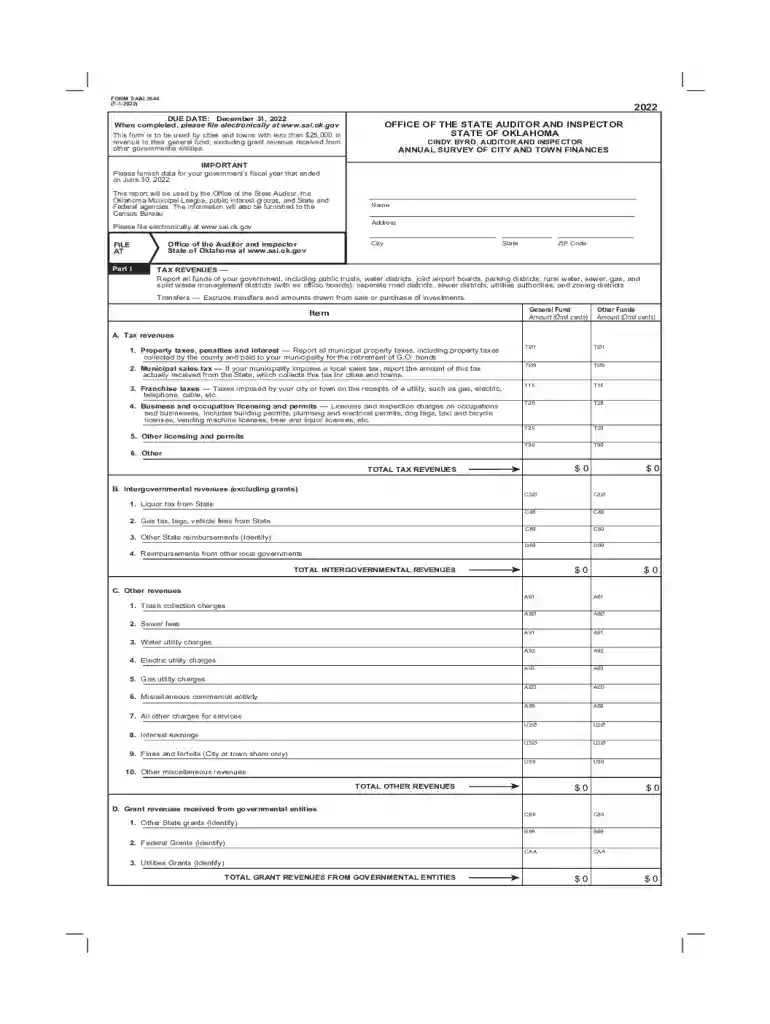
Amount (Omit cents) 2026

Get Form
Amount (Omit cents) Preview on Page 1

Here's how it works

01. Edit your form online
Type text, add images, blackout confidential details, add comments, highlights and more.

02. Sign it in a few clicks
Draw your signature, type it, upload its image, or use your mobile device as a signature pad.

03. Share your form with others
Send it via email, link, or fax. You can also download it, export it or print it out.

Definition & Meaning

The term "Amount (Omit cents)" refers to a method of entering financial data whereby only whole dollar amounts are reported, excluding cents. This practice is common in various forms and documents requiring financial disclosures or summaries. By focusing solely on whole dollars, this format simplifies data entry and reduces the potential for errors during manual calculation or transcription. This method is often employed to streamline the input process, offering clarity and consistency in situations where precise cent values are unnecessary for the intended purpose of the document.

How to Use the Amount (Omit cents)

Utilizing "Amount (Omit cents)" involves rounding monetary figures to the nearest whole dollar. This can be achieved by disregarding any cent values when entering amounts. Typically, if the cents are 49 or below, the amount is rounded down, while amounts with cents 50 or above are rounded up. For instance, an amount of $124.49 would appear as $124, whereas $124.50 would be recorded as $125. This form of data entry is used in diverse financial documentation, ensuring simplicity and standardization across reports.

Steps to Complete the Amount (Omit cents)

  1. Gather Financial Data: Collect all relevant financial figures for reporting.
  2. Review Cent Values: Examine the cent amounts for each financial figure.
  3. Round Appropriately:
    • If cents are under 50, round down to the nearest dollar.
    • If cents are 50 or above, round up to the next dollar.
  4. Enter Whole Dollar Amounts: Record the adjusted amounts on the form without any cent values included.
  5. Double-check Entries: Ensure accuracy in rounding and data input across all entries.

This step-by-step approach facilitates uniformity in data handling, minimizing calculation errors and enhancing the clarity of financial presentations.

Who Typically Uses the Amount (Omit cents)

"Amount (Omit cents)" is typically employed by various professionals and entities involved in financial reporting and documentation, including but not limited to:

  • Accountants: For simplifying general ledger entries and financial reports.
  • Small Business Owners: When preparing tax documents or financial statements where detailed cent precision is not critical.
  • Government Agencies: In standardized forms requiring financial disclosure, where simplicity is key for broad data collection.
  • Tax Professionals: While preparing tax returns, where the IRS may not require cent-level detail for certain submissions.

This method is integral for sectors prioritizing efficiency and accuracy in large volume data-handling processes.


decoration image ratings of Dochub

Legal Use of the Amount (Omit cents)

The legal use of "Amount (Omit cents)" aligns with practices outlined by various regulatory bodies such as the IRS, which allows or mandates the omission of cents in certain financial filings. This can reduce complexity and streamline processing. Importantly, the legal acceptability ensures that figures are reported accurately at a level sufficient for the intended regulatory oversight or compliance check, such as in tax filings or financial audits, where whole amounts generally suffice for oversight purposes.

Key Elements of the Amount (Omit cents)

  • Precision: Although cent values are omitted, precision at the dollar level is crucial.
  • Consistency: Uniform application of rounding rules ensures data consistency across documents.
  • Simplicity: Reduces the burden of detailing cents, simplifying form completion and review.
  • Transparency: Maintains clarity and transparency for readers, providing a clear financial summary at a quick glance without unnecessary detail.

Each element contributes to the functional application of this data entry approach, optimizing it for practical utility in various financial documentation scenarios.

Examples of Using the Amount (Omit cents)

Examples can provide clarity on the application of "Amount (Omit cents)" in real-world scenarios:

  • Federal Tax Filing: When calculating total deductions, a business with multiple entries of $5,203.78, $4,112.45, and $3,698.99 could report these as $5,204, $4,112, and $3,699 respectively, facilitating smoother calculations.
  • Expense Reports: Employees submitting expense claims in whole dollars simplify processing for both the employee and the employer, accelerating reimbursement cycles by reducing back-and-forth clarifications.

Each use case underscores the importance of a standardized method of rounding in practical applications.

IRS Guidelines

The IRS provides specific guidance on when and how to use "Amount (Omit cents," typically detailed in their documentation for different tax forms. According to IRS instructions, financial entries on various forms are frequently rounded to the nearest dollar, acknowledging that this practice streamlines tax data processing without sacrificing accuracy at a critical level. Certain forms may specify rounding criteria, and users should ensure compliance by reviewing IRS directives associated with the forms they are completing.

See more Amount (Omit cents) versions

We've got more versions of the Amount (Omit cents) form. Select the right Amount (Omit cents) version from the list and start editing it straight away!
Versions Form popularity Fillable & printable
2022 4.8 Satisfied (25 Votes)
2021 4.8 Satisfied (145 Votes)
2020 4.4 Satisfied (237 Votes)
2019 4.2 Satisfied (20 Votes)
2017 4.2 Satisfied (73 Votes)
2007 3.8 Satisfied (45 Votes)
be ready to get more

Complete this form in 5 minutes or less

Get form

Got questions?

We have answers to the most popular questions from our customers. If you can't find an answer to your question, please contact us.
Contact us
You can write the amount of cents by writing the value of the coins and adding a cent sign () after it. This shows that the amount of money is made up of coins less than 1 dollar.
(If you dont understand place value of decimals, please see our concept on place value of decimals in this grade level). If we write the amount as $2.50, it would show two dollars and fifty cents. Fifty cents is fifty-hundredths (or five-tenths) of a dollar while five cents is five-hundredths of a dollar.
Step 3: Write the payment amount in numbers Include cents, even if youre paying a full dollar amount. Write 500.00 rather than just 500. If youre paying an amount with dollars and cents, include the cents after the decimal.
Then be sure to also spell out the amount in the written field below, noting either 00/100, no/100, or xx/100 to represent 0 cents (e.g., Three hundred seventy-five dollars and 00/100).
A quarter, or 25 cents, is 0.25 of a dollar. Any time you have part of a whole, you can write it as a decimal.

Security and compliance

At DocHub, your data security is our priority. We follow HIPAA, SOC2, GDPR, and other standards, so you can work on your documents with confidence.

Learn more
ccpa2
pci-dss
gdpr-compliance
hipaa
soc-compliance
be ready to get more

Complete this form in 5 minutes or less

Get form

People also ask

In most English-speaking countries that use that symbol, it is placed to the left of the amount specified, e.g. $1, read as one dollar.
For example, if you are paying $130.45, you will write one hundred thirty and 45/100. To write a check with cents, be sure to put the cents amount over 100. If the dollar amount is a round number, still include and 00/100 for additional clarity.

Related links