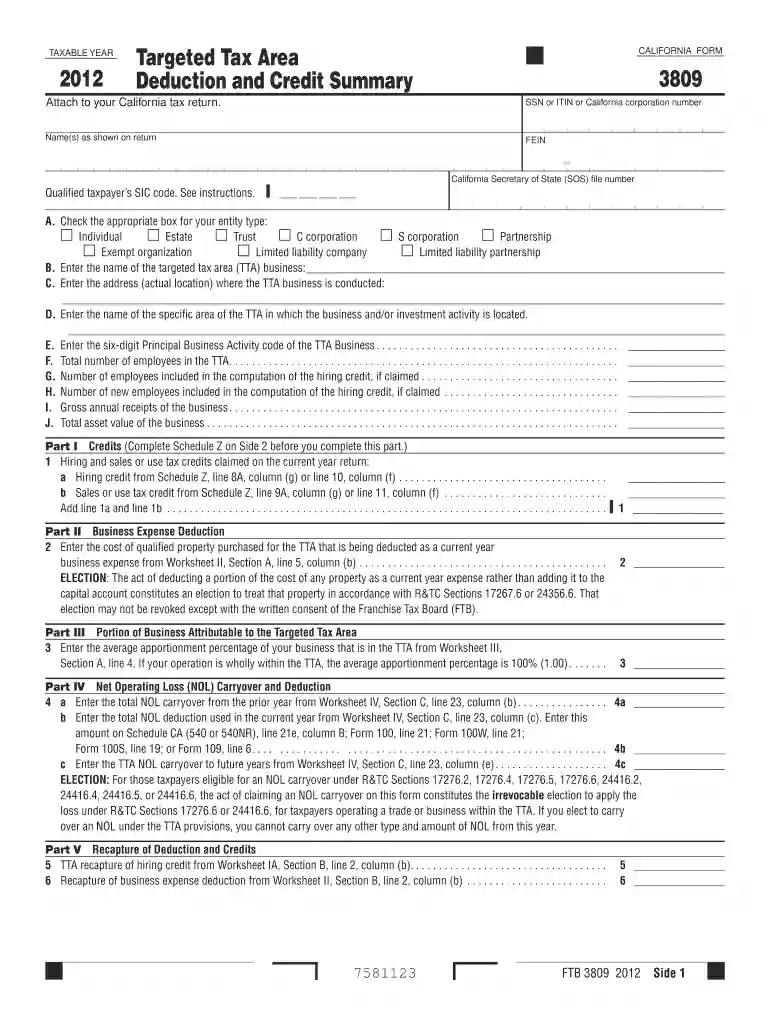
Definition and Purpose of California Form 3
California Form 3809 for the taxable year 2012, officially known as the "Targeted Tax Area Deduction and Credit Summary," serves as a document that enables qualified taxpayers to claim various tax benefits. These benefits are typically available to those operating businesses within designated Target Tax Areas (TTA) in California. The form allows taxpayers to summarize deductions and credits they are eligible for, aligning their business operations with specific state incentives.
Targeted Tax Areas Explained
- Purpose: TTAs are established to stimulate economic growth in regions that require development.
- Benefits: Tax incentives like deductions, credits, and exemptions are offered to businesses, encouraging establishment and expansion in these areas.
Importance of Form 3809
- Compliance: Ensures businesses meet regulatory requirements and claim legitimate tax benefits.
- Financial Planning: Supports effective tax planning by summarizing potential savings.
Steps to Complete California Form 3
Completing California Form 3 requires a structured approach to ensure accuracy and comprehensiveness. Here's how you can complete it effectively:
-
Gather Necessary Information
- Collect all relevant business and financial records.
- Ensure you have your taxpayer identification number and business details.
-
Fill Out Taxpayer Identification Section
- Enter the business name, address, and taxpayer identification number.
- Double-check for accuracy to avoid processing delays.
-
Calculate Eligible Deductions and Credits
- Use business records to identify applicable deductions.
- Calculate credits based on employee counts and business expenses within the TTAs.
-
Complete Each Section Methodically
- Fill out business expense deductions, net operating loss carryovers, and credit claims.
- Carefully review each entry to ensure compliance with tax rules.
-
Summarize and Double-Check Entries
- Review all figures and calculations.
- Ensure that all required fields are filled accurately.
-
Attach Supporting Documents
- Include any necessary attachments, such as previous tax returns or financial statements.
Common Errors to Avoid
- Incorrect Calculations: Ensure calculations reflect current tax law provisions.
- Omissions: Double-check for any sections left incomplete.
Obtaining California Form 3
Accessing the California Form 3 is a straightforward process. Here are the steps to obtain it:
-
Visit the California Franchise Tax Board Website
- Navigate to the forms section for downloadable copies.
-
Request through Mail
- Contact the California Franchise Tax Board to have a physical copy mailed to you.
-
Use Tax Preparation Software
- Many tax preparation software packages, such as TurboTax or QuickBooks, include this form for ease of filing.
Online Accessibility
- Forms are available for download in PDF format.
- Electronic versions may offer autofill features for enhanced ease of use.
Important Terms Related to California Form 3
Understanding key terminology is crucial for completing the form correctly:
-
Targeted Tax Areas (TTA)
- Designated zones with specific economic incentives.
-
Net Operating Loss Carryover
- The ability to apply a net operating loss to future tax years to reduce taxable income.
-
Recapture of Deductions and Credits
- A mechanism to reclaim benefits if early termination or noncompliance occurs.
Acronyms and Definitions
- TTA: Targeted Tax Area - Zones eligible for specific tax incentives.
- NOL: Net Operating Loss - Loss that can be carried over to reduce future tax liabilities.
Key Elements of California Form 3
Form 3809 consists of several critical components that need careful attention:
-
Taxpayer Identification
- Key personal and business information to be provided.
-
Business Details
- Information regarding business operations within the TTA.
-
Employee Counts
- Number of employees working within the TTA, affecting credit calculations.
-
Credit Claims and Deductions
- Lists of available credits and deductions with their calculated amounts.
Detailed Sections Breakdown
- Business Expense Deductions: Calculations based on expenses incurred in the TTAs.
- Recapture of Deductions and Credits: Necessary if prematurely ceased operations within the TTA.
Examples of Using California Form 3
Utilizing Form 3809 includes various scenarios where businesses leverage available deductions:
-
Manufacturing Company Expansion
- A manufacturer expanding operation within a TTA applies for credits on employee hires.
-
Startup Growth Incentives
- New businesses commencing within the TTA utilize tax credits to lower initial operational costs.
-
Retail Operation Tax Planning
- Retail businesses aiming to optimize tax liability by claiming business expense deductions.
Real-World Scenarios
- Redevelopment Initiatives: Businesses situated in redevelopment zones benefit from tax credits.
- Rural Business Establishments: Enterprises in rural TTAs are eligible for enhanced deduction options.
Penalties for Non-Compliance
Failure to submit a correctly completed California Form 3809 can lead to several consequences:
-
Fines and Penalties
- Potential fines for incorrect filings or failure to submit required documentation.
-
Disallowed Deductions
- Improper claims can lead to deductions being invalidated, increasing tax liabilities.
Implications of Late Submissions
- Interest may accrue on any unreported taxes, escalating financial burdens for businesses.
- Potential audits or further scrutiny by the California Franchise Tax Board.
Taxpayer Scenarios: Who Typically Uses California Form 3
Form 3809 caters to a variety of business types that benefit from tax incentives:
-
Qualified Businesses in TTAs
- Organizations established in designated areas seeking tax benefits.
-
Small to Mid-Sized Enterprises (SMEs)
- Typically pursue tax savings as part of strategic growth and compliance.
-
Large Corporations
- Leverage deductions to optimize tax expenses across multiple in-state locations.
Typical Users
- Agri-businesses: Common users when expanding into rural TTAs.
- Technology Firms: Often situated in urban TTAs to utilize economic incentives.
Filing Deadlines and Important Dates for California Form 3
To ensure timely submission, awareness of pertinent deadlines is crucial:
-
Filing Deadlines
- Typically coincides with the California corporate tax filing deadline, often April 15th.
-
Extension Requests
- Available for businesses unable to complete filings on time, but require adherence to specific state guidelines.
Important Considerations
- Amendments: Deadlines for amendment submissions to rectify prior filings.
- Record Retention: Businesses should retain documentation for at least four years post-filing in case of audits.