




01. Edit your form online
Type text, add images, blackout confidential details, add comments, highlights and more.

Type text, add images, blackout confidential details, add comments, highlights and more.

Draw your signature, type it, upload its image, or use your mobile device as a signature pad.

Send it via email, link, or fax. You can also download it, export it or print it out.
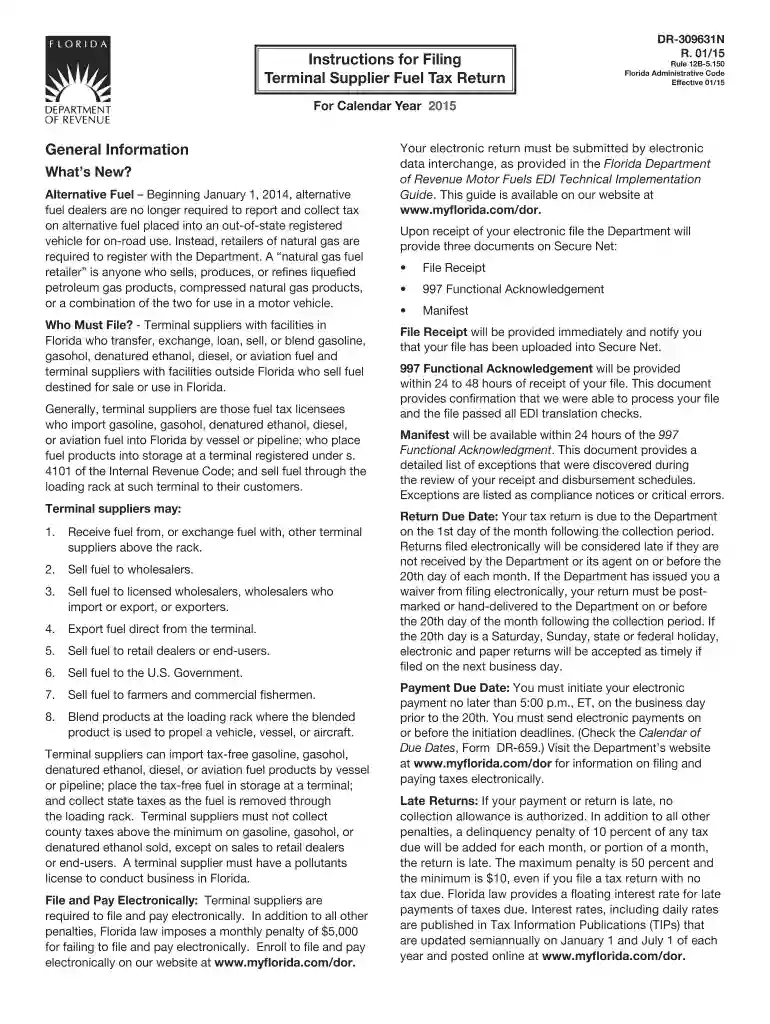
Form DR-309640, issued by the Florida Department of Revenue, is a critical document used in the state’s fuel tax reporting system. This form serves as a report for businesses engaged in activities related to fuel transactions, particularly focusing on motor fuel and other taxable fuel products. Its primary purpose is to ensure compliance with Florida’s tax regulations by accurately capturing the volume of fuel received, sold, or otherwise handled within the state's jurisdiction. Through this form, businesses declare their taxable operations related to fuel, providing the state with essential data to assess and collect the appropriate amount of tax.
Gather Necessary Information: Before starting, ensure you have all pertinent business information, including your taxpayer identification number, business name, and contact details.
Detail Fuel Transactions: Include all relevant transactions, specifying the type of fuel, volume, and transaction dates. This is critical for accuracy in tax computation.
Calculate Tax Obligations: Use the prescribed state tax rates applicable to each fuel type to determine your obligations. The form provides clear guidelines for tax rate applications.
Report Exemptions: Identify and report any transactions that qualify for exemptions under Florida law to avoid unnecessary tax liability.
Review and Submit: Carefully review the form to ensure all entries are correct, then submit it via the preferred method—online, mail, or in-person—before the filing deadline.
Form DR-309640 is primarily used by terminal suppliers, position holders, and distributors involved in the handling and distribution of fuel products within Florida. These entities are required to report their taxable operations to comply with state regulations accurately. Additionally, businesses such as gas stations and transport companies may also need to file this form if they meet certain activity thresholds defined by the Florida Department of Revenue. The objective is to maintain accurate tax payments and avoid penalties associated with non-compliance.


Understanding Florida’s unique rules and regulations around Form DR-309640 is crucial for accurate reporting. Businesses must abide by set state tax rates for each type of fuel. The state also specifies deadlines for filing and payment that must be strictly followed to avoid penalties. Comprehension of state-specific exemptions can further help in reducing taxable amounts and ensuring precise compliance with Florida’s tax code.
Legal use of Form DR-309640 involves accurately reporting all relevant fuel transactions and adhering to the deadlines set by the Florida Department of Revenue. Compliance with these requirements is mandatory for businesses operating within the fuel distribution sector in Florida. Non-compliance can result in significant penalties, including fines and potential legal action. Therefore, maintaining accuracy and timeliness in filing this form is paramount for any business's operational integrity within the state.
Filing deadlines for Form DR-309640 are critical to avoid penalties. Typically, the form must be submitted monthly, with the exact date aligned with the Florida Department of Revenue’s tax calendar. Businesses should ensure they are updated with the official deadlines, which may vary based on specific business activities or changes in regulatory requirements. Missed deadlines can incur penalties, making it vital for businesses to plan and file within the prescribed time frames.
Form DR-309640 can be submitted through various methods for convenience and efficiency:
Failure to comply with the filing requirements or deadlines of Form DR-309640 can result in severe penalties. These may include monetary fines based on the outstanding tax amounts and surcharges for late submission. In extreme cases, persistent non-compliance can attract legal action, further emphasizing the need for diligent adherence to the form's regulations and deadlines. Businesses must establish robust internal processes for accurate and timely filing to avoid such repercussions.
We've got more versions of the Form DR-309640 - Florida Department of Revenue form. Select the right Form DR-309640 - Florida Department of Revenue version from the list and start editing it straight away!
At DocHub, your data security is our priority. We follow HIPAA, SOC2, GDPR, and other standards, so you can work on your documents with confidence.
1) downloading the form from the Departments website at floridarevenue.com; or, DR-309640. Application for Refund of Tax Paid on Undyed Diesel Consumed
Aug 18, 2023 APPENDIX A: Environmental Impact Statement. APPENDIX B: Finding of No docHub Impact (FONSI). APPENDIX C: Public Comment.


