




01. Edit your form online
Type text, add images, blackout confidential details, add comments, highlights and more.

Type text, add images, blackout confidential details, add comments, highlights and more.

Draw your signature, type it, upload its image, or use your mobile device as a signature pad.

Send it via email, link, or fax. You can also download it, export it or print it out.
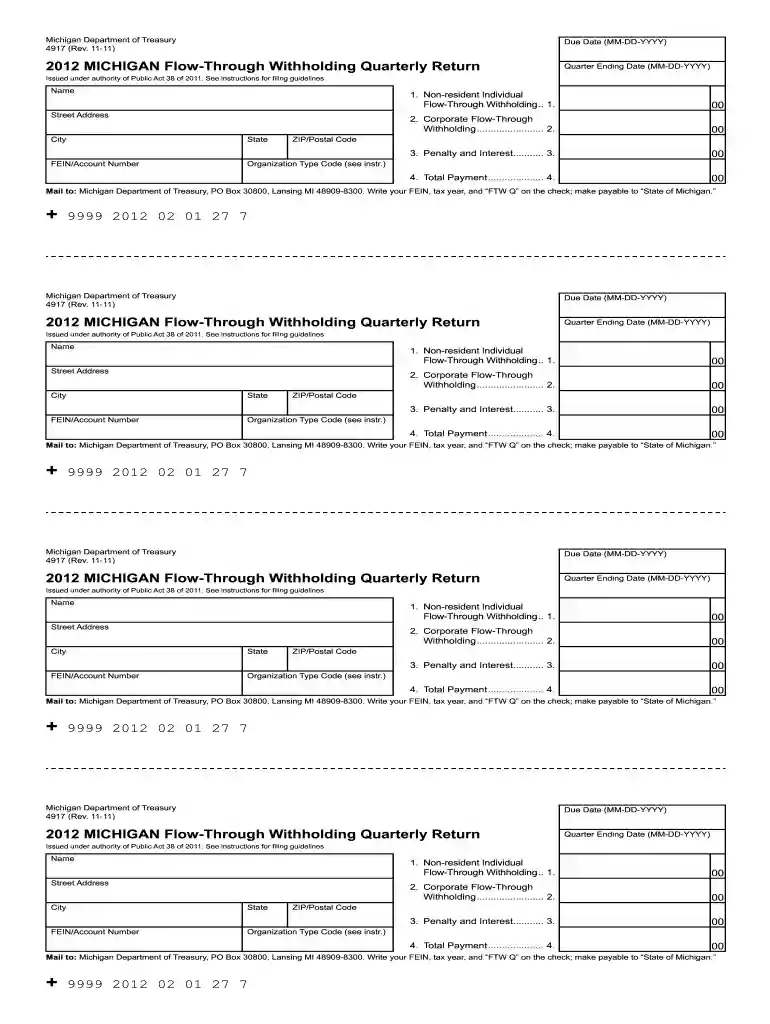
Form 4, officially known as the Michigan Department of Treasury Flow-Through Withholding Quarterly Return, is a document designed for non-resident individuals and corporations engaged in business within Michigan. The form is part of the state's efforts to manage and collect appropriate withholding taxes from entities that do not reside in the state but generate income there. It requires detailed reporting of income and the corresponding withholding amounts, ensuring that tax regulations are adhered to. Understanding the significance of this form helps businesses ensure they comply with Michigan tax laws and avoid potential legal issues.
To effectively utilize Form 4, businesses should follow these steps:
Gather Required Information: Collect all relevant financial records, including income statements and withholding details, before completing the form. Accurate data is crucial for avoiding discrepancies.
Complete Income Section: Enter the total income generated from Michigan sources. This might include sales revenues, rental income, and other earnings subject to taxation by the state.
Calculate Withholding Amounts: Determine the withholding tax based on Michigan's tax regulations. This section requires precision, as errors can lead to penalties.
Submit on Time: Ensure the form is submitted by the deadline to avoid late fees. Consider submitting early to address any unexpected issues.
Review Regularly: Make periodic checks to ensure the information remains accurate and up-to-date; this is critical if there are changes in business operations or income.
The form should be reviewed for errors before submission, and support is available from the Michigan Department of Treasury for any questions.
Successfully completing Form 4 involves several detailed steps:
Identify Business Entity Type: Determine if the filing is for an LLC, corporation, or partnership. Each type may have different requirements under Michigan law.
Input Withholding Information: Include details on taxes already withheld or paid in previous quarters. This helps calculate the net obligation or refund due.
Calculate Penalties and Interest: If applicable, use Michigan tax guidelines to compute any penalties or interest due for late submission or payment.
Sign and Date: Ensure the form is signed and dated by an authorized individual. Unsigned forms are considered incomplete.
Prepare for Submission: Choose the preferred submission method, considering both digital and paper options, to ensure timely and secure delivery.
These steps ensure that the form is complete and accurate, facilitating a smooth process with the state treasury.
Understanding the key elements of Form 4 is essential for proper completion:
Each element serves a critical function in ensuring legal compliance and effective tax management.
Non-compliance with deadlines for Form 4 can result in penalties. The form is typically due quarterly, aligning with the fiscal calendar specific to Michigan's state treasury processes.
Quarterly Deadlines: Dates generally follow the end of each calendar quarter—March 31st, June 30th, September 30th, and December 31st.
Deadline Adjustments: If a deadline falls on a weekend or holiday, the due date may extend to the next business day.
Late Filing Penalties: Understanding the consequences helps avoid unnecessary fees.
Timely filing is critical for avoiding penalties and staying in good standing with state obligations.
Non-compliance with the Form 4 filing requirements can lead to serious repercussions:
Understanding and adhering to these guidelines protects entities from negative financial and legal outcomes.
Various methods are available for submitting Form 4, each with its unique advantages:
Selecting the best method depends on business preferences and needs, emphasizing the importance of timely and secure submission.
Form 4 must be tailored to Michigan's specific tax rules:
Tax Rates: Michigan might apply different withholding rates based on the income type.
Reporting Requirements: Michigan requires businesses to adhere to unique filing procedures and formats.
Updates in Legislation: Businesses should stay informed about any changes in state tax laws affecting the form.
Understanding these state-specific guidelines ensures accurate and compliant filing, avoiding unnecessary complications or amendments.
We've got more versions of the form 4917 2012 form. Select the right form 4917 2012 version from the list and start editing it straight away!
At DocHub, your data security is our priority. We follow HIPAA, SOC2, GDPR, and other standards, so you can work on your documents with confidence.
Feb 21, 2012 Forms: CG4917 CG4918. Burden Estimate: The estimated burden has decreased from 291 to 252 hours annually. Authority: The Paperwork
If transfering to a different department, approval from the other department is required. 12, **Please email expenditure transfer (in excel format) and
Enclosed with this Report Form R-1 are copies of Annual Reports on Form 10-K for year ended December 31, 2008, filed with the. Securities and


