







Definition & Meaning
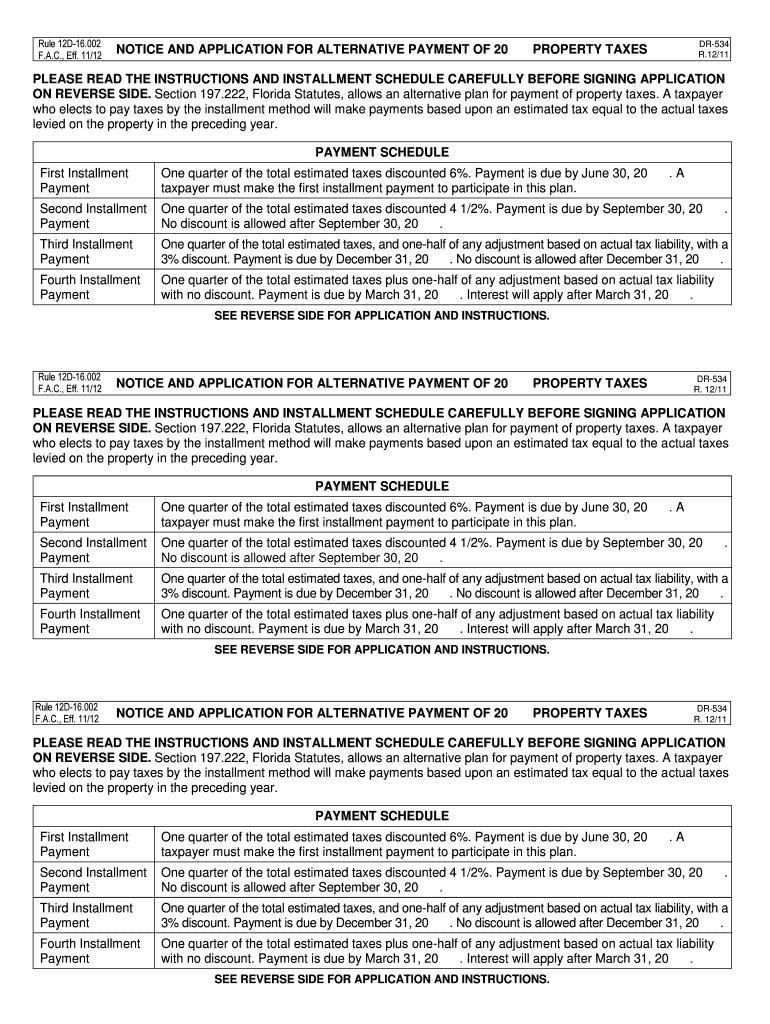
The "Notice and Application for Alternative Payment of 2011 Property Taxes" is a formal request form used by property owners to apply for an alternative payment plan for their property taxes. This plan allows taxpayers to pay taxes in installments rather than in a lump sum. It is designed to provide financial flexibility for taxpayers facing difficulty in meeting their property tax obligations all at once. This form is particularly relevant for those who were unable to pay their full property tax by the original due date.
How to Use the Notice and Application for Alternative Payment
To utilize this form effectively, property owners must understand its purpose and the process it initiates. The form should be filled out with accurate information regarding the taxpayer’s personal details, the property in question, and the estimated taxes owed. Upon completion, the form is submitted to the relevant tax authority, typically a local or county office.
- Ensure that all requested information is provided accurately.
- Indicate the estimated tax amount from the previous year.
- Submit the application before the deadline specified by the tax authority to avoid penalties.
Steps to Complete the Form
Filling out the "Notice and Application for Alternative Payment of 2011 Property Taxes" requires attention to detail. Follow these steps to ensure completeness and accuracy:
- Gather Necessary Information: Have your personal identification details, property address, and previous year's tax details ready.
- Complete the Form: Fill in sections related to taxpayer information, property identification, and tax installment preferences.
- Review and Sign: Double-check all entries for accuracy. Sign the form affirming that the information is correct.
- Submit the Form: Send the completed form to the appropriate tax authority by the required deadline.
Who Typically Uses the Form
Typically, residential and business property owners who are unable to pay their property taxes in full use this form. These individuals may include:
- Homeowners experiencing financial hardship.
- Small business owners seeking to manage cash flow more effectively.
- Retirees on fixed incomes who need more time to pay their taxes.


Eligibility Criteria
To qualify for the alternative payment plan, applicants usually must:
- Have an estimated tax bill exceeding a certain threshold, based on local rules.
- Submit the application by the specified deadline, often April 30.
- Pay the first installment by an established date, typically June 30.
Meeting these criteria is critical to being accepted into the installment plan and avoiding penalties.

Required Documents
Certain documents are commonly required when filling out the application:
- Previous year’s tax assessment.
- Personal identification (e.g., driver’s license or state ID).
- Proof of income or financial statements if relevant to the application process.
Filing Deadlines / Important Dates
The filing deadlines are crucial for applicants:
- Application Deadline: Must be submitted by April 30 to be considered for the current tax year’s installment plan.
- First Payment Deadline: Typically due by June 30, with the subsequent installments following a specified schedule.
Failure to meet these deadlines may result in disqualification from the payment plan and potential penalties.
Penalties for Non-Compliance
Non-compliance with the installment plan's requirements can result in various penalties, such as:
- Accumulation of interest on unpaid taxes.
- Liability for late fees or additional charges.
- Possible initiation of foreclosure proceedings by the local taxing authority.
Understanding these risks is essential for any taxpayer considering the alternative payment plan.
State-by-State Differences
Regulations and requirements for the alternative payment of property taxes can vary significantly by state. Key differences may include:
- Variation in tax thresholds for eligibility.
- Differences in application deadlines and payment dates.
- State-specific benefits or discounts for early payments.
Researching specific state guidelines will provide accurate details applicable to your locale.


