




01. Edit your application installment online
Type text, add images, blackout confidential details, add comments, highlights and more.

Type text, add images, blackout confidential details, add comments, highlights and more.

Draw your signature, type it, upload its image, or use your mobile device as a signature pad.

Send dr534 via email, link, or fax. You can also download it, export it or print it out.
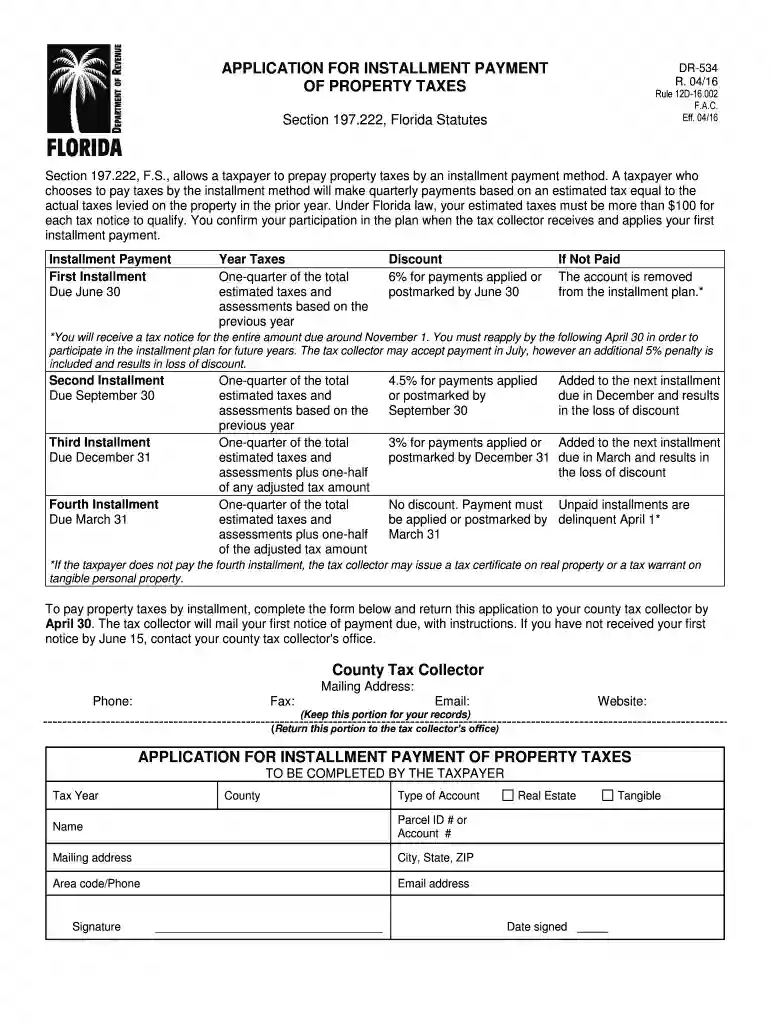
An "application installment payment" form is a document that allows taxpayers, particularly in the U.S., to apply for paying their property taxes or other financial obligations in scheduled, incremental payments rather than a lump sum. This method is particularly beneficial for budgeting purposes, as it distributes the financial burden over a specified period. Typically, these installments are spread over the fiscal year, allowing taxpayers to manage their finances more effectively.
Completing the application installment payment involves several key steps, each designed to ensure accurate and timely submission of the form. Here's how to navigate the process from start to finish.
Gather Documentation: Have your personal and financial information ready, including your tax identification number and details of the tax to be paid in installments.
Eligibility Check: Ensure that you meet specific eligibility criteria for installment payments. For instance, in Florida, you must apply by April 30 to qualify for the program.
Fill Out Personal Information: Provide your full name, address, and contact details on the form.
Select Payment Schedule: Choose the frequency and number of installments you prefer, such as quarterly or monthly payments.
Submit Documents: Include any required supporting documents, such as proof of income or previous tax records, as specified by your tax authority.
Sign and Submit: Verify all provided information is accurate and sign the form according to your local regulations. Submit it online, via mail, or in person as per your local tax office's instructions.
The installment payment method offers various advantages to taxpayers who may struggle with the financial implications of a lump sum payment.
Several elements are essential when dealing with an application installment payment, ensuring taxpayers meet their obligations comprehensively.
Different U.S. states may have unique rules governing the installment payment process, impacting eligibility and payment schedules.
Various groups of individuals and entities often rely on the installment payment plans for different reasons.



To successfully apply for an installment payment plan, having the proper documentation is crucial.
Understanding real-world scenarios can clarify how the application installment payment functions effectively for taxpayers.
Home Renovation Impact: Jeff, an Oregon resident, utilizes installment payments to manage both his property taxes and recent home renovation expenses without disrupting the family's financial stability.
Seasonal Workers: A seasonal worker in California capitalizes on the flexibility of installment payments to align tax payments with seasonal income fluctuations.
By following structured pathways and insights from these blocks, taxpayers can navigate the complexities of the installment payment process with greater assurance and efficiency.
We've got more versions of the application installment form. Select the right application installment version from the list and start editing it straight away!
At DocHub, your data security is our priority. We follow HIPAA, SOC2, GDPR, and other standards, so you can work on your documents with confidence.
We will apply all payments on this agreement in the best interests of the United States. Generally we will apply the payment to the oldest collection statute,.
The IRS Online Payment Agreement system lets you apply and receive approval for a payment plan to pay off your balance over time.
TIP offers a choice of on-line payment plans paid either by credit card or automatic bank payments (ACH) from your checking or savings account.


