




01. Edit your form online
Type text, add images, blackout confidential details, add comments, highlights and more.

Type text, add images, blackout confidential details, add comments, highlights and more.

Draw your signature, type it, upload its image, or use your mobile device as a signature pad.

Send it via email, link, or fax. You can also download it, export it or print it out.
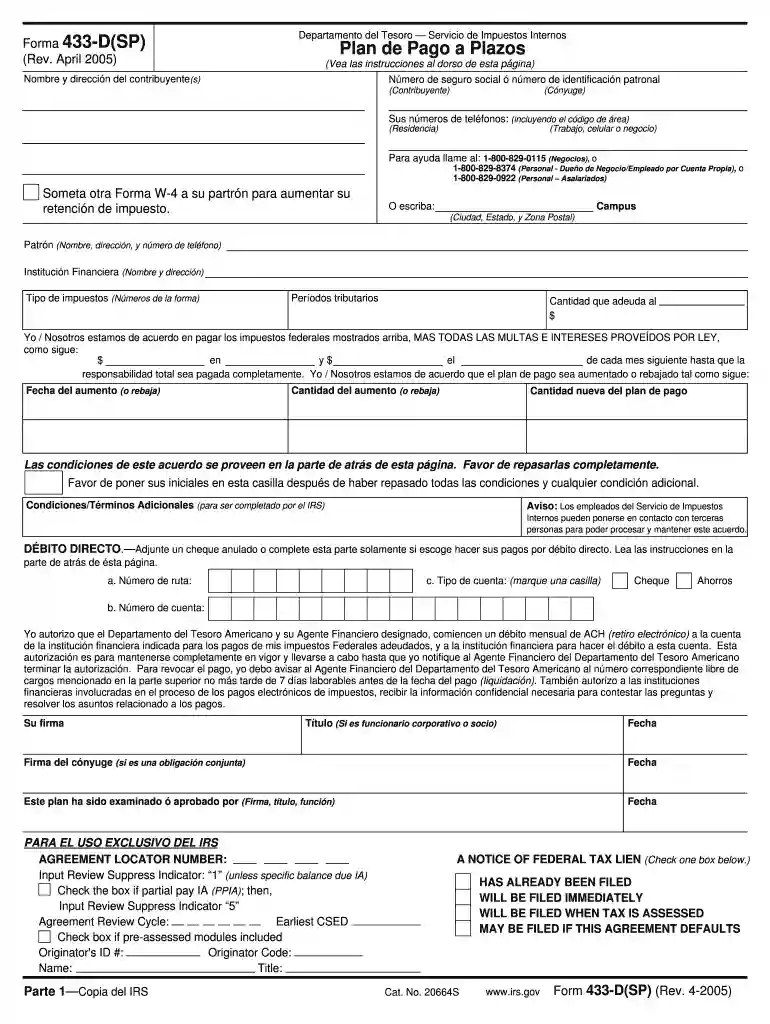
Form 433-D, known as an Installment Agreement, is a critical IRS document that facilitates taxpayers in setting up a legally binding payment plan for settling their federal tax liabilities over time. This form outlines the taxpayer's financial details, the total amount owed, and the terms under which they agree to fulfill their tax obligation via periodic installment payments. It includes specifics such as the payment amount, frequency, and method, often through direct debit from a bank account. Known more commonly as an Installment Agreement, this form allows taxpayers to meet their obligations without bearing the financial strain of paying in full immediately.
To effectively use Form 433-D, taxpayers should first gather all necessary personal and financial information, including their Social Security Number, tax filing status, and the total tax debt. This form must be completed accurately to avoid delays in processing or rejection by the IRS. Taxpayers will need to outline their proposed payment schedule, ensuring it adheres to IRS guidelines and that they can reasonably meet these obligations. Once completed, the form should be returned to the IRS via the specified submission methods, which may include mailing or faxing, depending on the circumstances outlined by the IRS.
Gather Required Information:
Fill Out Personal Information:
Outline Payment Schedule:
Review Terms of the Agreement:
Submit the Form:
Await Confirmation:
Form 433-D is predominantly used by individual taxpayers who require structured payment plans to meet their federal tax obligations. Common users include those who have experienced unexpected financial difficulties, such as job loss or medical expenses, which prevent them from paying their taxes in full. Additionally, small business owners facing temporary cash flow challenges may also benefit from utilizing this form to manage tax debts without disrupting their operations.
Form 433-D can be submitted to the IRS through several channels, depending on individual preferences and IRS requirements:
Additionally, submitting digitally through IRS-sponsored tools where applicable ensures quicker processing and confirmation.
Form 433-D serves the legal purpose of formalizing an individual's intent to repay their tax debt under specified terms and conditions. Signing this form is a legally binding acknowledgment of the debt and the agreed-upon payment arrangement, making compliance critical. Failure to comply with the terms, such as missing payments or providing inaccurate information, can result in penalties or nullification of the agreement.
The IRS stipulates specific guidelines for entering into an installment agreement using Form 433-D. Taxpayers must adhere to these to avoid potential repercussions, which can include:
Understanding and following the IRS guidelines ensures continuation of the agreement without additional stress or legal complications.
We've got more versions of the where to fax form 433 d 2005 form. Select the right where to fax form 433 d 2005 version from the list and start editing it straight away!
At DocHub, your data security is our priority. We follow HIPAA, SOC2, GDPR, and other standards, so you can work on your documents with confidence.
The taxpayer may select any installment payment date between the 1st and 28th day of each month. Form 433-D, Installment Agreement can be completed using RGS.
As required by Financial Regulation 13.3, the External Auditors opinion and his report on the 2011 financial statements are also submitted to the Council and
Jun 22, 2017 For us to consider an installment. Installment agreement for your overdue taxes, you Agreement must complete Form 433F, Collection. Information


