
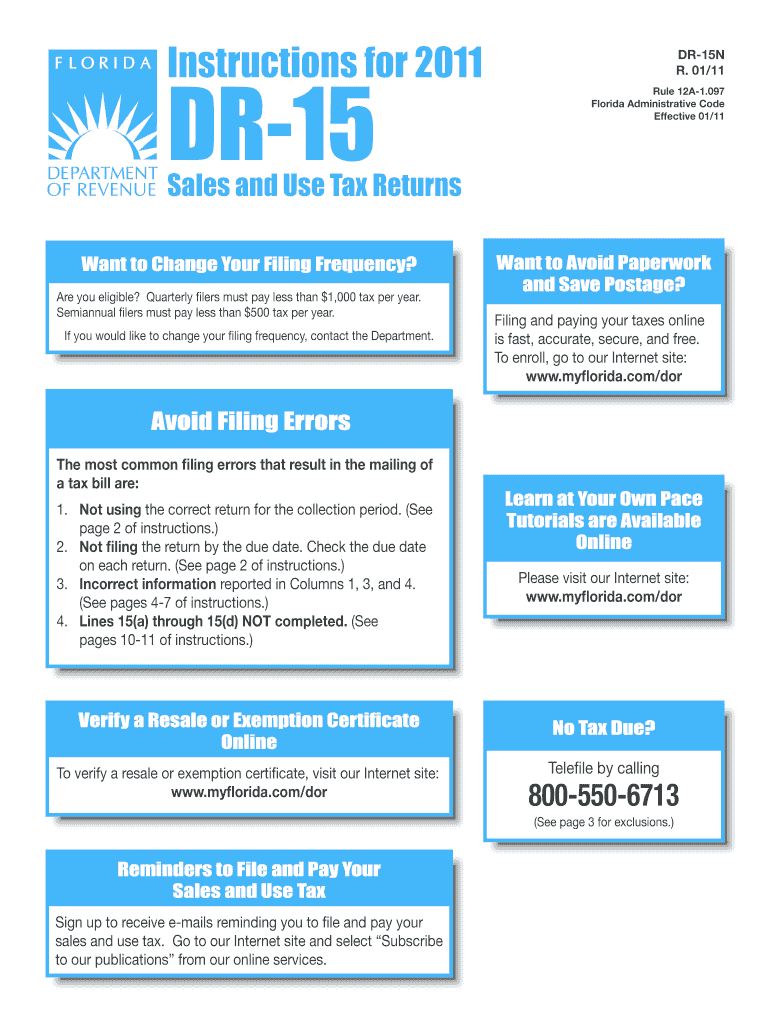







Definition & Purpose of Form DR-15N 2011
Form DR-15N 2011 is an informational guide associated with the Florida Sales and Use Tax Return (Form DR-15). This form provides instructions and guidelines for individuals and businesses on how to correctly complete and file their tax returns for the year 2011. The primary purpose of Form DR-15N 2011 is to ensure accurate reporting and compliance with Florida's sales tax regulations. It helps taxpayers understand the steps necessary to calculate and pay the appropriate taxes on goods and services.
Important Components
- Eligibility Criteria: Outlines who is required to file a Florida Sales and Use Tax Return and under what circumstances businesses must collect and remit sales tax.
- Filing Instructions: Provides a step-by-step guide on filling out Form DR-15, ensuring taxpayers include all necessary information.
- Tax Calculation: Details how to calculate sales tax, use tax, and any applicable discretionary sales surtax.
Steps to Complete Form DR-15N 2011
-
Gather Required Documents: Collect all relevant financial records, including receipts and invoices, to ensure you have accurate data for reporting.
-
Follow the Guidelines: Review the comprehensive instructions within Form DR-15N 2011 to understand the specific steps for completing each section of the tax return form.
-
Calculate Tax: Use the guidelines to calculate taxable sales, sales tax due, and the total amount payable, including any discretionary surtaxes.
-
Complete the Filing: Enter the calculated amounts into the corresponding sections of Form DR-15 and ensure all required information is provided.
-
Check for Errors: Verify all entries for accuracy to avoid common errors that could result in delays or penalties.
Subsection: Common Filing Errors to Avoid
- Miscalculating sales tax or discretionary surtax amounts.
- Omitting required signatures or necessary supporting documentation.
- Incorrectly completing fields or leaving sections blank that require an input.
Legal Use of Form DR-15N 2011
Form DR-15N 2011 serves as a legal guideline for businesses and individuals required to file Florida Sales and Use Tax Returns. The guide adheres to the state's tax laws, ensuring that taxpayers comply with legal obligations. Utilizing the form correctly helps avoid legal complications that arise from misreporting or failing to comply with Florida's tax regulations.
Compliance Requirements
- Accurate Reporting: Ensure that all sales and tax amounts reported are accurate and supported by documentation.
- Timely Filing: Submit the completed tax return before the designated deadlines to avoid late fees or interest penalties.
Filing Deadlines and Important Dates
- Monthly Filings: Due on the 1st of the month following the reporting period, with payment due by the 20th of the same month.
- Quarterly Filings: Generally required by businesses with lower volumes of taxable sales, due every quarter with specific dates outlined in the form.
- Annual Filings: Used by businesses opting for an annual filing frequency, typically due by January 20th of the following year.
Strategies for Timely Compliance
- Set calendar reminders for all relevant filing deadlines.
- Review the filing schedule provided in Form DR-15N 2011 to determine your required frequency.
- Consider electronic filing options to streamline the submission process.
Who Typically Uses Form DR-15N 2011
This form is primarily used by businesses and individuals operating within Florida who are required to file sales and use tax returns. It applies to a variety of entities, including:
- Retail Businesses: Required to collect sales tax on goods and services.
- Service Providers: Depending on the type of service, may need to remit sales tax.
- Online Sellers: Engaged in e-commerce and required to comply with sales tax laws.
Key Participant Criteria
- Any entity engaging in the sale of taxable goods or services within the state of Florida.
- Out-of-state businesses making sales to Florida residents may also have reporting obligations.
Key Elements of Form DR-15N 2011
Form DR-15N 2011 details several critical components necessary for correct filing:
- Tax Rate Information: Includes the state’s standard sales tax rate and any variable local discretionary surtax rates.
- Record-Keeping Requirements: Advises on maintaining proper documentation to support reported amounts on your return.
- Contact Information: Provides resources for taxpayers needing assistance, including telephone numbers and websites for additional support.
Detailed Overview of Record-Keeping
- Maintain sales receipts for at least three years.
- Organize documents chronologically to facilitate efficient auditing processes.
State-Specific Rules for Form DR-15N 2011
Each state has unique taxation rules, and Florida is no exception. The form outlines specific requirements for Florida taxpayers, taking into account state-specific regulations and exemptions.
Examples of Florida Regulations
- Exemptions for Certain Goods: Some goods may be exempt from sales tax under Florida law; these exemptions are detailed within the form.
- Special Tax Holidays: Florida may offer tax-free days, impacting sales occurring during those periods.
How to Obtain Form DR-15N 2011
The form can be easily accessed through a variety of methods to ensure readiness for filing:
- Online: Available for download from the Florida Department of Revenue’s official website.
- Mail: Request a physical copy to be sent directly by the Department of Revenue.
- In-Person: Visit local revenue offices for guidance and obtain the form in person.
Considerations for Accessing the Form
- Ensure you’re using the correct year’s version, as tax forms change annually.
- Utilize digital copies to streamline record-keeping and filing processes electronically.




