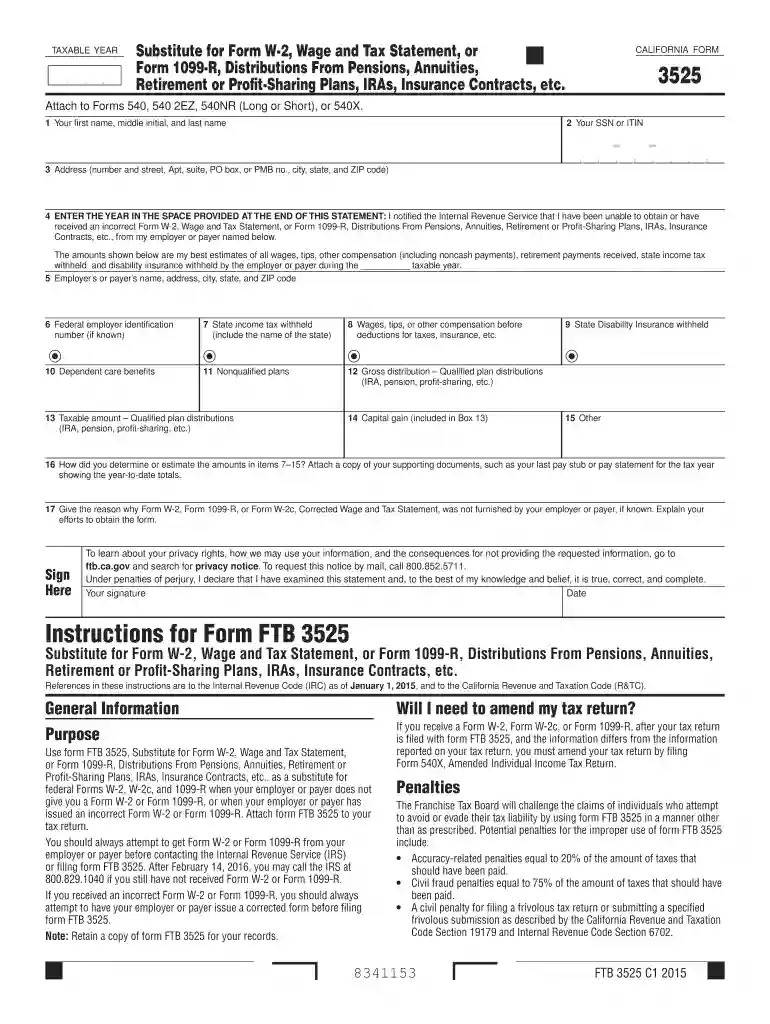
Acceptable Forms and Occurrences for CA Individual e-file 2026

Get Form
Acceptable Forms and Occurrences for CA Individual e-file Preview on Page 1

Here's how it works

01. Edit your form online
Type text, add images, blackout confidential details, add comments, highlights and more.

02. Sign it in a few clicks
Draw your signature, type it, upload its image, or use your mobile device as a signature pad.

03. Share your form with others
Send it via email, link, or fax. You can also download it, export it or print it out.

Definition & Meaning

The "Acceptable Forms and Occurrences for CA Individual e-file" refers to the specific types of tax forms and circumstances under which California residents can electronically file their individual tax returns. This includes forms such as the California Form 540, 540NR, or 540 2EZ, which are used for state tax reporting. Electronic filing is commonly used because it offers a faster and more secure way for taxpayers to submit their information to the California Franchise Tax Board. Understanding which forms are acceptable for e-filing is crucial for ensuring that submissions are processed correctly and without delay.

How to Use the Acceptable Forms and Occurrences for CA Individual e-file

To use the acceptable forms for CA individual e-file, taxpayers need to:

  1. Identify the Correct Form: Determine which tax form best fits your tax situation from options like Form 540 for residents or Form 540NR for nonresidents.
  2. Gather Required Information: Collect all necessary tax documents, such as W-2s, 1099s, and other income statements.
  3. Choose E-file Software: Select an approved e-file provider or tax software that supports California state e-filing.
  4. Enter Details: Accurately input personal and financial information into the selected software.
  5. Review and Submit: Review all information for accuracy before submitting through the e-file system.

These steps streamline the filing process, ensuring compliance with California tax laws.

Steps to Complete the Acceptable Forms and Occurrences for CA Individual e-file

Completing the forms involves several steps:

  1. Preparation: Begin by collecting all necessary tax documentation, including previous year’s tax returns and personal identification information.
  2. Form Selection: Choose the correct form based on residency status (Form 540 for residents, Form 540NR for nonresidents).
  3. Input Data: Use tax preparation software to enter all relevant details, including income, deductions, and credits.
  4. Validation: Use the software’s tools to validate the information for errors and compliance.
  5. E-file Submission: Submit the completed form electronically through an approved platform.
  6. Confirmation: Upon successful e-filing, receive a confirmation notice indicating that the California Franchise Tax Board has received the submission.

Required Documents

To successfully e-file, you must collect:

  • Income statements such as W-2 forms, 1099 forms, and any other relevant income documentation.
  • Last year’s state tax return for reference.
  • Personal identification, including a social security number or taxpayer identification number.
  • Documentation for deductions, credits, or exemptions, such as mortgage interest statements or student loan interest forms.

Ensuring these documents are complete and accurate is essential for a smooth e-filing process.

Software Compatibility

Utilizing appropriate software is key for California individual e-file. Compatibility with popular tax preparation and e-filing software like TurboTax and QuickBooks is essential. These platforms allow seamless integration, accurate tax form completion, and secure submission. Ensure that the chosen software is certified for California state e-filing to avoid compatibility issues and submission errors. Software updates in tax laws and regulations are crucial for compliant filing.

IRS Guidelines

While focusing on California e-filing, it is imperative to consider IRS guidelines as federal and state taxes are often filed concurrently. Ensure you understand federal tax obligations, as discrepancies could affect state filing. Taxpayers should refer to IRS publications for guidance on tax credits, deductions, and e-filing procedures, which help in accurately completing both federal and state forms.

Filing Deadlines / Important Dates

The typical deadline for California individual tax returns coincides with the federal tax filing deadline, generally April 15. If the 15th falls on a weekend or holiday, the deadline shifts to the next business day. Taxpayers may request an extension, usually by October 15. It is crucial to be aware of these deadlines to avoid late fees or penalties. Marking these dates on a calendar can aid in timely preparation and submission.

Penalties for Non-Compliance

Failure to comply with California e-filing requirements can result in various penalties, such as:

  • Late Filing Penalties: Incurred if tax returns are not filed by the due date without an approved extension.
  • Accuracy-related Penalties: Applied if there are significant errors or omissions on the tax return.
  • Non-payment Penalties: Assessed if taxes owed are not paid by the deadline.

Understanding these penalties emphasizes the importance of timely and accurate filing.

Important Terms Related to Acceptable Forms and Occurrences for CA Individual e-file

  • Franchise Tax Board (FTB): The California agency responsible for administering state income taxes.
  • 540 Form: The standard tax return form for California residents.
  • Electronic Funds Withdrawal (EFW): A payment option for electronic filers to pay taxes directly from a bank account.

Familiarizing yourself with these terms helps in navigating the California e-file process smoothly.

See more Acceptable Forms and Occurrences for CA Individual e-file versions

We've got more versions of the Acceptable Forms and Occurrences for CA Individual e-file form. Select the right Acceptable Forms and Occurrences for CA Individual e-file version from the list and start editing it straight away!
Versions Form popularity Fillable & printable
2022 4.8 Satisfied (50 Votes)
2021 4.8 Satisfied (76 Votes)
2020 4.3 Satisfied (166 Votes)
2019 4.4 Satisfied (241 Votes)
2018 4.3 Satisfied (93 Votes)
2017 4.3 Satisfied (58 Votes)
2016 4.4 Satisfied (288 Votes)
2015 4.3 Satisfied (46 Votes)
2014 4 Satisfied (37 Votes)
2013 4 Satisfied (30 Votes)
2011 3.9 Satisfied (39 Votes)
2006 4 Satisfied (55 Votes)
be ready to get more

Complete this form in 5 minutes or less

Get form

Got questions?

We have answers to the most popular questions from our customers. If you can't find an answer to your question, please contact us.
Contact us
B. Who Must File Normal gross receiptsFile Gross receipts normally $50,000 or less* FTB 199N Gross receipts more than $50,000 Form 199 Private foundations (regardless of gross receipts) Form 199 Nonexempt charitable trusts described in IRC Section 4947(a)(1) (regardless of gross receipts) Form 199
California Forms Instructions 540. FTB.ca.gov.
These include: A W-2 form from each employer. Other earning and interest statements (1099 and 1099-INT forms) Receipts for charitable donations; mortgage interest; state and local taxes; medical and business costs; and other tax-deductible expenses if you are itemizing your return.
Mandatory e-file requirement California law requires tax preparers to e-file if they prepare: More than 100 individual income tax returns. 1 or more returns using tax preparation software.
Form 540 is used by California residents to file their state income tax every April. This form should be completed after filing your federal taxes, such as Form 1040, Form 1040A, or Form 1040EZ, because information from your federal taxes will be used to help fill out Form 540.

Security and compliance

At DocHub, your data security is our priority. We follow HIPAA, SOC2, GDPR, and other standards, so you can work on your documents with confidence.

Learn more
ccpa2
pci-dss
gdpr-compliance
hipaa
soc-compliance

People also ask

The fiduciary (or one of the fiduciaries) must file Form 541 for a trust if any of the following apply: Gross income for the taxable year of more than $10,000 (regardless of the amount of net income) Net income for the taxable year of more than $100. An alternative minimum tax liability.
Forms not eligible for e-filing Dual-Status Return or Dual-Status Statement. Form 56, Notice concerning fiduciary relationship. Form 433-F, Collection Information Statement. Form 8283, Noncash Charitable Contributions. Form 8873, Extraterritorial Income Exclusion. Form 14039, Identity Theft Affidavit.
FTB Form 590, Withholding Exemption Certificate, listing CHCF as the withholding agent and certifying exemption from the withholding requirement. CA Form 587, Nonresident Income Allocation Worksheet, which allocates the expected income under CHCFs contract for work completed within and outside of California.

Related links