Definition & Meaning
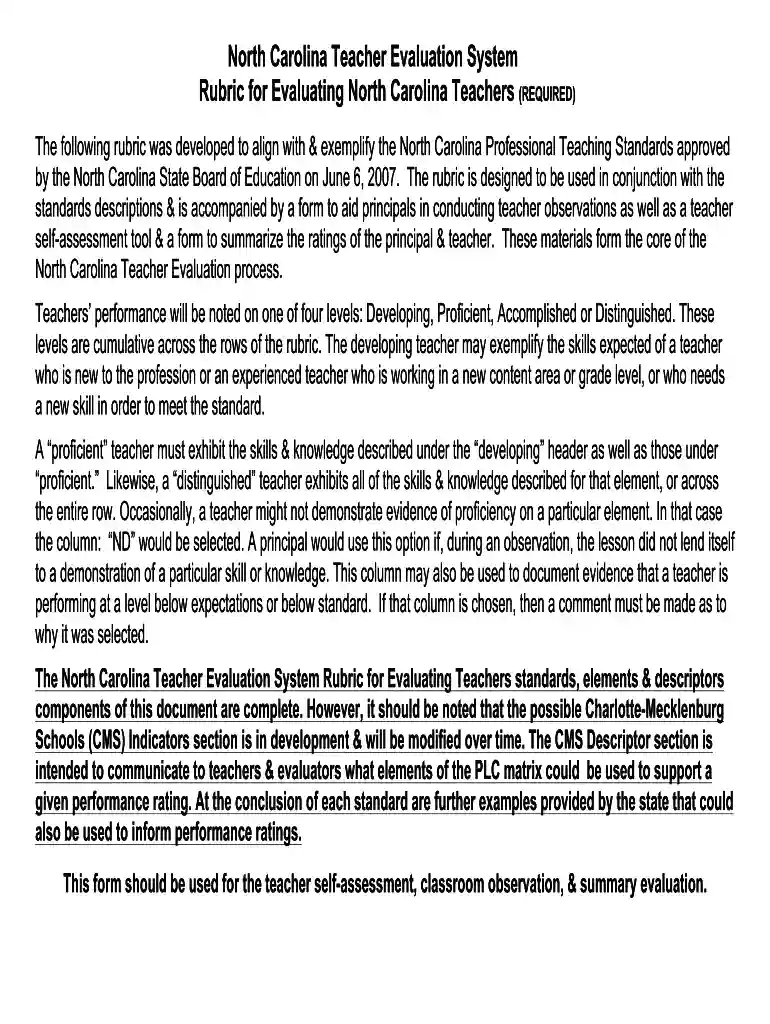
The "nc teacher evaluation rubric form sample" refers to a standardized document that outlines the criteria used for evaluating teachers in North Carolina. This form is aligned with the North Carolina Professional Teaching Standards, which provide a framework for assessing teacher performance across various domains. The evaluation is designed to assess and enhance the quality of teaching by addressing areas such as professional development, instructional practices, and contributions to school leadership and community.
Key Components
- Performance Levels: The rubric includes four performance levels – Developing, Proficient, Accomplished, and Distinguished – to categorize teacher effectiveness.
- Evaluation Areas: It covers multiple areas, including teacher leadership, advocacy, and creating inclusive learning environments.
- Professional Development: Emphasizes the importance of ongoing learning for teachers to improve their instructional practices and adapt to diverse student needs.
How to Use the NC Teacher Evaluation Rubric Form Sample
Using this form effectively requires a deep understanding of its structure and purpose. The form is generally completed by school administrators or evaluators who observe classroom practices and assess a teacher’s performance based on predefined standards.
Steps for Evaluators
- Familiarize with Standards: Understand the North Carolina Professional Teaching Standards to evaluate consistently.
- Classroom Observation: Conduct thorough observations of classroom interactions, teaching methods, and student engagement.
- Performance Rating: Assign ratings based on observed practices and documented evidence, ensuring fairness and accuracy.
- Provide Feedback: Offer constructive feedback to help teachers improve their performance and achieve higher competency levels.
Steps to Complete the NC Teacher Evaluation Rubric Form Sample
Completing this form involves a systematic approach to ensure thorough assessment and documentation.
Detailed Steps
- Preparation: Review the form and understand the criteria before beginning the evaluation.
- Observation: Conduct at least one detailed observation session to accurately assess teaching methods and student interactions.
- Documentation: Note observations and findings for each criterion on the rubric. Ensure that all evidence is adequately documented.
- Rating Assignment: Assign a rating for each category based on the documented evidence and rubric standards.
- Feedback Session: Conduct a feedback session with the teacher to discuss the evaluation results and suggest areas for improvement.
- Finalization: Ensure the form is completed accurately and signed by both the evaluator and the teacher for official records.
Key Elements of the NC Teacher Evaluation Rubric Form Sample
The form is structured to cover various aspects of teaching that contribute to effective educational practices.
Essential Elements
- Teacher Leadership: Evaluates a teacher's ability to lead and inspire both students and colleagues.
- Professional Practices: Assesses teaching methods and the ability to foster a positive learning environment.
- Community Engagement: Looks at how teachers interact with and contribute to the school community beyond classroom responsibilities.
Importance of the NC Teacher Evaluation Rubric Form Sample
The evaluation form plays a crucial role in maintaining and improving the quality of education within the state.
Significance
- Teacher Development: Provides a structured approach for identifying areas for professional growth.
- Educational Standards: Ensures that teaching practices align with state education standards, promoting consistency and quality in education.
- Student Outcomes: Improves student learning outcomes by focusing on effective teaching strategies and classroom management.
Legal Use of the NC Teacher Evaluation Rubric Form Sample
It is important to understand the legal aspects of using this evaluation form within the educational system.
Legal Considerations
- Privacy and Confidentiality: Ensure that all evaluations and records are kept confidential and are used solely for intended purposes.
- Legally Binding: The form is a legally binding document once completed and signed, serving as an official record of teacher performance.
- Compliance: Schools must comply with state regulations regarding the use and storage of completed evaluation forms.
State-Specific Rules for the NC Teacher Evaluation Rubric Form Sample
The form must be used in accordance with specific guidelines set by North Carolina educational authorities.
Compliance Guidelines
- Regulatory Adherence: Follow the state’s specific regulations on submitting and reviewing evaluations.
- Periodic Review: The rubric may be subject to updates; staying informed of any changes ensures compliance with current standards.
- Training Requirements: Evaluators may need state-sanctioned training to use the form effectively and understand the criteria.
Examples of Using the NC Teacher Evaluation Rubric Form Sample
Practical examples illustrate the form's application within educational settings.
Case Studies
- New Teacher Assessment: Used to evaluate new teachers during their probation period to identify strengths and opportunities for growth.
- Mature Teacher Evaluation: Applied to experienced teachers for assessing continued effectiveness and adaptation to new instructional strategies.
- School-wide Implementation: Part of a broader effort to improve teaching quality across a district, providing insights into collective educational strategies.