
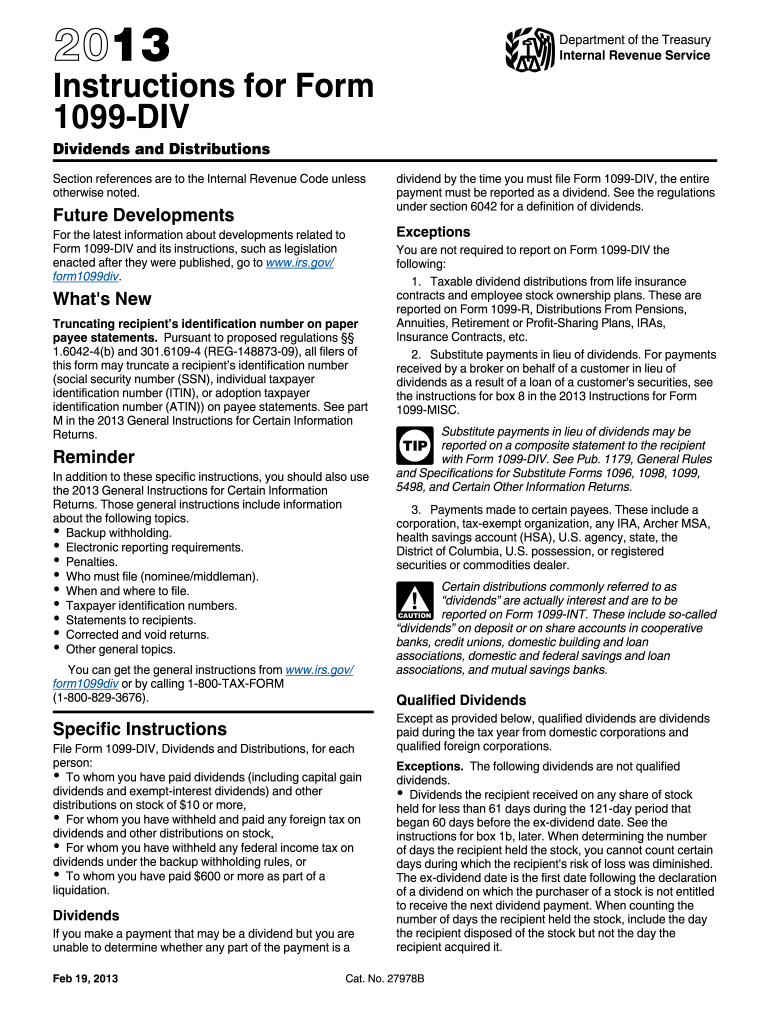







Understanding Form 1099-DIV for 2013
Form 1099-DIV is a critical tax document that reports dividends and other distributions paid to investors. This form helps ensure compliance with IRS regulations, as dividends must be reported as income by the recipient. The 1099-DIV form serves as a financial summary, listing different types of dividend income, including ordinary dividends, qualified dividends, and capital gain distributions.
Obtaining the Form 1099-DIV 2013
To access the 1099-DIV form for 2013, individuals generally receive it from financial institutions or companies where they hold investments. If you have not received this form by mail, you may download it from the IRS website or request it through your brokerage firm. It is important to ensure you have all necessary forms before filing your taxes to avoid discrepancies.
Completing Form 1099-DIV 2013
When filling out Form 1099-DIV for 2013, accuracy is essential. Collect all details regarding the amounts distributed throughout the fiscal year. Ensure each box accurately reflects the correct category of distribution:
- Box 1a & 1b: Report total ordinary dividends, including those that qualify for a lower tax rate.
- Box 2a: Capital gain distributions need careful attention to ensure correct reporting.
- Box 3: Utilize this field for any non-dividend distributions.
Who Needs to Use Form 1099-DIV 2013
Form 1099-DIV applies broadly to individuals and entities receiving dividends from stocks, mutual funds, or REITs. It aids in tracking taxable income from these investments. Typically, financial advisors and tax professionals assist investors to interpret and file this form if they have multiple holdings or complex investment portfolios.
Key Components of Form 1099-DIV 2013
Understanding the components of Form 1099-DIV helps taxpayers accurately report dividend income:
- Ordinary Dividends: Standard taxable dividends reported in Box 1a.
- Qualified Dividends: Eligible for lower capital gains tax rates, listed in Box 1b.
- Capital Gains Distributions: Reports gains from asset sales made within funds, noted in Box 2a.
- Non-Dividend Distributions: Returns of capital, specified in Box 3.
IRS Guidelines for Form 1099-DIV 2013
The IRS provides detailed instructions for filing the 1099-DIV form to ensure proper reporting. Taxpayers should adhere to guidelines that distinguish between qualified and ordinary dividends, ensuring accurate tax treatment. Additionally, capital gain distributions must align with IRS definitions to avoid complications.
Filing Deadlines for 1099-DIV 2013
Timely submission of Form 1099-DIV is crucial:
- To Recipients: Must be delivered by January 31 to ensure taxpayers can file accurately.
- To the IRS: Form 1099-DIV information should be sent by February 28 if filing on paper, or March 31 if filing electronically.
Penalties for Non-Compliance with 1099-DIV
Failure to file Form 1099-DIV accurately and on time may result in penalties. These fines can escalate based on the extent of lateness or inaccuracies, affecting both financial institutions and individual taxpayers. It's essential to verify the information meticulously to avoid such penalties.
Variations and Software Compatibility
Form 1099-DIV has not significantly changed over the years, but it is essential to verify any updates for each tax year. Software like TurboTax and QuickBooks can streamline the reporting process by automatically importing data and helping you fill out the forms efficiently. These tools are invaluable for maintaining accuracy and ease of filing for taxpayers handling multiple financial documents.
This comprehensive guide helps you understand, obtain, and accurately complete Form 1099-DIV for 2013 while highlighting deadlines and potential penalties. Following the IRS guidelines ensures a seamless tax filing process, mitigating any risks associated with non-compliance.


