




01. Edit your form online
Type text, add images, blackout confidential details, add comments, highlights and more.

Type text, add images, blackout confidential details, add comments, highlights and more.

Draw your signature, type it, upload its image, or use your mobile device as a signature pad.

Send it via email, link, or fax. You can also download it, export it or print it out.
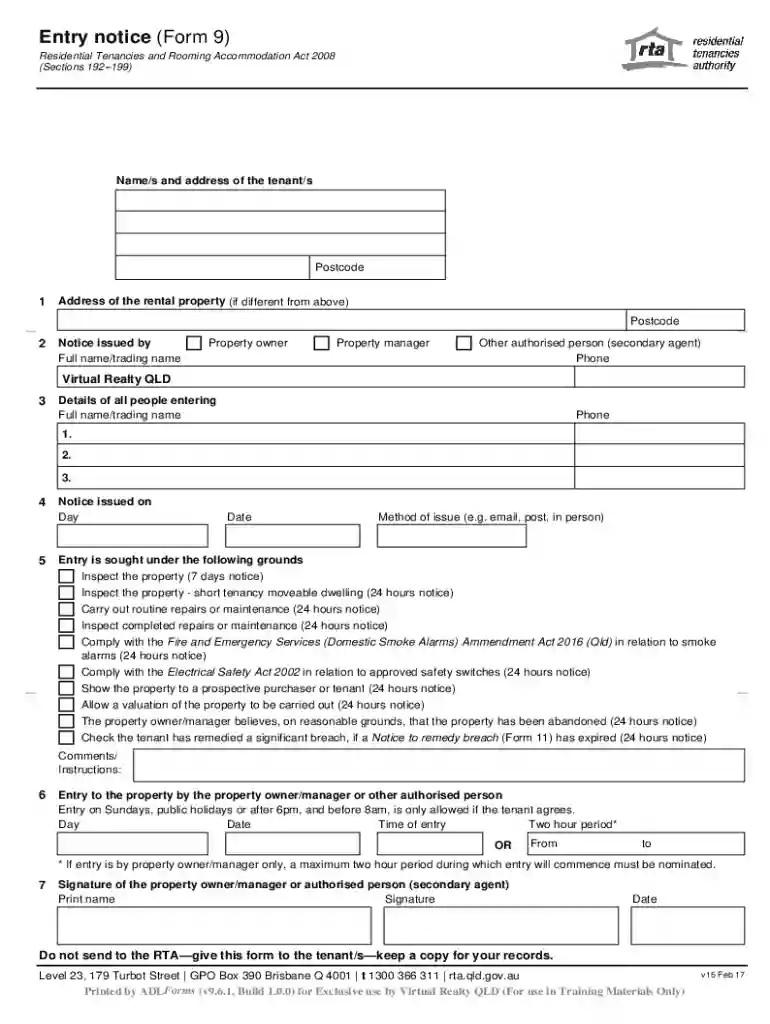
The Entry Notice (Form 9) under the Residential Tenancies and Rooming Accommodation Act 2008 is a legal document used by property owners or managers to inform tenants of their intention to enter a rental property. This form plays a crucial role in maintaining transparent communication between landlords and tenants, ensuring that all parties are aware of and consent to entries for specific purposes. Entry can be for reasons such as conducting repairs, performing inspections, or fulfilling compliance checks. This form is essential in documenting the reasons for entry and the dates on which these visits are scheduled, facilitating an organized approach to tenant-landlord interactions.
Identify the Purpose for Entry: Determine the reason for entering the property, such as repairs, inspections, or maintenance activities. The purpose should comply with the Residential Tenancies and Rooming Accommodation Act 2008.
Select the Correct Date and Timeframe: Choose dates and times that align with the notice period requirements stipulated in the Act. Typically, this involves providing tenants with a notice period ranging from 24 hours to seven days, depending on the purpose of the entry.
Complete the Form Accurately: Fill out all required sections of the Entry Notice, including tenant and property details, reasons for entry, and proposed entry times. Ensure that information is clear and precise to avoid misunderstandings.
Delivery to Tenants: Provide the completed form to the tenants using an acceptable method, such as personal delivery, postal service, or electronic communication. Confirm that the method of delivery is acceptable under relevant state laws.
Keep Records: Maintain a record of the notice and its delivery method for reference. This may be useful in case of disputes or legal proceedings.
Gather Necessary Information: Before filling out Form 9, collect the relevant details including tenant names, property address, and the specific purpose for seeking entry.
Enter Property Details: Clearly specify the address of the rental property along with the names of the tenants involved.
State the Entry Reason: Articulate the reason for entry. Common reasons include routine inspections, urgent repairs, or showing the property to potential tenants or buyers.
Specify Date and Time: Detail the date and time when the proposed entry will occur, honoring the minimum notice period mandated by the Act.
Tenant Notification: Once the form is completed, notify the tenants in line with legal requirements. This typically requires written notice unless agreed otherwise.
Review for Accuracy: Double-check the completed form for accuracy and completeness before sending it to tenants or tenants' representatives.
Document Delivery Method: Record the chosen delivery method for the Entry Notice to ensure proof of notice was provided.
The Entry Notice (Form 9) complies with legal standards set by the Residential Tenancies and Rooming Accommodation Act 2008. It outlines the landlord's right to enter the property under specified conditions and protects against unauthorized entry, thereby safeguarding tenant privacy. This form legally obliges landlords to furnish prior notice and comply with specified procedures, promoting fairness and transparency. Non-compliance with these procedures can lead to penalties or disputes, and thus landlords must adhere strictly to the guidelines outlined in the notice requirements.
Routine Inspections: A landlord intends to perform a routine inspection every three to six months to ensure the property is well-maintained. Form 9 is used to notify tenants in advance.
Emergency Repairs: In cases where urgent repairs are required, such as fixing a broken water pipe, the landlord uses Form 9 to communicate the need for entry within a legal timeframe, as allowed for emergencies.
Showing Property to Prospective Buyers: When a property is listed for sale, the landlord may need to show it to potential buyers, using the Entry Notice to schedule viewings with minimal disruption to the tenant.
Various states may have different requirements for notice periods and acceptable methods of delivery. It is crucial to review state-specific rules to ensure compliance and validity of the notice. For instance, some states may allow electronic delivery, while others require personal delivery or registered mail as the only acceptable means. Understanding these nuances aids in avoiding legal pitfalls and reinforces the integrity of the notice.
We've got more versions of the Entry notice (Form R9)Residential Tenancies Authority form. Select the right Entry notice (Form R9)Residential Tenancies Authority version from the list and start editing it straight away!
At DocHub, your data security is our priority. We follow HIPAA, SOC2, GDPR, and other standards, so you can work on your documents with confidence.
by CC Kilpinen 2010 Cited by 1 243 The model policy suggests a minimum of thirty days notice based on common practice in tenancies. The model notice provision ensures that discharged
May 3, 1983 authority applications (2 documents). 19957. Permanent authority applications; correction. 19955. Permanent authority applications; operating.


