





Definition & Meaning
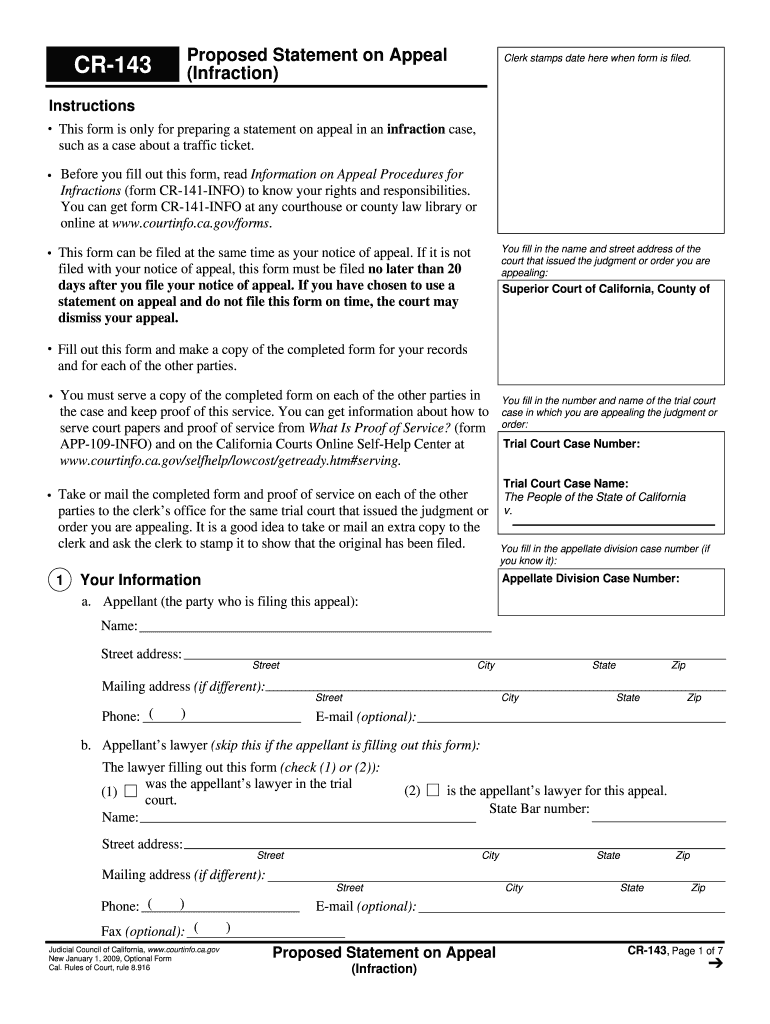
Form CR-143, also known as "Proposed Statement on Appeal (Infraction)," is a legal form used in the United States court system to appeal decisions in infraction cases. Common infractions include minor legal violations such as traffic tickets. The CR-143 form is essential for documenting the intent to appeal a court’s decision, outlining the basis for the appeal, and providing details about the original trial and its outcome. This form is pivotal as it serves as the appellant's formal assertion that the trial court's decision may have been flawed or unjust.
Typical Use Cases
- Filing an appeal against a traffic ticket conviction
- Challenging a minor infraction verdict due to procedural errors
- Requesting a review of the trial court's findings due to new evidence
The form is utilized primarily within the court appeals process and is a formal mechanism to seek a review or reversal of a decision. Its use is strictly regulated by court guidelines and deadlines.
Steps to Complete the Form CR
Completing Form CR-143 requires attention to detail to ensure accuracy and compliance with court protocols.
- Obtain the Form: Access Form CR-143 from the court's website or local court office.
- Fill in Personal Information: Include full name, contact details, and case number.
- Provide Case Details:
- Trial court case information, including the court location and judge's name.
- Date of the original trial and case outcome.
- Outline Grounds for Appeal: Clearly articulate the reasons for the appeal, highlighting errors or new evidence.
- Detail Existing Findings: Include sentencing and any objections raised during the trial.
- Attach Required Documents: Provide any supporting documents that reinforce the appeal grounds.
- Sign and Date: Ensure the form is signed and dated by the appellant or their attorney.
All fields must be correctly filled with accurate information to avoid dismissal of the appeal.
How to Obtain the Form CR
Acquiring Form CR-143 can be done through several methods:
- Court Websites: Most state court systems offer downloadable versions of the form online.
- Physical Copies: Visit the local courthouse to obtain a paper copy directly from the clerk’s office.
- Legal Aid Organizations: Some non-profits and legal aid clinics provide assistance in accessing and completing court forms.
It is crucial to ensure that the version of the form is current and aligns with the specific year of the filing process.
Important Terms Related to Form CR
Understanding specific terminology related to Form CR-143 is beneficial for effective completion:
- Appellant: The individual or entity filing the appeal.
- Infraction: Minor legal violations not amounting to a misdemeanor or felony, often punishable by fine.
- Trial Court: The court where the original case was heard and adjudicated.
Such terms ensure clarity and precision in form completion, crucial for legal compliance.
Legal Use of the Form CR
The legal application of Form CR-143 serves to formally initiate the appeal process in minor infraction cases. The form is governed by strict legal standards, requiring timely filing—usually within twenty days following a notice of appeal—to prevent automatic dismissal. Its submission signals the appellant’s request for a higher judicial authority to review and possibly overturn the trial court’s decision.
Courts rely on this documented procedure to assess whether a retrial or dismissal is warranted based on procedural or factual inaccuracies during the original hearings.
State-Specific Rules for the Form CR
State-specific regulations can affect the use and filing of Form CR-143:
- Filing Deadlines: Different states may have varying deadlines for appealing an infraction decision.
- Supplemental Documentation: Requirements for additional documentation might differ based on local court rules.
- Filing Fees: Some courts may impose a fee to process the appeal, which should be accounted for during submission.
These variables emphasize the need for thorough verification of state-specific guidelines prior to filing.
Key Elements of the Form CR
The form comprises sections crucial for completing the appeal:
- Appellant Information: Includes name and contact info.
- Trial Court Details: Identifies the original court and case specifics.
- Appeal Grounds: Documents the basis for contesting the trial’s conclusion.
- Required Alerts: Any legal statutes or precedents supporting the appeal.
Each element demands careful input to sustain legal validity and support the appeal’s argument.
Form Submission Methods
The form offers diverse submission methods to cater to different convenience and accessibility needs:
- Online Filing: Digital submissions through e-filing systems where available.
- Postal Mail: Sending completed forms and documents via certified mail for documentation.
- In-Person Delivery: Submitting the form at the court’s filing window to confirm receipt and compliance.
Each method should adhere to specified court protocols to guarantee the appeal is processed promptly and correctly.




