






Definition and Meaning
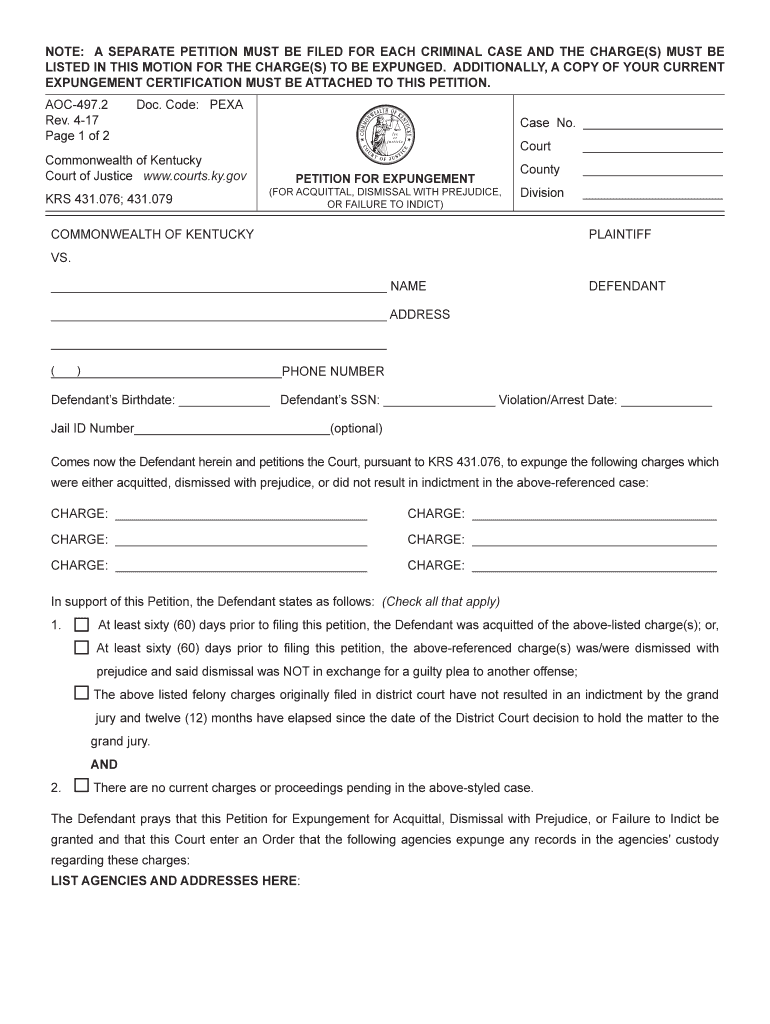
The "Listed in This Motion for the Charge(s) to Be Expunged" refers to a legal document submitted to a court requesting the removal of specific criminal charges from an individual's record. This process is known as expungement and is applicable in cases where charges have been acquitted or dismissed with prejudice. Expungement allows individuals to seal or erase such charges, thereby preventing them from appearing in future background checks. This document is essential for individuals seeking to improve employment prospects or restore personal reputation by eliminating the public record of past charges.
How to Use the Form
To effectively use the "Listed in This Motion for the Charge(s) to Be Expunged," you must ensure that the details of the charges you intend to expunge are accurately documented. The form typically requires:
- A comprehensive listing of each charge, including the relevant case numbers.
- Attachment of necessary documents, such as an expungement eligibility certification.
- Personal information, ensuring accuracy to avoid any processing delays.
Follow these steps carefully to ensure the form meets all legal requirements for expungement in your jurisdiction.
Steps to Complete the Form
-
Gather Necessary Documents: Collect all relevant court records, identification details, and any previous documentation related to the charges.
-
Fill In Personal Information: Include your full name, address, and contact details accurately.
-
List Charges to Be Expunged: Enter each charge individually, accompanied by its case number and date of the final judgment.
-
Attach Certification: Ensure your expungement eligibility certification is attached as required.
-
Signature and Notarization: Sign the form in the presence of a notary or circuit clerk, who will also verify and seal the document.
-
Submit the Form: Depending on your location, submission methods may include online, mail, or in-person delivery to the relevant court office.
Who Typically Uses the Form
This expungement petition is primarily used by individuals with criminal records in the U.S. who qualify for record sealing. Most often, people who have had charges dismissed or acquitted, or who have met the required passage of time since conviction, will utilize this form. Lawyers often assist clients in preparing and submitting these petitions to ensure accuracy and compliance with legal standards.


Required Documents
For a successful expungement application, the following documents are often required:
- A completed expungement eligibility certification for each charge.
- Official court records pertaining to the charges.
- Identification documents, such as a driver's license or state ID.
- Any supplementary evidence supporting the expungement request, such as letters of recommendation or proof of rehabilitation.
State-Specific Rules
Understanding state-specific rules is critical, as expungement requirements and eligibility vary widely across the U.S. For instance, some states may demand a waiting period after charge dismissal, while others offer immediate eligibility. It is essential to consult legal resources or an attorney familiar with local laws to navigate these differences effectively.
Legal Use
The expungement petition must strictly adhere to legal formalities, as it seeks permanent removal of charges from public access. An approved expungement prevents third parties, including potential employers, from accessing these specifics during background checks, ultimately aiding in privacy restoration and personal advancement.
Application Process and Approval Time
The expungement process involves several steps, typically beginning with submission of the petition to the court:
- Initial Review: A judge examines the form and attached documents for completeness.
- Notification: Interested parties, such as law enforcement agencies, are informed and may object.
- Hearing: If objections arise, a court hearing may be scheduled.
- Approval: Upon acceptance, charges are expunged, usually within a few weeks to months, depending on court schedules and complexity.
Eligibility Criteria
Eligibility for expungement usually hinges on several factors, including but not limited to:
- The nature of the charges.
- Time elapsed since the incident or charge dismissal.
- Fulfillment of all court requirements, such as completed sentences or fines.
- Absence of new charges or criminal activity.
These criteria ensure that only individuals who have demonstrated rehabilitation and adherence to the law are granted expungement relief.