
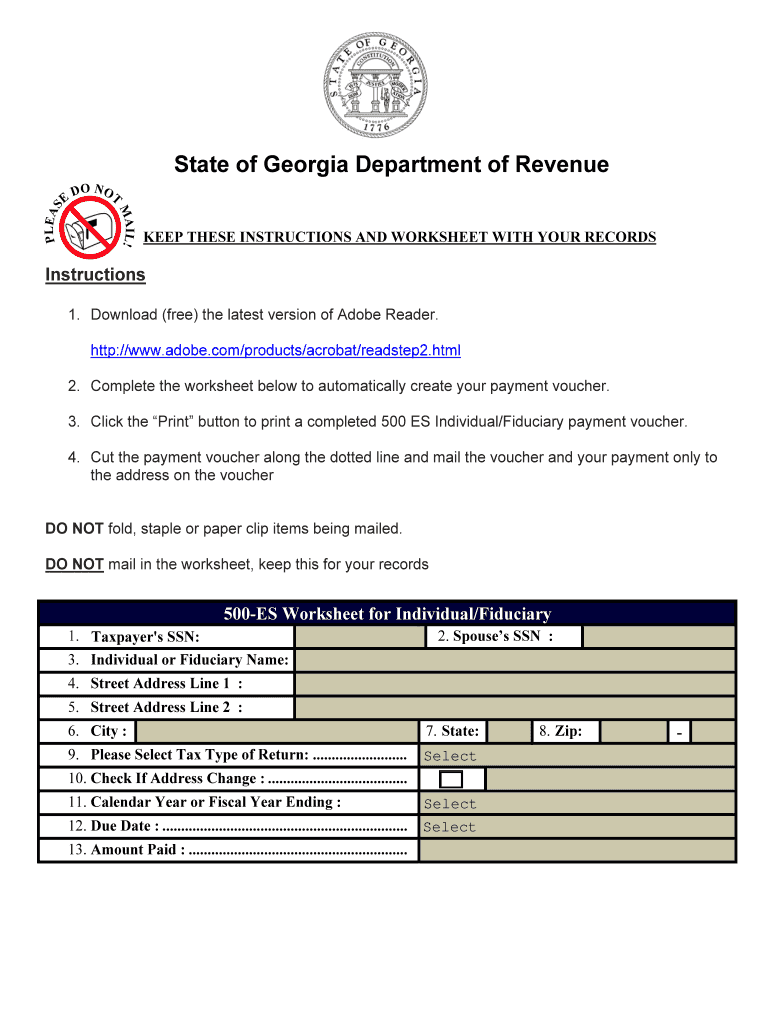







Definition and Purpose of the 2014 500 ES 2015 Form
The 2014 500 ES 2015 form is a document used for making estimated tax payments primarily related to the state of Georgia. It serves as a payment voucher that helps individuals and fiduciaries adhere to state tax obligations by allowing them to submit quarterly estimated tax payments. Typically, this form ensures taxpayers meet their tax liabilities on time to avoid penalties. The "500 ES" refers to the specific section of the Georgia Department of Revenue forms designated for this purpose.
General Use Cases
- Individuals and Fiduciaries: Those with significant non-wage income who must make estimated tax payments.
- Small Business Owners: Owners with income not subject to withholding, such as rental income or capital gains.
- Retirees: Retirees with taxable pension or investment incomes may benefit from this form to manage their financial commitments efficiently.
- Self-Employed Individuals: Professionals with untaxed earnings require the 500 ES form for quarterly tax payments.
Steps to Complete the 2014 500 ES 2015 Form
Completing the 2014 500 ES form requires attention to detail and accurate self-assessment of expected annual income. Here is a step-by-step guide to assist taxpayers:
- Calculate Estimated Income: Estimate your annual income, including wages, investment earnings, and any other taxable income.
- Determine Tax Liability: Use tax tables or software to determine how much tax you need to pay based on your estimated income.
- Complete the Form Fields: Enter personal details, including your name, address, and taxpayer identification number (TIN).
- Specify Payment Amount: Indicate the calculated installment amount for the current quarter.
- Review and Sign: Double-check all entered information to ensure accuracy, then sign the form.
- Submit the Form: Choose your submission method (online or mail) and ensure it's sent before the deadline.
How to Obtain the 2014 500 ES 2015 Form
Acquiring the 2014 500 ES 2015 form is a straightforward process that can be done through multiple channels:
- Online: Access the official Georgia Department of Revenue website to download the form directly.
- Tax Software: Professional tax preparation software, compatible with the form, can be used to print or electronically file it.
- Physical Locations: Visit local tax offices or public libraries offering paper forms during the tax season.
- Email Request: Request a copy via email directly from the Georgia Department of Revenue.
Why Use the 2014 500 ES 2015 Form?
The use of the 2014 500 ES 2015 form extends beyond merely complying with legal requirements. It offers several practical benefits:
- Avoids Penalties: Timely estimated payments can prevent penalty charges for underpayment.
- Budget Management: Helps taxpayers distribute tax payments throughout the year, aiding in financial planning.
- Compliance Assurance: Ensures adherence to state tax laws, maintaining good standing with tax authorities.
Additional Benefits
- Flexibility in Payment: Allows taxpayers to manage cash flow better by paying taxes in manageable portions.
- Peace of Mind: Reduces end-of-year stress by preventing a large tax bill at once.
Key Elements of the 2014 500 ES 2015 Form
Understanding the key elements of the form is crucial for accurate and complete submission:
- Personal Information: Includes spaces for the taxpayer's full name, address, and Social Security or TIN.
- Installment Payment Section: Area designated for the installment amount you plan to remit.
- Year and Period Indicators: Spaces to specify the tax year and the quarter of payment being made.
- Payment Method Details: Instructions and options for electronic or paper check payments.
Legal Use and Guidelines
The legal use of the 2014 500 ES 2015 form aligns with Georgia state tax regulations, guided by specific protocols:
- Legally Binding Document: Required for certain taxpayers with estimated liabilities.
- State-Specific Regulations: Adheres to rules set by Georgia’s Department of Revenue.
- Secure Submission: Adheres to privacy laws protecting sensitive taxpayer information.
Compliance Tips
- Check Deadlines: Familiarize yourself with payment dates to avoid late fees.
- Maintain Records: Always keep copies of submitted forms for reference.
Penalties for Non-Compliance
Failure to comply with estimated tax requirements using the 2014 500 ES can result in significant penalties:
- Underpayment Penalties: Incurred if estimated taxes are less than 90% of the taxes due for the year.
- Late Payment Fees: Additional charges for payments not made by the specified deadline.
- Interest Accrual: Charged on outstanding amounts, compounding the longer the payments are delayed.
Form Submission Methods
Understanding the various submission methods ensures timely and successful processing:
- Online Submission: Quick and secure method through the Georgia Department of Revenue’s official platform.
- Mail Submissions: Recommended to include the mailing address and postmark before the deadline.
- In-Person: Possible at local Department of Revenue offices.
Preferred Method
Online submissions are often preferred for their ease of tracking, electronic confirmation, and faster processing times.


