Definition & Purpose of the 2013 Form Spouse
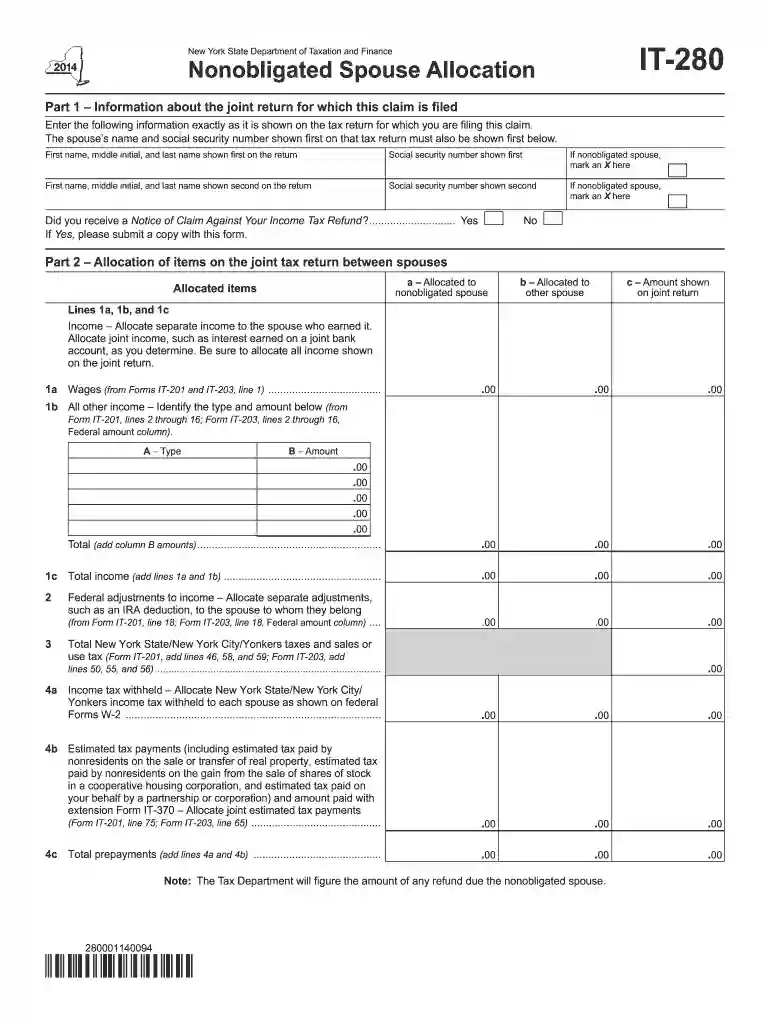
The 2013 form spouse serves as a crucial tool for managing tax-related responsibilities within a marriage, particularly for the nonobligated spouse. This form is often used in the context of joint tax returns to allocate income, tax credits, and liabilities between spouses. The nonobligated spouse uses it to protect their share of any tax refund from being applied to debts owed solely by their partner. While this form is typically associated with the New York State Department of Taxation and Finance, similar forms exist across various states, reflecting differences in state-specific tax regulations.
Real-World Application Examples
- A couple filing jointly has a refund due, but one spouse has outstanding student loans. The nonobligated spouse can file the 2013 form spouse to ensure their portion of the refund is not seized to cover these debts.
- In cases where one spouse has back taxes from previous years, the form allows the other spouse to safeguard their share of current year tax refunds.
Eligibility Criteria for Using the 2013 Form Spouse
Eligibility to use the 2013 form spouse is primarily determined by the tax liabilities of each spouse. If a spouse is not responsible for certain debts, they may qualify to complete this form. Key considerations include:

- Tax Resident Status: The filer must be a resident or part-time resident in the state where the form is being filed.
- Joint Filing Status: The couple must be filing their taxes jointly for the form to apply.
- Debt Ownership: Only debts incurred individually by one spouse can be addressed with this form.
Practical Scenarios
- Individuals Who Recently Married: Newlyweds where one spouse has pre-existing financial obligations can benefit from the form by securing their own tax refunds.
- Spouses With Separate Debts: When both partners have individual debts, understanding eligibility can help delineate who is responsible for each portion of a combined tax liability.
How to Obtain the 2013 Form Spouse
Acquiring the 2013 form spouse involves several straightforward steps. Most states provide this form on the official website of their taxation and finance departments. Here's how you can obtain it:
- Visit the Department's Website: Navigate to the New York State Department of Taxation and Finance website or the relevant state's taxation portal.
- Search for the Form: Use the search feature to locate the "2013 form spouse."
- Download the PDF: Most sites offer the form in PDF format, which you can download and print.
- Contact Support: If you encounter difficulties online, contact the department’s customer service for assistance.
Steps to Complete the 2013 Form Spouse
Successfully completing the 2013 form spouse requires careful attention to detail. Follow these steps to ensure accuracy:
- Gather Required Documents: Ensure you have all necessary tax documents, personal identification, and details concerning debts.
- Fill Out Personal Information: Enter your name, Social Security number, and other identifying details on the form.
- Allocate Income and Tax Credits: Clearly specify how income and credits should be divided between you and your spouse.
- Detail Any Liabilities: Identify loans or debts that are attributed exclusively to your spouse.
- Review and Sign: Double-check entries for accuracy before signing the form.
- Submit the Form: Depending on state requirements, file the form online or mail it alongside your tax return.
Detailed Breakdown of Each Step
- Gathering Documents: Include W-2 forms, 1099s, and previous tax records that demonstrate your separate liability.
- Reviewing Entries: Pay particular attention to complex entries such as shared business income or joint property deduction claims to avoid errors.
Key Elements of the 2013 Form Spouse
Understanding the composition of the 2013 form spouse is essential for proper utilization. The form typically includes the following elements:
- Personal Information Section: Captures the basic details of both spouses.
- Income Allocation Fields: Allows filers to designate individual income sources.
- Debt Attribution Section: Specifies which debts belong to which spouse.
- Signatures: Requires both spouses to verify the information provided through their signatures.
Important Considerations
- Accuracy is crucial when filling out income and deduction sections to ensure correct tax liability assessment and refund allocation.
- Incorrect attributions can lead to processing delays and potential legal scrutiny.
IRS Guidelines for the 2013 Form Spouse
While the 2013 form spouse is primarily a state-level document, understanding its interplay with IRS guidelines is critical. The IRS recognizes the importance of accurately reporting tax liabilities and income divisions:
- Joint Filers' Obligations: The IRS requires precise allocations when couples file jointly, with both parties being equally liable for tax liabilities unless otherwise documented.
- 90-Day Amendment Period: Alerts filers to the opportunity to amend inaccuracies within ninety days of tax filing, helping to correct errors or misallocated deductions.
Compliance with Federal Regulations
- Ensure that state filings align with federal returns to avoid discrepancies.
- Regularly consult IRS publications for updates on filing requirements and allocation rules.
State-Specific Rules for the 2013 Form Spouse
Taxation policies and forms often vary significantly by state. For the 2013 form spouse, differences may include:
- Filing Deadlines: These may be earlier or later than federal deadlines based on state regulations.
- Handle of Deductions and Credits: Some states may have additional credits applicable only to individual filings, affecting joint filing clarity.
- State Taxes vs. Federal Taxes: Understanding how local tax obligations differ from federal requirements impacts form completion accuracy.
State Variation Examples
- New York: Allows amendments to be filed one year after the initial return date; however, income allocations must adhere closely to state-specific guidelines.
- California: Offers community property laws that might influence how income is split for tax purposes.
Penalties for Non-Compliance
Failure to properly file or complete the 2013 form spouse could result in various penalties:
- Financial Penalties: Inaccurate submission can lead to fines or a reassessment of owed taxes.
- Legal Consequences: In extreme cases, audits and legal action might be pursued for deliberate misinformation.
- Impact on Refunds: Incorrect allocations can cause significant delays or reductions in expected refunds.
Avoiding Penalties
- Conduct a meticulous review of the form before submission to prevent errors.
- Seek professional tax advice if uncertain about completing any portion of the form correctly.
Each of these aspects is critical in maximizing the utility of the 2013 form spouse and ensuring compliance with both state and federal tax regulations.