
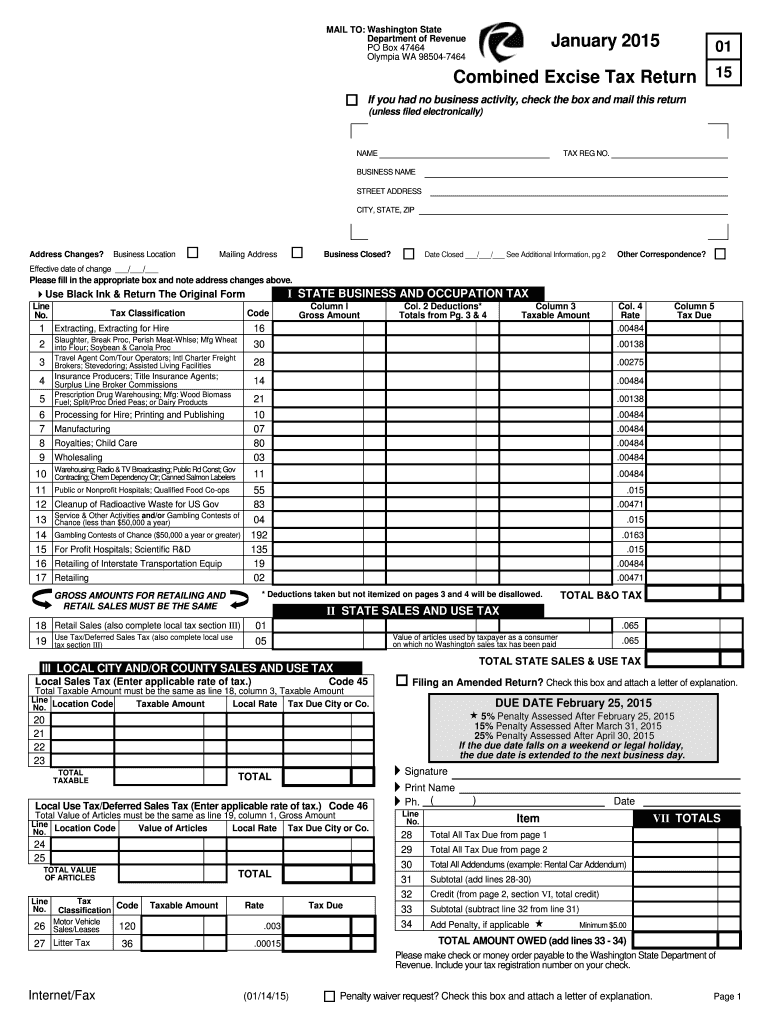







Definition and Purpose of the Combined Excise Tax 2015 Form
The combined excise tax 2015 form is a comprehensive document used primarily by businesses operating in Washington State to report various state taxes. These taxes include business and occupation taxes, sales and use taxes, and other related excise taxes. This form consolidates multiple tax reporting requirements into a single filing, simplifying the process for businesses and ensuring compliance with state tax laws. The main goal of this form is to streamline tax filings and ensure accurate and timely submission of tax dues. It is fundamental for maintaining tax obligations and avoiding potential penalties associated with late or incorrect filings.
Steps to Complete the Combined Excise Tax 2015 Form
-
Gather Required Information:
- Compile all necessary financial documents, including sales records, revenue reports, and previous tax filings. This data is crucial for accurately reporting your tax liabilities.
-
Understand Tax Classification Codes:
- Identify the correct tax classification codes applicable to your business. These codes determine the rate and type of tax you need to compute and pay.
-
Calculate Taxable Amounts:
- Use the data from your records to calculate the taxable amounts under each classification code. Be thorough to ensure no discrepancies in your calculations.
-
Apply Deductions:
- Review available deductions that can be applied to reduce your tax liability. Deductions must be accurately documented and justified to be valid.
-
Complete Field Entries:
- Fill in all required fields accurately, including specific details such as your business information, calculated tax amounts, and any deductions.
-
Review and Verify:
- Double-check all entries for accuracy to prevent errors. This step is crucial for avoiding penalties due to misreported figures.
Key Elements of the Combined Excise Tax 2015 Form
-
Business Information:
- Begin by providing your business's legal name, address, and identification numbers. Accurate contact details ensure proper processing and communication.
-
Tax Classification Sections:
- Each section corresponds to different tax types like business and occupation taxes or sales and use taxes. Make sure to report each classification separately for clarity.
-
Deductions and Penalties:
- Detail any eligible deductions and take note of potential penalties for late submissions. Clear documentation helps in claiming deductions appropriately.
-
Computation of Totals:
- Once individual sections are completed, compute the total tax liability. Ensure all calculations are correct and inclusive of any applicable deductions or additions.
How to Obtain the Combined Excise Tax 2015 Form
- Businesses can obtain the combined excise tax 2015 form through the Washington State Department of Revenue's website. This provides quick access to the latest form version and accompanying instructions for completion.
- The form may also be available at local tax offices or by requesting a mailed copy directly from the department for individuals preferring paper submissions.
Filing Deadlines and Important Dates
-
For the combined excise tax 2015 form, it is crucial to be aware of filing deadlines to avoid late fees. Generally, these forms need to be filed quarterly or annually, depending on the business size and revenue.
-
Quarterly Filers: Must usually file by the final day of the month following the end of the quarter (e.g., January 31 for Q4 of the previous year).
-
Annual Filers: Typically must file by April 15 of the following year.
-
-
Always confirm the specific deadline applicable for your filing period, as dates may vary based on regulatory updates or specific business circumstances.
Legal Use and Compliance
-
The combined excise tax 2015 form ensures legal compliance with Washington State tax laws. Accurate completion and timely submission are essential for avoiding audits, penalties, and interest charges.
-
Businesses are required to maintain detailed records supporting the information reported in their filings. This includes transaction records, receipts for deductions, and other relevant documentation for at least seven years.
Penalties for Non-Compliance
-
Failing to file the combined excise tax 2015 form on time or inaccurately reporting taxes can result in significant penalties. These include monetary fines, interest on unpaid taxes, and potential legal action.
-
Late Filing Penalties: Often escalate with the delay duration and may involve a percentage of the tax owed.
-
Misreporting Penalties: Can incur additional fines and necessitate detailed audits, potentially disrupting business operations.
-
State-Specific Rules and Considerations
-
Washington State may have unique rules regarding tax reporting that businesses need to be aware of when using the combined excise tax 2015 form.
-
Local Tax Variations: Some areas might impose additional local taxes, which must be identified and reported accurately.
-
Special Regulations: Certain industries could be subject to specific reporting requirements or tax rates based on local economic policies.
-
-
Regularly reviewing state guidelines and consulting with tax professionals can help businesses stay compliant and avoid unforeseen issues.




