






Definition and Meaning
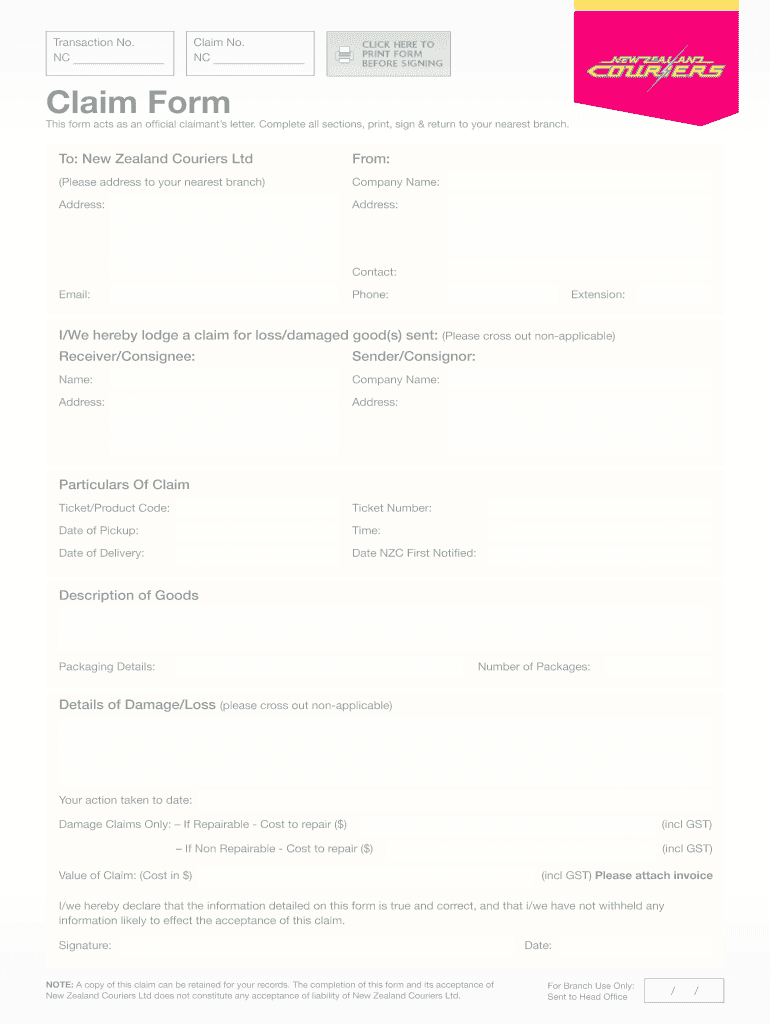
The "NC Claim Form - NZ Couriers" is a specialized document used by New Zealand Couriers Ltd for claiming compensation related to the loss or damage of shipped goods. Claimants must complete this form to report issues encountered with their shipments. Essential information required includes the sender and receiver details, a comprehensive description of the goods involved, and any measures taken regarding the damage or loss. The claimant's signature is necessary to declare that the provided information is accurate and truthful. Completing this form allows claimants to formally address their concerns. However, it does not guarantee acceptance of liability by New Zealand Couriers Ltd.
Steps to Complete the NC Claim Form - NZ Couriers
Filling out the NC Claim Form involves several detailed steps, critical for accurate submission:
-
Gather Information: Collect all relevant information, such as sender and receiver details, tracking numbers, and any previous correspondence related to the shipment.
-
Complete Sender and Receiver Details: Fill in the sender's and receiver's names, addresses, and contact numbers. Accurate contact details are crucial for processing the claim effectively.
-
Detail the Goods: Describe the nature and condition of the goods, including their value and category. Document any specific identification markers or serial numbers if applicable.
-
Explain the Incident: Clearly describe the damage or loss incurred. Include potential causes and timings. Adding photos or additional evidence can support your claim.
-
Sign the Form: Legally affirm that all submitted information is truthful and complete by signing the document. Digital signatures are acceptable if permitted by the claim process.
-
Submit the Form: Check submission options provided by New Zealand Couriers Ltd, which may include online submission, mail, or in-person delivery. Verify the deadline to ensure timely processing.
Who Typically Uses the NC Claim Form - NZ Couriers
The NC Claim Form is predominantly used by:
- Businesses and Corporations: Companies frequently shipping goods and needing transparency in logistics issues use the form for financial restitution.
- Individual Shippers: Individuals sending personal goods, seeking compensation for mishandled or lost items during transit.
- Insurance Providers: Entities handling insurance claims may utilize the form to gather necessary documentation before processing client reimbursements.
Understanding the type of user can aid in tailoring the completion and submission approach, potentially streamlining the claim process for various stakeholders involved.


Key Elements of the NC Claim Form - NZ Couriers
This form contains important sections requiring attention:
-
Claimant Information: The party lodging the claim must provide their full details for identification and contact purposes.
-
Goods Description: A detailed account of the shipped items, including any distinguishing features and conditions pre-shipment.
-
Incident Details: A narrative on how the damage or loss occurred, supported by any evidence like photos or eyewitness reports.
-
Acknowledgement and Declaration: Legal acknowledgment from the claimant that the information provided is accurate, affirming their commitment to honesty.
Each section is crucial to securing the validity of the claim and ensuring the process is managed smoothly and efficiently.
Required Documents
Supporting documents bolster the validity of claims. Necessary documents commonly include:
- Proof of Shipment: Receipt or invoice indicating the goods were handed over for shipment.
- Photographic Evidence: Images depicting the condition of goods before and after shipping, illustrating the nature of the damage.
- Proof of Value: Invoices or appraisals substantiating the item's value, helping calculate compensation.
- Communication Records: Any correspondence with the courier regarding the incident could provide vital context.
These documents collectively help establish a strong foundation for justifying the claim and aid in resolving disputes efficiently.
Form Submission Methods
Submitting the NC Claim Form offers several avenues:
-
Online Submission: Submit the form electronically through New Zealand Couriers Ltd's official website or portal, allowing for a faster processing time frame.
-
Mail Submission: Sending a physical copy through postal services might be preferred for those who require formal records or lack digital access.
-
In-Person Submission: Hand-delivering the form to a local office can ensure immediate confirmation of receipt, offering peace of mind and expediency.
Choose a method aligning with your convenience and ensure compliance with any specific guidelines set by the courier company.
Versions or Alternatives to the NC Claim Form
While the NC Claim Form is unique to New Zealand Couriers Ltd, similar forms might exist for different courier companies. It's essential to verify:
-
Revised Versions: Check if recent form updates have been released, especially if older forms are available for download.
-
Equivalent Forms: Other couriers might use a differently named form for identical purposes. Be aware to avoid unnecessary confusion or delays.
-
Alternative Processes: In cases where forms are unavailable, couriers may offer an alternative claim procedure documented in their service terms or customer support channels.
Keeping abreast of the latest information ensures claim submissions are accurate and aligned with procedural expectations.
Legal Use of the NC Claim Form
The legal use of the NC Claim Form by New Zealand Couriers Ltd requires compliance with the following:
-
Accurate Representation: Ensure all details are truthfully represented in the form, maintaining integrity and transparency in the claim process.
-
Understanding Liability: Submission of the form doesn't imply immediate acceptance of liability by the courier, and claimants should be prepared for a thorough review process.
-
Regulations: Familiarize yourself with any regulatory guidelines or courier-specific terms affecting the form's processing and outcomes.
Following these legal stipulations protects claimants from any punitive consequences of compliance failures while emphasizing thoroughness in documentation.